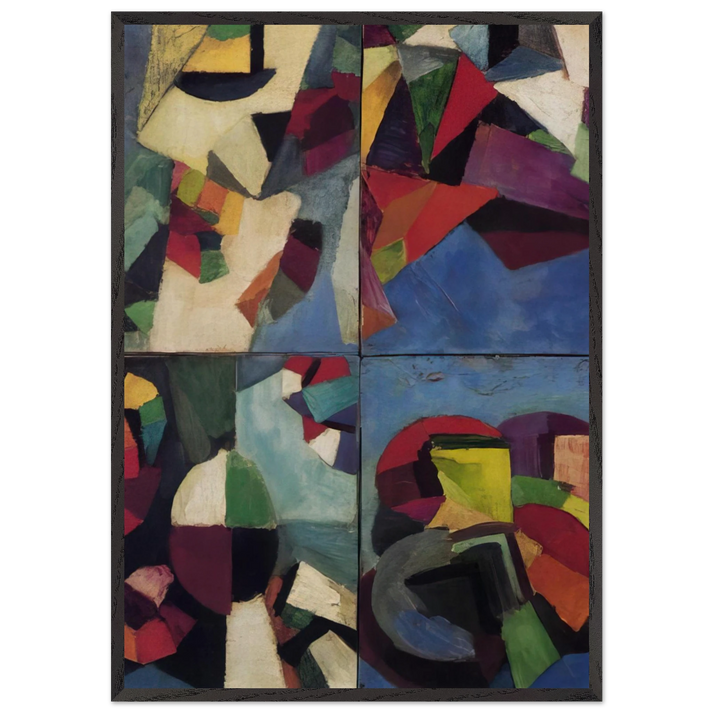
Four Part Synchromy Numero 7 - 1915 - Morgan Russell 70x100 cm / 28x40 pollici – Stampa d'Arte Incorniciata – Cornice in Legno Nero
Four Part Synchromy Numero 7 - 1915 - Morgan Russell 70x100 cm / 28x40 pollici – Stampa d'Arte Incorniciata – Cornice in Legno Nero
Impossibile caricare la disponibilità di ritiro
Four Part Synchromy Number 7 (1915) di Morgan Russell
Vivi l'energia pionieristica del modernismo del primo Novecento con questa stampa d'arte incorniciata di qualità museale di Four Part Synchromy Number 7 di Morgan Russell. Creato nel 1915, questo capolavoro astratto esemplifica il movimento Sin cromatismo — una radicale forma d'arte americana che cercava di tradurre l'armonia musicale in puro colore e forma. Russell, insieme a Stanton Macdonald-Wright, sviluppò il Sin cromatismo come una vibrante alternativa al Cubismo europeo, utilizzando arrangiamenti cromatici dinamici per evocare ritmo ed emozione. Questa stampa cattura ogni sfumatura della sua tavolozza audace, sperimentale e della composizione geometrica, offrendo un pezzo senza tempo per interni contemporanei.
RedKalion presenta questa riproduzione archivistica su carta premium 250 gsm (110 lb) opaca, non patinata con finitura bianca naturale, garantendo un'eccezionale fedeltà cromatica e durata. La stampa è elegantemente incorniciata in una cornice in legno nero spessa 20 mm (0,79") realizzata con legno di quercia e frassino di provenienza responsabile, che offre un profilo più ampio e sostanziale rispetto alle cornici classiche da 14 mm. Protetta da plexiglass infrangibile e corredata di kit pronto per l'uso, questa stampa d'arte incorniciata da 70x100 cm / 28x40 pollici arriva completamente pronta per elevare il tuo spazio con un tocco di significato storico-artistico. Ogni dettaglio, dai materiali sostenibili certificati FSC alla costruzione di grado archivistico, riflette il nostro impegno nel curare riproduzioni d'arte raffinate che durano nel tempo.
- Artista: Morgan Russell (1886–1953)
- Movimento: Sin cromatismo (Modernismo americano)
- Anno: 1915
- Dimensioni della stampa: 70x100 cm / 28x40 pollici
- Materiale della cornice: Cornice in legno nero (legno di quercia e frassino di provenienza responsabile)
- Spessore della cornice: 20 mm (0,79"), più ampio delle cornici classiche da 14 mm
- Specifiche della carta: Carta opaca, non patinata, bianca naturale di qualità museale da 250 gsm (110 lb)
- Protezione: Plexiglass infrangibile
- Sostenibilità: Materiali certificati FSC o equivalenti
- Pronto per appendere: Incluso kit di montaggio per una collocazione immediata
Eleva la tua casa o ufficio con questa opera d'archivio che unisce la storia dell'arte e il design moderno, offrendo un punto focale che dà inizio a conversazioni, supportato dall'esperienza di RedKalion nelle riproduzioni di qualità premium.
Discover Unlimited Art Possibilities
At RedKalion, you can find virtually any artwork from any artist, available in a wide range of sizes to perfectly match your space.
If you didn’t find what you’re looking for, contact us at support@redkalion.com . We will source any artwork and produce it in any size and format you need, including art prints, posters, canvas, framed pieces, framed canvas, and more.
For dedicated art enthusiasts, we also offer handcrafted replicas of any artwork, carefully painted by highly skilled artists using traditional techniques.
For custom requests, contact us at support@redkalion.com .
Qual è il significato storico di Four Part Synchromy Number 7?
Realizzato nel 1915 da Morgan Russell, quest'opera è un esempio fondamentale del Sincretismo, un movimento modernista americano che utilizzava armonie cromatiche per emulare ritmi musicali, sfidando le tendenze artistiche europee dell'epoca.
Quali sono le specifiche della carta utilizzata per questa stampa d'arte?
La stampa è su carta di qualità museo, naturale bianca, non patinata, opaca da 250 gsm (110 lb), che garantisce una riproduzione dei colori vivida e una durata nel tempo per la tua stampa d'arte incorniciata.
Come è costruito il telaio e quali sono le sue dimensioni?
Il telaio è realizzato in legno di quercia e frassino di provenienza responsabile, spesso e largo 20 mm (0,79"), che offre un profilo più robusto rispetto ai telai standard da 14 mm per una migliore esposizione.
Questa stampa incorniciata è pronta per essere appesa al momento della consegna?
Sì, include un kit di montaggio ed è pronta per essere appesa direttamente al muro, offrendo un'installazione comoda per godere immediatamente della tua riproduzione di qualità museo.
Che protezione offre la stampa contro i danni?
È dotata di vetro acrilico infrangibile per proteggere la stampa da urti e fattori ambientali, garantendo che la tua opera di Morgan Russell rimanga in perfette condizioni nel tempo.
In cosa si differenzia il Sincretismo da altri movimenti artistici astratti?
Il Sincretismo, pionieristico grazie a Morgan Russell e Stanton Macdonald-Wright, si concentrava sul colore come elemento primario per creare armonia visiva, a differenza del Cubismo che enfatizzava la forma o del Futurismo che prediligeva il dinamismo.
I materiali utilizzati in questo prodotto sono sostenibili dal punto di vista ambientale?
Sì, utilizziamo materiali certificati FSC o equivalenti per la carta e il telaio, in linea con pratiche sostenibili per le nostre stampe d'arte premium.