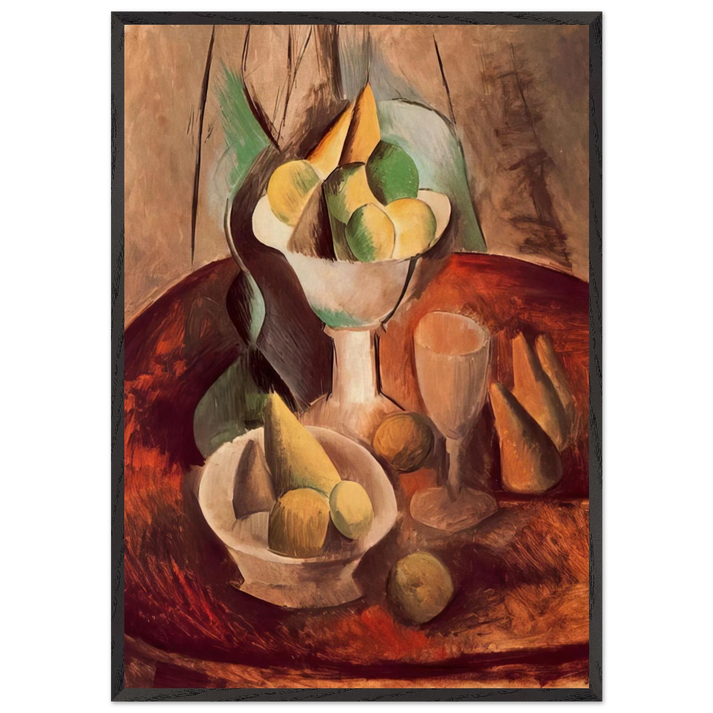
Frutta in un vaso - 1909 - Pablo Picasso 70x100 cm / 28x40 pollici Stampa d'arte incorniciata – Cornice in legno nero
Frutta in un vaso - 1909 - Pablo Picasso 70x100 cm / 28x40 pollici Stampa d'arte incorniciata – Cornice in legno nero
Impossibile caricare la disponibilità di ritiro
Natura morta con vaso (1909) di Pablo Picasso – Stampa d'arte incorniciata di qualità museale
Scopri l'innovazione audace del capolavoro cubista di Pablo Picasso, Natura morta con vaso (1909), in questa raffinata stampa d'arte incorniciata di RedKalion. Creato durante il periodo pionieristico del Cubismo analitico di Picasso, quest'opera decompone la prospettiva tradizionale, presentando frutta e vaso in forme geometriche frammentate che sfidano la percezione e celebrano l'esperimentazione artistica. La composizione del 1909, con la sua tavolozza smorzata e l'interazione dinamica delle forme, cattura un momento fondamentale nella storia dell'arte moderna, offrendo un pezzo sofisticato per collezionisti esigenti.
La riproduzione premium di RedKalion garantisce che ogni sfumatura della tecnica rivoluzionaria di Picasso sia preservata. Stampata su carta di qualità museale da 250 gsm (110 lb) con finitura opaca non patinata, questa stampa d'arte offre un'eccezionale fedeltà cromatica e texture. La stampa è elegantemente incorniciata in una cornice nera in legno spessa 20 mm (0,79") realizzata con legno di quercia e frassino di provenienza responsabile, che offre un profilo più ampio e sostanziale rispetto alle cornici standard. Protetta da plexiglass infrangibile, questa opera pronta per essere appesa include un kit di montaggio per un'installazione senza sforzo, permettendoti di elevare il tuo spazio con un capolavoro archivistico che dura nel tempo.
- Dettagli dell'opera: Titolo originale: Natura morta con vaso, Anno: 1909, Artista: Pablo Picasso, Dimensioni: 70x100 cm / 28x40 pollici.
- Specifiche della cornice: Cornice in legno nero realizzata con legno di quercia e frassino di provenienza responsabile, spessa 20 mm (0,79") e larga, con protezione in plexiglass infrangibile.
- Qualità della carta: Peso 250 gsm (110 lb), spessore 0,29 mm (11,4 mils), finitura opaca non patinata bianca naturale, realizzata con materiali sostenibili certificati FSC.
- Comodità: Pronto per essere appeso con kit di montaggio incluso, spedito in modo sicuro per una visualizzazione immediata.
Discover Unlimited Art Possibilities
At RedKalion, you can find virtually any artwork from any artist, available in a wide range of sizes to perfectly match your space.
If you didn’t find what you’re looking for, contact us at support@redkalion.com . We will source any artwork and produce it in any size and format you need, including art prints, posters, canvas, framed pieces, framed canvas, and more.
For dedicated art enthusiasts, we also offer handcrafted replicas of any artwork, carefully painted by highly skilled artists using traditional techniques.
For custom requests, contact us at support@redkalion.com .
Qual è il significato storico di "Frutta in un vaso" (1909) di Picasso?
"Frutta in un vaso" (1909) è un'opera chiave del periodo del Cubismo analitico di Picasso, in cui decontestualizzava gli oggetti in forme geometriche per esplorare molteplici prospettive, rivoluzionando l'arte moderna e influenzando l'estetica del XX secolo.
Come migliora questa cornice la stampa d'arte?
La cornice in legno nero spesso 20 mm, realizzata con legno di quercia e frassino di provenienza responsabile, offre un profilo più ampio e resistente che si armonizza con lo stile cubista audace di Picasso e garantisce una protezione a lungo termine per la tua riproduzione di qualità museale.
Quali sono le specifiche della carta archivistica utilizzata?
Questa stampa utilizza carta opaca non patinata bianco naturale da 250 gsm (110 lb), spessa 0,29 mm, con materiali certificati FSC per la sostenibilità, ideale per preservare colore e texture nelle riproduzioni d'arte di alto livello.
Questa stampa incorniciata è pronta per essere appesa?
Sì, include un kit di montaggio ed è pronta per essere appesa direttamente al muro, offrendo una soluzione comoda per esporre stampe d'arte cubista di qualità senza ulteriori preparativi.
Come protegge il plexiglass infrangibile la stampa?
Il plexiglass infrangibile protegge la stampa dalla polvere, dai raggi UV e dai danni fisici, garantendo che la tua riproduzione di Picasso rimanga perfetta e sicura per anni.
Cosa rende questa una riproduzione di qualità museale?
Combina la stampa ad alta risoluzione su carta archivistica da 250 gsm con un'accurata corrispondenza dei colori all'originale di Picasso, rispettando gli standard professionali per stampe d'arte e riproduzioni di opere cubiste.
Come si confronta la cornice da 20 mm con quelle standard?
Con uno spessore e una larghezza di 20 mm, è più ampia dei classici telai da 14 mm, offrendo maggiore durata e un'estetica più sostanziale per opere d'arte di grandi dimensioni come questa stampa da 70x100 cm.