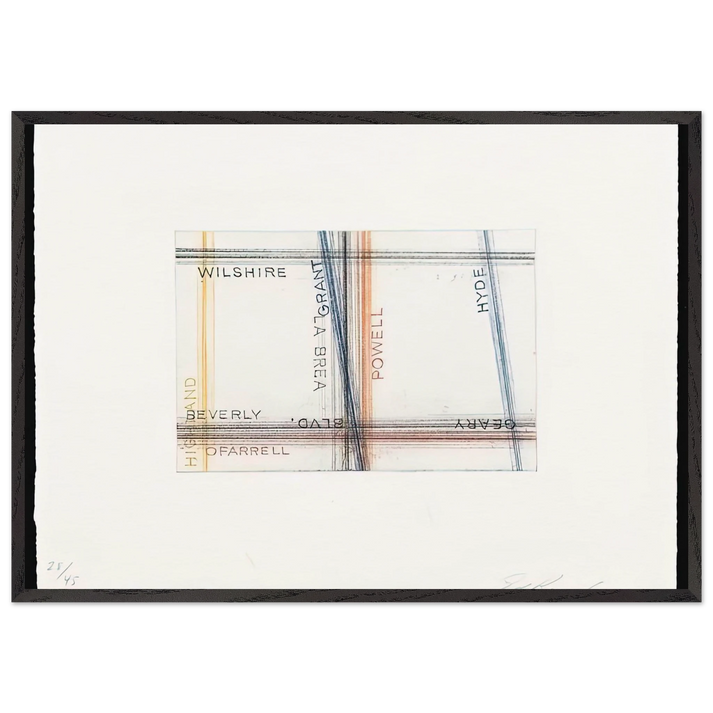
GRANT DAL PORTFOLIO LOS FRANCISCO SAN ANGELES DI EDWARD RUSCHA 70x100 cm / 28x40 pollici – Stampa d'Arte Incorniciata – Cornice in Legno Nero
GRANT DAL PORTFOLIO LOS FRANCISCO SAN ANGELES DI EDWARD RUSCHA 70x100 cm / 28x40 pollici – Stampa d'Arte Incorniciata – Cornice in Legno Nero
Impossibile caricare la disponibilità di ritiro
Grant dal Portfolio Los Francisco San Angeles di Edward Ruscha
Eleva il tuo spazio con questa iconica stampa d'arte incorniciata di Edward Ruscha, tratta dal suo celebre Portfolio Los Angeles San Francisco, una serie fondamentale che cattura l'essenza grafica e cruda dei paesaggi urbani americani degli anni '60. Questa riproduzione di qualità museale presenta la parola "GRANT" resa nella tipografia impassibile e minimalista di Ruscha, evocando un senso di distacco e di eleganza sobria che riflette l'interesse dell'artista per l'insegne commerciale e il vernacolo della West Coast.
Come figura di spicco del movimento della Pop Art, Ruscha ha pionieristicamente fuso arte concettuale e fotografia, utilizzando il linguaggio quotidiano per esplorare temi di luogo e identità. Quest'opera, creata originariamente nel 1969, esemplifica la sua tecnica innovativa di combinare testo e immagine per sfidare le forme d'arte tradizionali, rendendola un must per collezionisti di stampe d'arte e arte americana moderna.
RedKalion presenta questo capolavoro d'archivio in una cornice in legno nero di qualità premium, realizzata con legno di quercia e frassino provenienti da fonti responsabili. La cornice misura 20 mm di spessore e larghezza, offrendo una presenza sostanziale e degna di una galleria che ne esalta l'impatto. La stampa è protetta da plexiglass infrangibile e stampata su carta patinata opaca certificata FSC da 250 gsm, garantendo durata e una finitura bianca naturale che riproduce fedelmente la visione originale di Ruscha. Pronto da appendere con un kit incluso, questo pezzo arriva come una dichiarazione completa e pronta da appendere per la tua casa o ufficio.
- Cornice: Cornice in legno nero realizzata con legno di quercia e frassino provenienti da fonti responsabili, spessore e larghezza di 20 mm.
- Stampa: 70x100 cm / 28x40 pollici, su carta patinata opaca non rivestita, certificata FSC, di qualità museale.
- Protezione: Plexiglass infrangibile per durata e chiarezza.
- Sostenibilità: Materiali certificati FSC per una scelta eco-consapevole.
- Pronto da appendere: Include kit di montaggio per una esposizione immediata.

Discover Unlimited Art Possibilities
At RedKalion, you can find virtually any artwork from any artist, available in a wide range of sizes to perfectly match your space.
If you didn’t find what you’re looking for, contact us at support@redkalion.com . We will source any artwork and produce it in any size and format you need, including art prints, posters, canvas, framed pieces, framed canvas, and more.
For dedicated art enthusiasts, we also offer handcrafted replicas of any artwork, carefully painted by highly skilled artists using traditional techniques.
For custom requests, contact us at support@redkalion.com .
Quali sono le dimensioni di questa stampa d'arte incorniciata di Edward Ruscha?
La stampa misura 70x100 cm (28x40 pollici), incorniciata in una cornice nera in legno che aggiunge una presenza da galleria di rilievo a questa riproduzione di arte fine.
Che tipo di carta viene utilizzata per questa stampa di qualità museale?
È stampata su carta opaca da 250 gsm, non patinata, di qualità archivistica museale con finitura bianco naturale, garantendo longevità e una riproduzione fedele dei colori per la tua arte di Edward Ruscha.
Questa stampa incorniciata è pronta per essere appesa al muro?
Sì, include un kit di montaggio ed è pronta per essere appesa direttamente al muro, rendendo l'installazione semplice per questa stampa d'arte premium.
Quanto è resistente l'incorniciatura e la protezione di questa stampa d'arte?
La cornice è realizzata in legno di quercia e frassino provenienti da fonti responsabili, spesso 20 mm, con vetro acrilico infrangibile per proteggere la stampa da danni e garantire qualità archivistica.
Cosa rende questa una scelta sostenibile per le stampe d'arte fine?
Utilizziamo materiali certificati FSC o equivalenti, sostenendo pratiche eco-friendly nelle nostre riproduzioni di qualità museale come questo pezzo di Edward Ruscha.
Qual è il significato storico del portfolio "Grant from Los Francisco San Angeles"?
Creato nel 1969, quest'opera fa parte del portfolio iconico di Ruscha che utilizza la tipografia per esplorare i paesaggi urbani americani, riflettendo la fusione dell'arte Pop tra immagini commerciali e profondità concettuale.
In che modo la tecnica di Edward Ruscha influenza il design di questa stampa?
La tipografia impassibile di Ruscha e l'attenzione al linguaggio quotidiano, come si vede in "GRANT", sfidano le forme d'arte tradizionali, rendendo questa stampa un esempio chiave dell'arte d'avanguardia degli anni '60.