
Henri Matisse - AHT AMONT LE FALAISI D'ETRETAT 1920 75x100 cm / 30x40 pollici Manifesto d'Arte
Henri Matisse - AHT AMONT LE FALAISI D'ETRETAT 1920 75x100 cm / 30x40 pollici Manifesto d'Arte
Impossibile caricare la disponibilità di ritiro
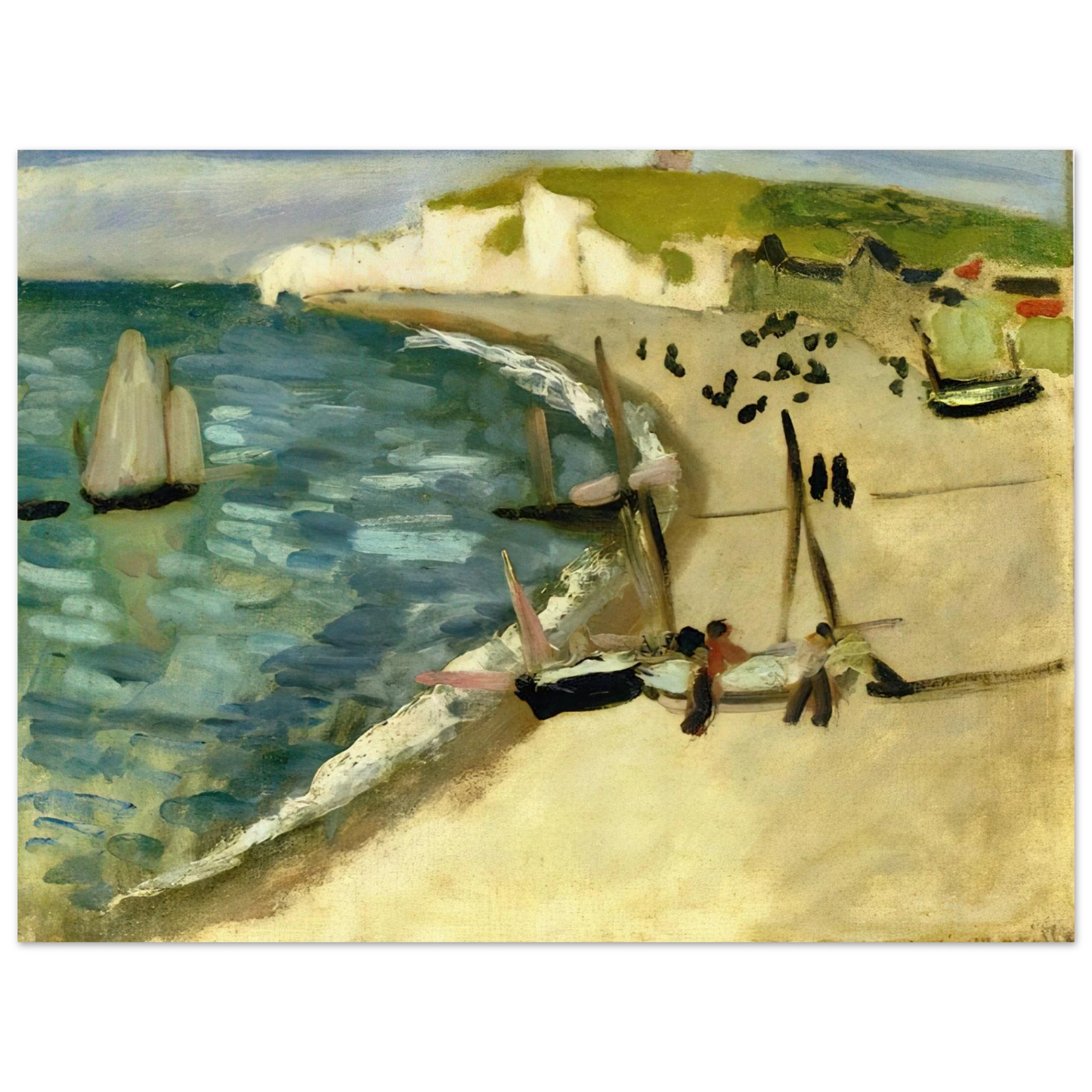
Henri Matisse - AHT AMONT CLIFFS AT ETRETAT 1920: Stampa d'arte di qualità museale
Immergiti nell'energia costiera vibrante della Normandia con questa riproduzione archivistica di Henri Matisse "AHT AMONT CLIFFS AT ETRETAT 1920". Questo poster d'arte raffigura l'interpretazione audace ed espressiva dell'artista delle iconiche scogliere di gesso, realizzate con la sua caratteristica tavolozza fauve che rivoluzionò l'arte moderna. Misurando 75x100 cm (30x40 pollici), questa opera porta un'affermazione dinamica e storica in qualsiasi ambiente.
RedKalion presenta questo capolavoro su carta esclusiva Master's Edition, garantendo una conservazione di qualità museale. La finitura opaca non patinata in un tono bianco naturale accentua la texture e la profondità della pennellata di Matisse, mentre la composizione priva di acidi (pH superiore a 7) assicura resistenza all'ingiallimento per generazioni. Realizzata su carta certificata FSC da 250 gsm (110 lb) con uno spessore di 0,29 mm (11,4 mils), questa stampa offre un pezzo d'erede lussuoso e sostenibile. Stampata e spedita su richiesta senza ordini minimi, arriva pronta per elevare il tuo spazio con autorevolezza artistica duratura.
- Opera: Henri Matisse - AHT AMONT CLIFFS AT ETRETAT 1920
- Dimensioni: 75x100 cm / 30x40 pollici
- Carta: Carta esclusiva Master's Edition, qualità museale
- Finitura: Opaca, non patinata, bianco naturale (avorio)
- Longevità: Senza acidi (pH superiore a 7) per prevenire l'ingiallimento
- Peso e Spessore: 250 gsm (110 lb), 0,29 mm (11,4 mils)
- Sostenibilità: Carta certificata FSC
- Consegna: Stampata e spedita su richiesta, senza ordini minimi
Discover Unlimited Art Possibilities
At RedKalion, you can find virtually any artwork from any artist, available in a wide range of sizes to perfectly match your space.
If you didn’t find what you’re looking for, contact us at support@redkalion.com . We will source any artwork and produce it in any size and format you need, including art prints, posters, canvas, framed pieces, framed canvas, and more.
For dedicated art enthusiasts, we also offer handcrafted replicas of any artwork, carefully painted by highly skilled artists using traditional techniques.
For custom requests, contact us at support@redkalion.com .
Qual è il significato storico di quest'opera di Henri Matisse?
Questa opera del 1920 mostra lo stile Fauve di Matisse, che utilizza colori audaci e forme espressive per catturare le drammatiche scogliere di Étretat, riflettendo il suo approccio innovativo all'arte moderna che privilegiava l'impatto emotivo rispetto al realismo.
Come garantisce la qualità della carta che questa sia una riproduzione di qualità museale?
La nostra carta Master's Edition archivistica è senza acidi (pH superiore a 7), certificata FSC e spessa 250 gsm, offrendo una finitura opaca e duratura che riproduce la texture e la longevità delle stampe d'arte originali per una visualizzazione autentica.
Quali sono le dimensioni esatte di questo poster d'arte?
Questa stampa di Henri Matisse misura 75x100 cm, equivalenti a 30x40 pollici, rendendola una dimensione ideale per la decorazione murale che attira l'attenzione senza sopraffare gli spazi più piccoli in case o uffici.
Come viene spedita questa stampa e qual è il processo di evasione?
Stampiamo e spediamo su richiesta senza ordini minimi, utilizzando imballaggi protettivi per garantire che il poster d'arte fine archivistico arrivi in condizioni perfette, pronto per essere incorniciato e esposto immediatamente.
Perché la carta senza acidi è importante per la conservazione a lungo termine?
La carta senza acidi (pH superiore a 7) previene l'ingiallimento e il degrado nel tempo, garantendo che questa riproduzione di Matisse mantenga i suoi colori vivaci e l'integrità strutturale come capolavoro archivistico duraturo per le generazioni future.
Cosa ispirò Matisse a dipingere le scogliere di Étretat?
Matisse fu attratto dai paesaggi costieri drammatici di Étretat, influenzato da artisti precedenti come Monet, e li utilizzò per esplorare tecniche fauves, enfatizzando tinte audaci e forme semplificate per evocare l'energia naturale della Normandia.
Come migliora la finitura opaca l'esperienza di visione di questa stampa?
La finitura opaca e non rivestita riduce i riflessi e mette in risalto la texture naturale della carta, permettendo di apprezzare nei dettagli i colori ricchi e la pennellata di "AHT AMONT CLIFFS AT ETRETAT" di Matisse in varie condizioni di illuminazione.