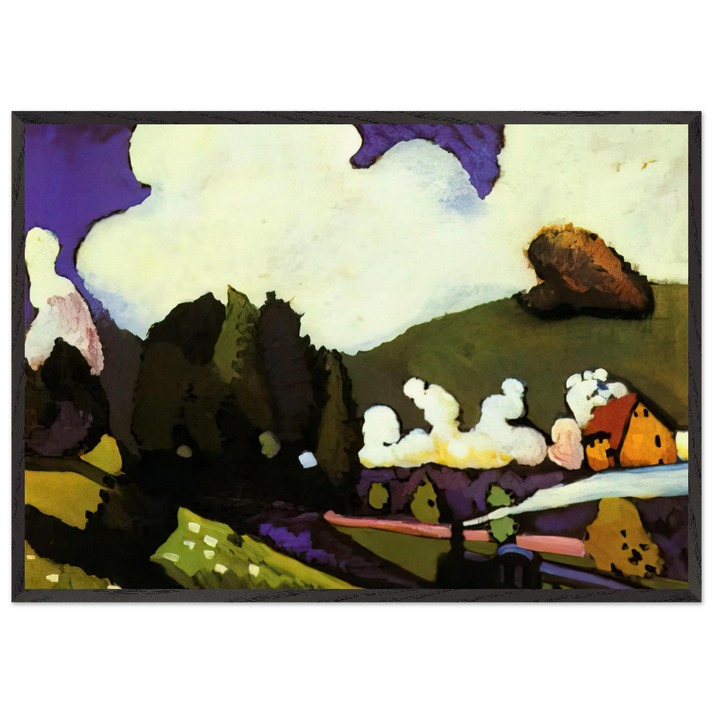
PAESAGGIO CON LOCOMOTIVA A VAPORE 1909 - Wassily Kandinsky 70x100 cm / 28x40 pollici – Stampa d'Arte Incorniciata – Cornice in Legno Nero
PAESAGGIO CON LOCOMOTIVA A VAPORE 1909 - Wassily Kandinsky 70x100 cm / 28x40 pollici – Stampa d'Arte Incorniciata – Cornice in Legno Nero
Impossibile caricare la disponibilità di ritiro
Paesaggio con locomotiva a vapore 1909 - Wassily Kandinsky
Immergetevi nella visione rivoluzionaria di Wassily Kandinsky con questa stampa d'arte incorniciata di qualità museale di "Paesaggio con locomotiva a vapore 1909". Quest'opera fondamentale cattura la transizione di Kandinsky dall'arte rappresentativa all'astrazione, fondendo l'energia industriale di una locomotiva a vapore con le forme organiche della campagna bavarese. La composizione dinamica, con i suoi colori audaci e i tratti di pennello espressivi, evoca un senso di movimento e modernità, rendendola un pezzo centrale affascinante per qualsiasi spazio contemporaneo o tradizionale.
RedKalion presenta questa riproduzione d'archivio su carta opaca premium da 250 gsm (110 lb), non patinata, che garantisce una fedeltà cromatica ricca e una finitura bianca naturale che onora la vibranza dell'originale. La stampa è elegantemente incorniciata in una cornice nera in legno di quercia e frassino, spessa 20 mm, per un aspetto sostanzioso degno di una galleria. Protetta da un plexiglass infrangibile, questo pezzo pronto da appendere include un kit di montaggio per un'installazione senza sforzo, permettendovi di elevare la vostra decorazione con un capolavoro senza tempo che perdura.
- Artista: Wassily Kandinsky
- Anno: 1909
- Dimensione della stampa: 70x100 cm / 28x40 pollici
- Cornice: Cornice nera in legno (quercia e frassino), spessore 20 mm
- Carta: Carta opaca d'archivio da 250 gsm, certificata FSC
- Protezione: Plexiglass infrangibile
- Pronto da appendere: Include kit di montaggio

Discover Unlimited Art Possibilities
At RedKalion, you can find virtually any artwork from any artist, available in a wide range of sizes to perfectly match your space.
If you didn’t find what you’re looking for, contact us at support@redkalion.com . We will source any artwork and produce it in any size and format you need, including art prints, posters, canvas, framed pieces, framed canvas, and more.
For dedicated art enthusiasts, we also offer handcrafted replicas of any artwork, carefully painted by highly skilled artists using traditional techniques.
For custom requests, contact us at support@redkalion.com .
Qual è il significato storico di "Paesaggio con locomotiva a vapore" di Kandinsky del 1909?
Questa opera segna l'inizio dell'esplorazione dell'astrazione da parte di Kandinsky, fondendo motivi industriali con paesaggi naturali per esprimere modernità e profondità emotiva, fondamentale nel suo percorso verso l'arte non oggettiva.
Quali sono le specifiche della carta utilizzata per questa stampa d'arte?
La stampa utilizza carta opaca non patinata da 250 gsm (110 lb), spessa 0,29 mm, di qualità museale archivistica, con materiali certificati FSC per durabilità e riproduzione vivida dei colori in questa replica di qualità museale.
Come viene spedita e installata la stampa d'arte incorniciata?
Arriva pronta da appendere con un kit di fissaggio sicuro, accuratamente imballata per garantire una consegna sicura della tua stampa incorniciata di Wassily Kandinsky, pronta per essere esposta immediatamente sulla parete.
Cosa rende la cornice nera in legno archivistica e sostenibile?
La cornice è realizzata con legno di quercia e frassino provenienti da fonti responsabili, spessa 20 mm per stabilità, abbinata a materiali archivistici per proteggere a lungo termine questa stampa d'arte di qualità premium.
In che modo il plexiglass infrangibile migliora questa stampa incorniciata?
Il plexiglass infrangibile offre una protezione chiara e resistente contro i danni, garantendo che la tua stampa d'arte del paesaggio di Kandinsky rimanga intatta e al sicuro in qualsiasi ambiente.
Perché Kandinsky ha incluso una locomotiva a vapore in questo dipinto paesaggistico?
Kandinsky ha utilizzato la locomotiva a vapore come simbolo del progresso tecnologico e dell'energia dinamica, contrapponendola alla natura per esplorare temi di movimento e vita moderna nell'arte del primo Novecento.
Quali dettagli nel dipinto mostrano il passaggio di Kandinsky verso l'astrazione?
Cerca le forme semplificate, i tratti espressivi del pennello e i contrasti audaci di colore che riducono i dettagli realistici, prefigurando le successive composizioni completamente astratte di Kandinsky.