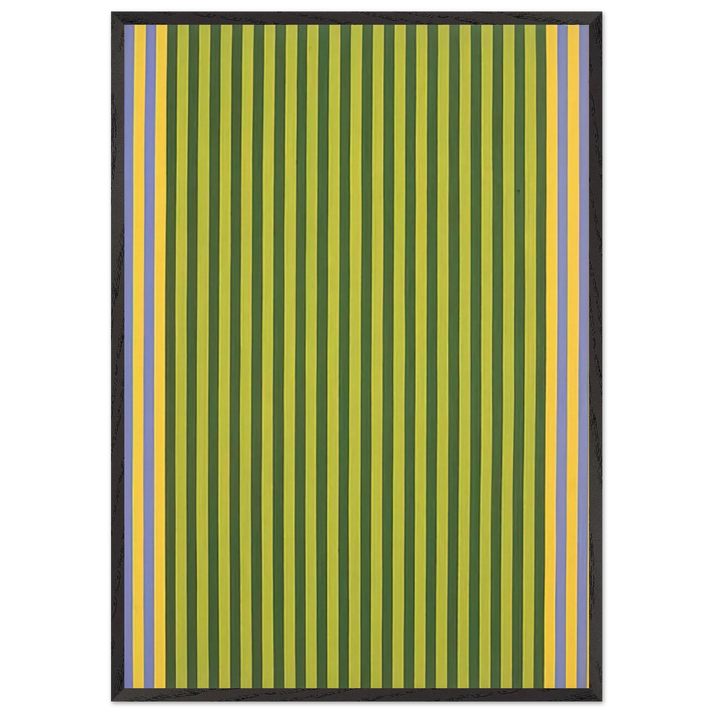
LimelightSuoni dell'erba - 1960 - Gene Davis 70x100 cm / 28x40 pollici Stampa d'arte incorniciata – Cornice in legno nero
LimelightSuoni dell'erba - 1960 - Gene Davis 70x100 cm / 28x40 pollici Stampa d'arte incorniciata – Cornice in legno nero
Impossibile caricare la disponibilità di ritiro
Limelight Sounds of Grass (1960) di Gene Davis
Vivi il vibrante ritmo dell'arte americana di metà secolo con questa stampa incorniciata di qualità museale di "Limelight Sounds of Grass" (1960) di Gene Davis. Opera fondamentale della Washington Color School, questo dipinto esemplifica l'uso pionieristico da parte di Davis delle strisce verticali di colore per creare composizioni ritmiche, quasi musicali. Le tonalità audaci e contrastanti evocano l'energia dinamica del jazz e dell'espressionismo astratto, trasformando qualsiasi spazio in una galleria di moderna raffinatezza.
RedKalion presenta questa riproduzione d'archivio su carta premium 250 gsm (110 lb) opaca, non patinata, garantendo una fedeltà cromatica ricca e una finitura bianca naturale al tatto. La stampa è elegantemente incorniciata in una cornice in legno nero spessa 20 mm (0,79") realizzata con legno di quercia e frassino di provenienza responsabile, offrendo un profilo più ampio e sostanziale rispetto alle cornici classiche. Protetta da plexiglass infrangibile, questa opera d'arte pronta da appendere include un kit di montaggio per una visualizzazione immediata, permettendoti di elevare la tua casa o il tuo ufficio con un pezzo di storia dell'arte che perdura.
- Artista: Gene Davis (americano, 1920–1985)
- Anno: 1960
- Dimensioni: 70x100 cm / 28x40 pollici (incorniciato)
- Cornice: Cornice in legno nero (spessore 20 mm, legno di quercia e frassino di provenienza responsabile)
- Carta: Carta opaca non patinata d'archivio di qualità museale, 250 gsm (110 lb), spessore 0,29 mm
- Protezione: Plexiglass infrangibile
- Sostenibilità: Materiali certificati FSC o equivalenti
- Pronto da appendere: Include kit di montaggio
In qualità di curatore affidabile di stampe d'arte, RedKalion garantisce che ogni dettaglio — dalla carta certificata FSC alla cornice di precisione — risponda agli standard archivistici più elevati, rendendo questo un investimento in bellezza senza tempo.

Discover Unlimited Art Possibilities
At RedKalion, you can find virtually any artwork from any artist, available in a wide range of sizes to perfectly match your space.
If you didn’t find what you’re looking for, contact us at support@redkalion.com . We will source any artwork and produce it in any size and format you need, including art prints, posters, canvas, framed pieces, framed canvas, and more.
For dedicated art enthusiasts, we also offer handcrafted replicas of any artwork, carefully painted by highly skilled artists using traditional techniques.
For custom requests, contact us at support@redkalion.com .
Qual è il significato storico di "Limelight Sounds of Grass" di Gene Davis?
Realizzato nel 1960, quest'opera è un esempio chiave della Washington Color School, in cui Gene Davis utilizzava strisce verticali per esplorare la teoria del colore e il ritmo, riflettendo l'influenza del movimento dell'espressionismo astratto sull'arte americana del dopoguerra.
Quali sono le dimensioni esatte e i dettagli della cornice di questa stampa d'arte?
La stampa incorniciata misura 70x100 cm (28x40 pollici), con una cornice in legno nero spesso 20 mm (0,79 pollici) realizzata con quercia e frassino provenienti da fonti responsabili, più larga delle cornici standard per un effetto più imponente.
Che tipo di carta viene utilizzata per questa riproduzione di qualità museale?
Viene utilizzata carta opaca non patinata da 250 gsm (110 lb) di qualità museale archivistica, con uno spessore di 0,29 mm (11,4 mil), che garantisce durata e una riproduzione dei colori vivida per esposizioni di arte raffinata.
Come viene spedita e installata questa stampa d'arte incorniciata?
Questa stampa pronta da appendere include un kit di montaggio ed è spedita in modo sicuro, consentendo un facile fissaggio diretto al muro senza bisogno di ulteriori cornici, ideale per una decorazione domestica senza complicazioni.
Questa stampa d'arte è archivistica e sostenibile?
Sì, utilizza carta certificata FSC o equivalente e una protezione in plexiglass infrangibile, progettata per garantire una qualità archivistica a lungo termine e responsabilità ambientale.
In che modo la tecnica di Gene Davis in quest'opera crea un ritmo visivo?
Davis disponeva strisce verticali contrastanti di precise larghezze e colori, creando un effetto pulsante e musicale che coinvolge gli spettatori attraverso vibrazioni ottiche e armonia astratta.
Cosa rende questa cornice diversa dalle cornici d'arte tipiche?
La cornice è spessa 20 mm (0,79 pollici) e larga, realizzata con quercia e frassino provenienti da fonti responsabili, offrendo un aspetto più robusto e premium rispetto alle cornici classiche da 14 mm (0,55 pollici).