
MERZBILD ALF 1939 - Kurt Schwitters 70x100 cm / 28x40 pollici Stampa d'Arte Incorniciata – Cornice in Legno Nero
MERZBILD ALF 1939 - Kurt Schwitters 70x100 cm / 28x40 pollici Stampa d'Arte Incorniciata – Cornice in Legno Nero
Impossibile caricare la disponibilità di ritiro
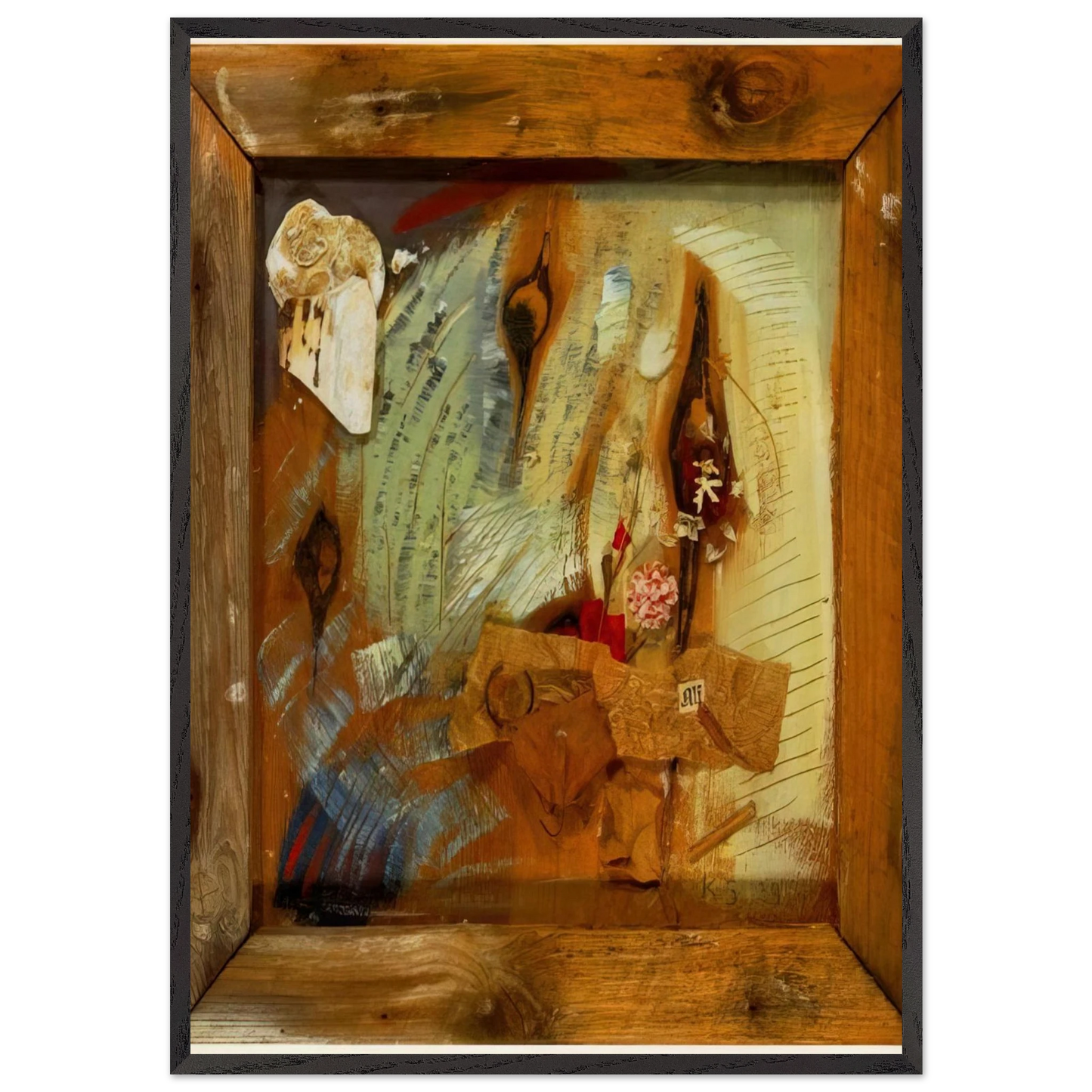
MERZBILD ALF 1939 di Kurt Schwitters
Immergiti nell'innovazione radicale di Kurt Schwitters con questa stampa d'arte incorniciata di qualità museale MERZBILD ALF 1939. Un'opera fondamentale della sua pionieristica serie Merz, questo capolavoro di collage ridefinisce i confini artistici incorporando oggetti trovati ed ephemera stampati in una composizione astratta dinamica. L'approccio Dadaista di Schwitters sfida l'estetica convenzionale, creando un pezzo ricco di texture e stimoli che cattura lo spirito caotico dell'Europa prebellica. Questa riproduzione archivistica preserva ogni dettaglio intricato dei materiali stratificati e delle forme espressive dell'originale, offrendo un collegamento tangibile alla storia dell'arte d'avanguardia del XX secolo.
Realizzata con maestria da RedKalion, questa stampa d'arte fine è presentata in una sofisticata cornice nera in legno di quercia e frassino provenienti da fonti responsabili. La cornice misura 20 mm (0,79") di spessore e larghezza, offrendo una presenza sostanziale degna di una galleria che ne esalta l'impatto. È pronta per essere appesa grazie al kit di montaggio incluso, consentendo un'immediata esposizione nella tua casa o ufficio.
La stampa stessa è prodotta su carta premium per museo di qualità archivistica da 250 gsm (110 lb), opaca, non patinata, bianca naturale, garantendo un'eccezionale fedeltà cromatica e durata. Con uno spessore di 0,29 mm (11,4 mils), questa carta certificata FSC offre un substrato ideale per la riproduzione di opere d'arte. La protezione è assicurata da un vetro acrilico infrangibile che preserva la stampa mantenendo la chiarezza. Arricchisci il tuo spazio con questo capolavoro archivistico che perdura, unendo significato storico e artigianato contemporaneo.
Discover Unlimited Art Possibilities
At RedKalion, you can find virtually any artwork from any artist, available in a wide range of sizes to perfectly match your space.
If you didn’t find what you’re looking for, contact us at support@redkalion.com . We will source any artwork and produce it in any size and format you need, including art prints, posters, canvas, framed pieces, framed canvas, and more.
For dedicated art enthusiasts, we also offer handcrafted replicas of any artwork, carefully painted by highly skilled artists using traditional techniques.
For custom requests, contact us at support@redkalion.com .
Qual è il significato storico di MERZBILD ALF 1939 di Kurt Schwitters?
MERZBILD ALF 1939 è un'opera chiave della serie Merz di Kurt Schwitters, che esemplifica la sua tecnica dadaista di collage utilizzando oggetti trovati per sfidare le forme d'arte tradizionali durante l'epoca pre-bellica della Seconda guerra mondiale.
Quali materiali vengono utilizzati per la cornice di questa stampa d'arte di Kurt Schwitters?
La cornice è realizzata in legno di quercia e frassino provenienti da fonti responsabili, con uno spessore di 20 mm, ed è fornita già pronta per appendere con un kit per una facile esposizione a parete della vostra riproduzione di qualità museale.
Quali sono le specifiche della carta utilizzata per questa stampa d'arte di qualità?
Questa stampa utilizza carta opaca non patinata di colore bianco naturale da 250 gsm (110 lb), con uno spessore di 0,29 mm, garantendo durata e una riproduzione dei colori premium per il vostro pezzo d'arte incorniciato.
Come viene protetta la stampa in questa riproduzione d'arte incorniciata?
La stampa è protetta da un vetro acrilico infrangibile che offre una protezione chiara mantenendo l'integrità visiva di questa riproduzione di grado archivistico di Kurt Schwitters.
La carta utilizzata per questa stampa d'arte è ecologicamente sostenibile?
Sì, la carta è certificata FSC o equivalente, rendendo questa stampa d'arte fine sostenibile una scelta ecologica per la decorazione della vostra casa o ufficio.
Cosa si intende con 'Merz' nei titoli delle opere di Schwitters?
'Merz' era un termine coniato da Kurt Schwitters per descrivere la sua arte basata su collage che incorporava materiali di uso quotidiano, riflettendo il suo approccio d'avanguardia alla composizione astratta nei primi del Novecento.
Come si confronta la dimensione della cornice con le cornici standard?
Questa cornice ha uno spessore di 20 mm, che è più ampio rispetto alla classica cornice da 14 mm, offrendo un aspetto più sostanzioso e moderno per la vostra stampa d'arte di qualità.