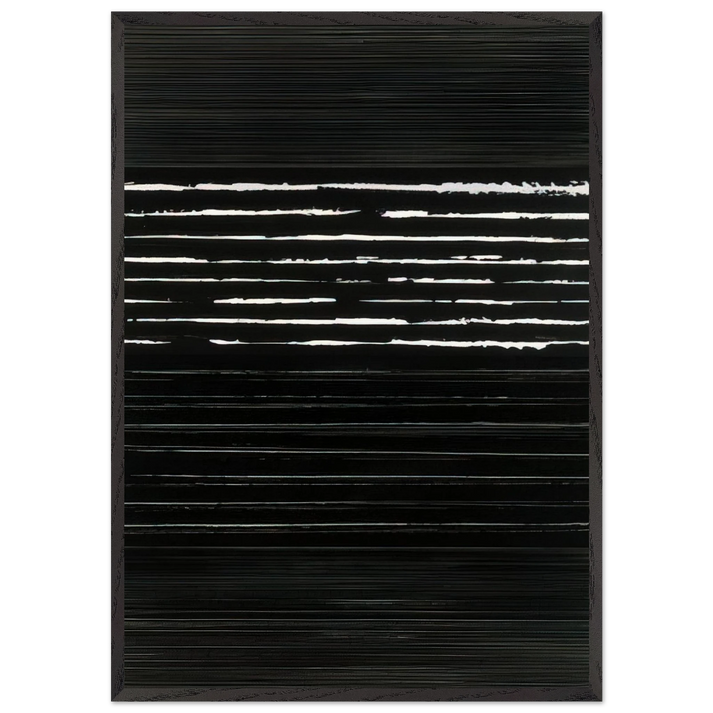
Pittura 324 x 181 cm 14 marzo 1999 Polittico - 1999 - Pierre Soulages Cornice per stampa d'arte in legno nero – 70x100 cm / 28x40 pollici
Pittura 324 x 181 cm 14 marzo 1999 Polittico - 1999 - Pierre Soulages Cornice per stampa d'arte in legno nero – 70x100 cm / 28x40 pollici
Impossibile caricare la disponibilità di ritiro
Peinture 324 x 181 cm 14 marzo 1999 Polittico - 1999 - Pierre Soulages
Immergiti nelle profonde profondità della monumentale "Peinture 324 x 181 cm 14 marzo 1999 Polittico" con questa riproduzione di qualità museale. Creato nel 1999, questo polittico (opera a più pannelli) esemplifica l'esplorazione di tutta una vita di Soulages di "Outrenoir" (Oltre il Nero), dove trascende il semplice colore per scolpire la luce stessa attraverso superfici nere textureggiate. Questo pezzo cattura l'energia grezza e meditativa della sua maestria tarda, invitando alla contemplazione e imponendo la sua presenza in qualsiasi spazio.
RedKalion presenta questo capolavoro d'archivio come una stampa d'arte incorniciata da 70x100 cm / 28x40 pollici, realizzata con cura per onorare la visione dell'artista. La nostra riproduzione utilizza carta da museo di qualità archivistica da 250 gsm (110 lb) con finitura opaca non patinata che garantisce longevità e un'autentica esperienza tattile. La stampa è protetta da plexiglass infrangibile ed è elegantemente incorniciata in una cornice in legno nero realizzata con legno di quercia e frassino provenienti da fonti responsabili, con uno spessore di 20 mm per una presentazione sostanziale degna di una galleria.
Eleva il tuo ambiente con una stampa d'arte che incarna l'autorità dell'astrazione del XX secolo. Questo pezzo pronto da appendere include un kit di montaggio, permettendoti di integrare senza sforzo l'iconica opera di Soulages nella tua casa o ufficio, dove durerà come testimonianza dell'innovazione artistica.

Discover Unlimited Art Possibilities
At RedKalion, you can find virtually any artwork from any artist, available in a wide range of sizes to perfectly match your space.
If you didn’t find what you’re looking for, contact us at support@redkalion.com . We will source any artwork and produce it in any size and format you need, including art prints, posters, canvas, framed pieces, framed canvas, and more.
For dedicated art enthusiasts, we also offer handcrafted replicas of any artwork, carefully painted by highly skilled artists using traditional techniques.
For custom requests, contact us at support@redkalion.com .
Quali sono le dimensioni di questa stampa incorniciata di Pierre Soulages?
Questa riproduzione di qualità museale misura 70x100 cm (28x40 pollici) in una cornice nera in legno, pronta per essere appesa direttamente al muro con il kit incluso.
Che tipo di carta viene utilizzata per questa stampa d'arte?
Utilizziamo carta di qualità archivistica museale da 250 gsm (110 lb) con finitura opaca e non patinata, garantendo durata e un aspetto autentico per questa riproduzione del polittico di Pierre Soulages.
Come viene protinta la stampa all'interno della cornice?
La stampa è protetta da un vetro acrilico infrangibile, che offre una protezione duratura mantenendo la chiarezza per questa opera maestra di Soulages Outrenoir.
La cornice è di provenienza sostenibile?
Sì, la cornice in legno nero è realizzata con legno di quercia e frassino provenienti da fonti responsabili, riflettendo il nostro impegno per la qualità e la sostenibilità nelle stampe d'arte.
Cosa rende questa una riproduzione di qualità museale?
Questa riproduzione utilizza carta certificata FSC e tecniche di stampa precise per catturare la texture e la profondità dell'originale di Soulages Peinture 324 x 181 cm 14 marzo 1999 Polittico.
Qual è il significato di "Outrenoir" nell'opera di Soulages?
"Outrenoir" (Oltre il Nero) si riferisce alla tecnica di Soulages di utilizzare la pittura nera per riflettere e manipolare la luce, creando superfici dinamiche e testurate che evocano emozioni e profondità in opere come questo polittico.
Perché questa opera è chiamata polittico?
Un polittico è un'opera d'arte a più pannelli; questa opera di Soulages del 1999 utilizza questo formato per esplorare le variazioni nella texture del nero e nella luce all'interno della sua composizione, accentuandone la presenza monumentale.