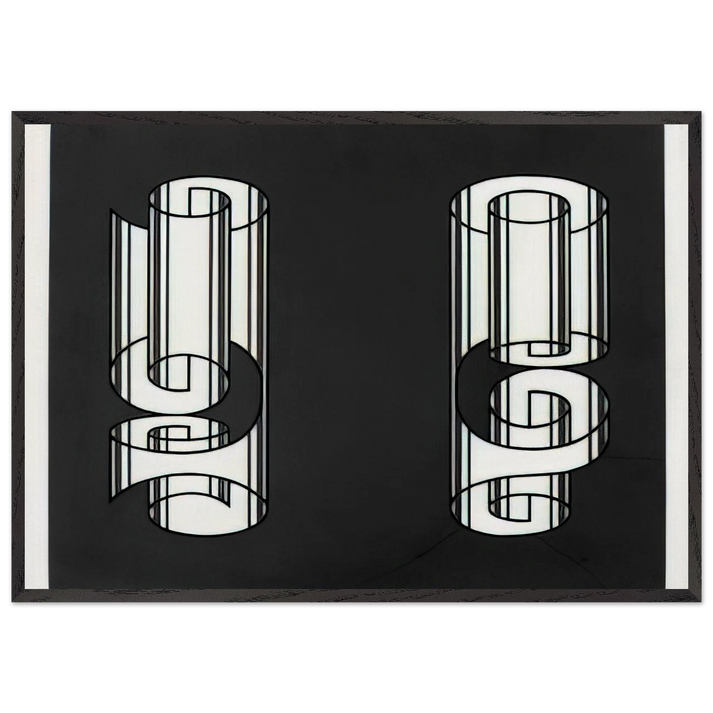
ROTOLATO MALE 1931 - Josef Albers 70x100 cm / 28x40 pollici Stampa d'Arte Incorniciata – Cornice in Legno Nero
ROTOLATO MALE 1931 - Josef Albers 70x100 cm / 28x40 pollici Stampa d'Arte Incorniciata – Cornice in Legno Nero
Impossibile caricare la disponibilità di ritiro
Rolled Wrongly 1931 di Josef Albers: Un Capolavoro Geometrico
Immergiti nella visione audace e pionieristica del maestro del Bauhaus Josef Albers con questa stampa d'arte incorniciata di qualità museale Rolled Wrongly 1931. Quest'opera iconica esemplifica l'esplorazione rivoluzionaria di Albers della teoria del colore e dell'astrazione geometrica, dove forme precise e contrasti dinamici creano un ritmo visivo che sfida la percezione. Come figura chiave dell'arte moderna del XX secolo, Albers' Omaggio al Quadrato — serie preceduta da opere come questa — ha ridefinito il modo in cui viviamo l'interazione dei colori, rendendo questo pezzo un pilastro della storia dell'arte astratta.
RedKalion presenta questa riproduzione archivistica su carta di qualità museale opaca non patinata da 250 gsm (110 lb), garantendo una fedeltà eccezionale di dettagli e colori che onora la tecnica meticolosa di Albers. La stampa è elegantemente incorniciata in una cornice in legno nero spessa 20 mm (0,79") realizzata con legno di quercia e frassino di provenienza responsabile, offrendo un profilo più ampio e sostanziale rispetto alle cornici classiche da 14 mm per una presenza più marcata. Protetta da plexiglass infrangibile e corredata di kit pronto per l'installazione, questa stampa d'arte incorniciata arriva completamente pronta per elevare qualsiasi ambiente con il suo fascino senza tempo e intellettuale.
- Cornice: Cornice in legno nero (spessore/larghezza 20 mm) in legno di quercia e frassino di provenienza responsabile
- Carta: Carta di qualità museale opaca non patinata da 250 gsm (110 lb), spessore 0,29 mm, bianco naturale
- Protezione: Plexiglass infrangibile per durabilità e chiarezza
- Sostenibilità: Materiali certificati FSC o equivalenti sostenibili
- Praticità: Incluso kit di installazione, pronto per essere appeso direttamente al muro
Eleva il tuo spazio con un capolavoro archivistico che dura nel tempo, unendo significato storico-artistico e artigianato premium per collezionisti e appassionati di design.

Discover Unlimited Art Possibilities
At RedKalion, you can find virtually any artwork from any artist, available in a wide range of sizes to perfectly match your space.
If you didn’t find what you’re looking for, contact us at support@redkalion.com . We will source any artwork and produce it in any size and format you need, including art prints, posters, canvas, framed pieces, framed canvas, and more.
For dedicated art enthusiasts, we also offer handcrafted replicas of any artwork, carefully painted by highly skilled artists using traditional techniques.
For custom requests, contact us at support@redkalion.com .
Qual è il significato storico di "Rolled Wrongly 1931" di Josef Albers?
"Rolled Wrongly 1931" è un'opera fondamentale dell'artista del Bauhaus Josef Albers, che mostra la sua prima esplorazione dell'astrazione geometrica e della teoria del colore che in seguito avrebbe definito la sua iconica serie "Homage to the Square", influenzando l'arte moderna del XX secolo.
Come migliora questa cornice la stampa d'arte di Josef Albers?
La cornice in legno nero spesso 20 mm (0,79"), realizzata con legno di quercia e frassino provenienti da fonti responsabili, offre un bordo più ampio e sostanziale rispetto alle cornici standard, aggiungendo presenza e protezione a questa stampa d'arte geometrica di qualità museale.
Che tipo di carta viene utilizzata per questa riproduzione d'arte?
Questa stampa utilizza carta opaca, non rivestita, bianca naturale di qualità museale da 250 gsm (110 lb), spessa 0,29 mm, garantendo accuratezza dei colori e durata per una stampa incorniciata d'arte di Josef Albers di qualità premium.
Questa stampa incorniciata è pronta per essere appesa?
Sì, include un kit di montaggio ed è pronta per essere appesa direttamente al muro, offrendo comodità per esporre immediatamente la vostra opera geometrica di Josef Albers.
Come viene protetta la stampa nella cornice?
Un plexiglass infrangibile protegge la stampa dai danni mantenendo la chiarezza, garantendo che la vostra stampa d'arte di Josef Albers rimanga in condizioni perfette nella cornice in legno nero.
Cosa rende questa una stampa d'arte sostenibile?
Utilizza materiali sostenibili certificati FSC o equivalenti, inclusa la carta e la cornice, in linea con pratiche eco-friendly per una riproduzione responsabile di Josef Albers.
Puoi descrivere la tecnica di Josef Albers in quest'opera?
Albers impiegava forme geometriche precise e colori stratificati per studiare gli effetti ottici, un metodo che si evolse nei suoi esperimenti sistematici sul colore, rendendo "Rolled Wrongly 1931" un esempio chiave del suo approccio analitico all'arte astratta.