
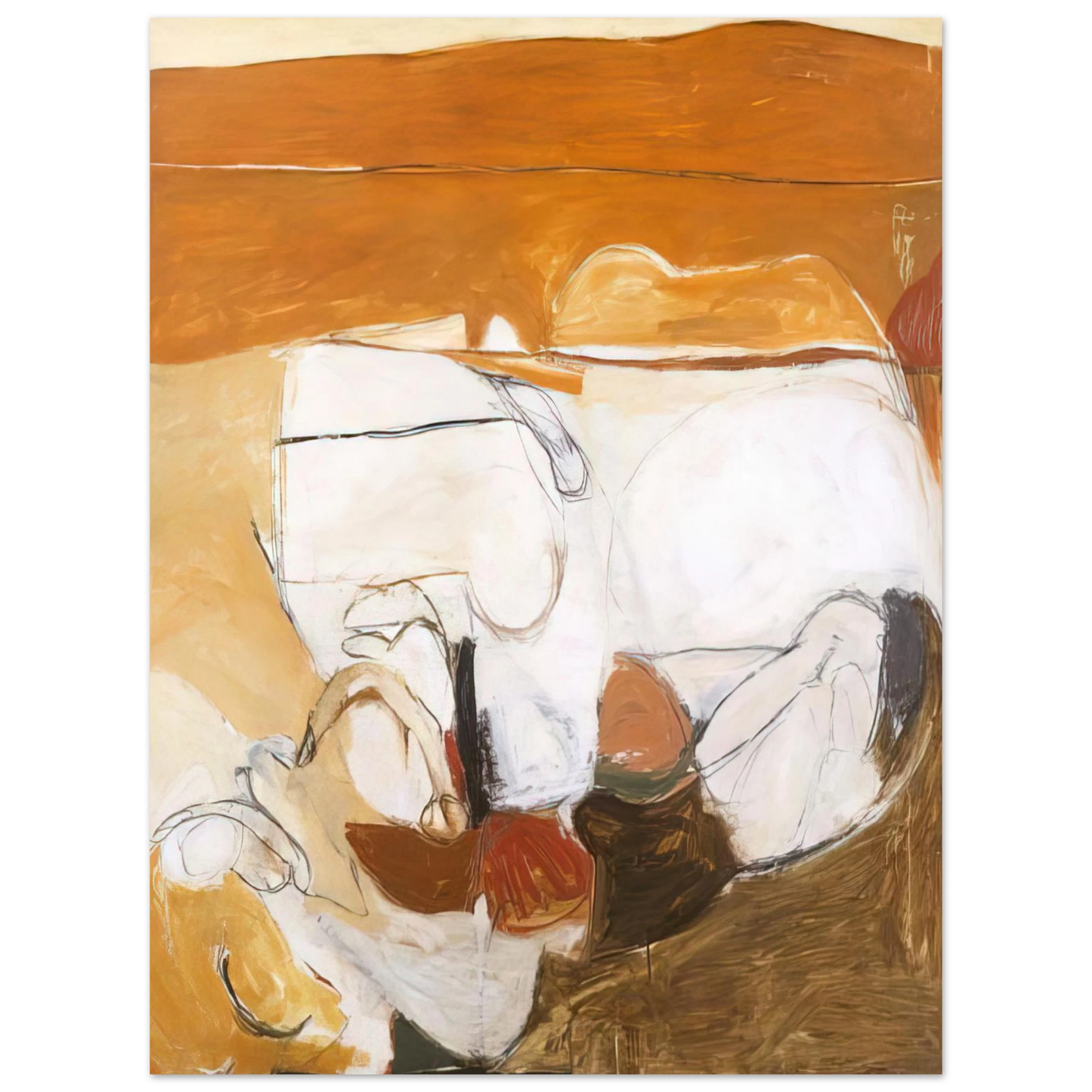
What is the significance of the 1961 period for Brett Whiteley?
1961 was Whiteley's breakthrough year in London. It marked his shift toward organic abstraction and international recognition, leading to him becoming the youngest artist to have work acquired by the Tate Gallery at that time.
What defines the 'warm' palette in this specific artwork?
The palette consists of earth tones, ambers, and ochres. These colors reflect Whiteley's fascination with bodily forms and the Australian landscape, translated through the lens of European abstract expressionism.
What type of paper is used for this fine art poster?
We use Master's Edition archival paper. It is a 250 gsm (110 lb) natural white paper with a matte, uncoated finish, specifically designed to meet museum-grade reproduction standards.
Is the paper archival and fade-resistant?
Yes. The paper is acid-free with a pH value above 7. This prevents the paper from yellowing or becoming brittle, ensuring the artwork maintains its vibrancy for decades.
What are the exact dimensions and thickness of the print?
This print measures 75x100 cm (30x40 inches). It has a thickness of 0.29 mm (11.4 mils), providing a premium, durable feel suitable for high-end framing.
How is the print shipped and fulfilled?
Each order is printed and shipped on demand with no minimum requirements. We use specialized protective packaging to ensure your museum-quality print arrives in pristine condition.
Is the production process environmentally conscious?
Absolutely. We use FSC-certified paper, which guarantees that the materials are sourced from responsibly managed forests that provide environmental, social, and economic benefits.