
Discover Unlimited Art Possibilities
At RedKalion, you can find virtually any artwork from any artist, available in a wide range of sizes to perfectly match your space.
If you didn’t find what you’re looking for, contact us at support@redkalion.com . We will source any artwork and produce it in any size and format you need, including art prints, posters, canvas, framed pieces, framed canvas, and more.
For dedicated art enthusiasts, we also offer handcrafted replicas of any artwork, carefully painted by highly skilled artists using traditional techniques.
For custom requests, contact us at support@redkalion.com .
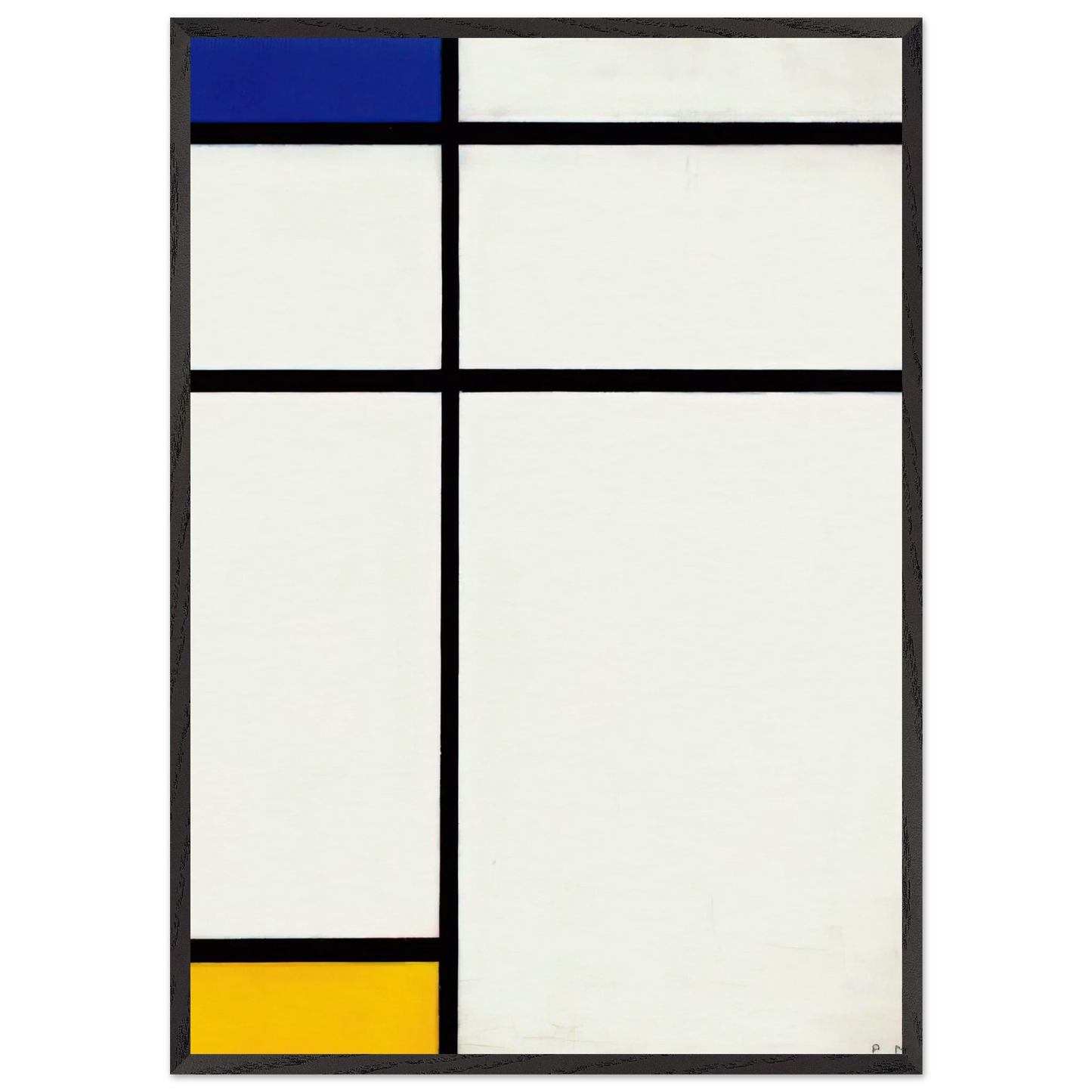
What is Piet Mondrian's "Composition III with Blue Yellow and White"?
This museum-quality art print features Piet Mondrian's "Composition III with Blue Yellow and White," a classic example of his Neoplasticism style, showcasing abstract geometric forms and primary colors.
What are the paper specifications for this Piet Mondrian print?
The fine art print uses 250 gsm (110 lb) archival, matte, uncoated, natural white paper with a thickness of 0.29 mm (11.4 mils) for superior quality.
What materials are used for the frame and protection?
The frame is constructed from responsibly sourced oak and ash wood (20mm thick), and the print is protected by shatterproof plexiglass.
Is this Piet Mondrian artwork ready to hang upon arrival?
Yes, this framed art print comes with a pre-attached hanging kit, making it ready to hang right out of the box.
How long will this archival Piet Mondrian print last?
Utilizing archival paper and museum-quality printing techniques, this fine art reproduction is designed for exceptional longevity and colorfastness.
What is the significance of Mondrian's use of primary colors and black lines?
Mondrian believed primary colors and black lines represented universal truths and spiritual harmony, seeking a pure, abstract visual language in his Neoplasticism works.
Can you tell me more about the specific 'Composition III with Blue Yellow and White'?
This specific composition, likely from the late 1920s or early 1930s, embodies Mondrian's mature style, balancing dynamic tension with static equilibrium through precise geometric arrangements.