
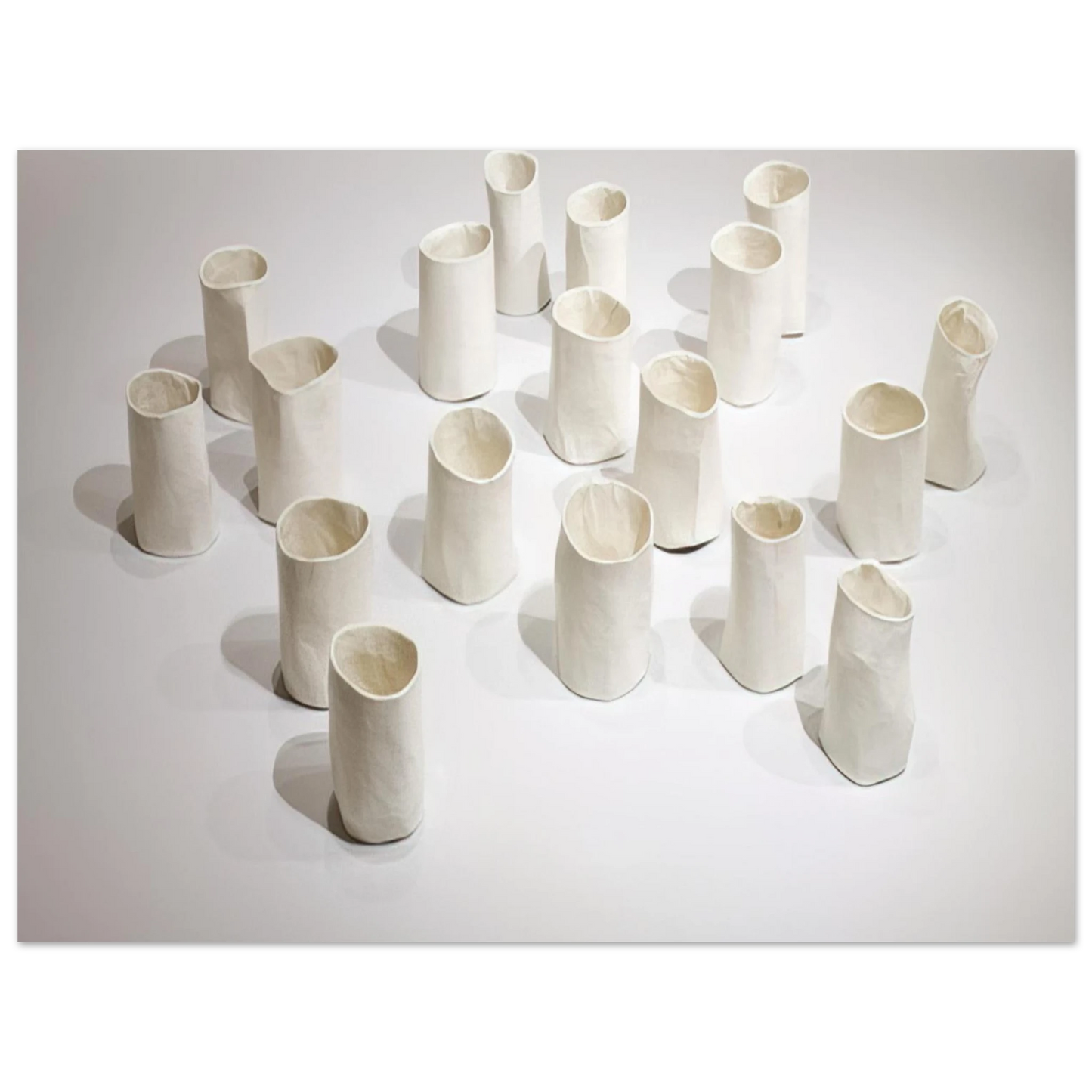
What is the significance of Eva Hesse's REPETITION NINETEEN I (1967)?
This artwork is a key Postminimalist piece by Eva Hesse, exploring seriality and organic form through nineteen handcrafted units, bridging Minimalism with process art in 1960s New York.
What are the dimensions of this fine art print?
The print measures 75x100 cm (30x40 inches), matching the original scale for an authentic museum-quality reproduction display.
What type of paper is used for this archival print?
It's printed on Master's Edition archival paper, featuring a matte, uncoated finish and natural white hue for a luxurious texture and acid-free longevity.
How durable is this museum-quality reproduction?
With acid-free paper (pH above 7), 250 gsm weight, and 0.29 mm thickness, it resists yellowing and ensures lasting vibrancy for years.
Is this print eco-friendly and how is it shipped?
Yes, it uses FSC-certified paper and is printed on demand with no minimum orders, shipped directly for sustainable fulfillment.
Why did Eva Hesse use repetition in this artwork?
Hesse used repetition to subvert Minimalist rigidity, introducing handcrafted variations that evoke human imperfection and psychological depth.
What materials did Hesse originally use for REPETITION NINETEEN I?
She used fiberglass and polyester resin, creating cylindrical forms that blend industrial materials with organic, tactile qualities.