
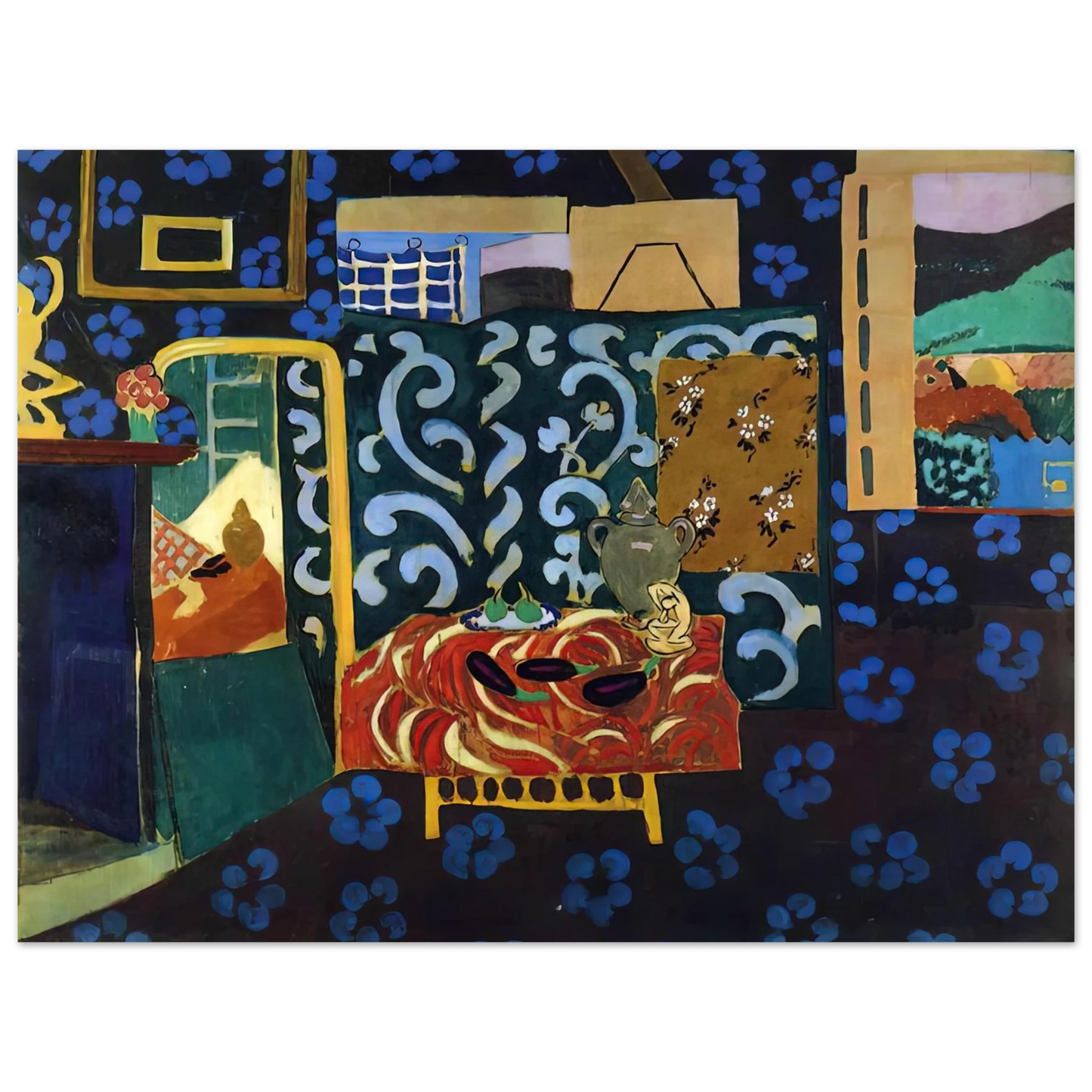
What is the historical significance of Henri Matisse's "Still Life with Aubergines"?
Painted in 1911, this work exemplifies Matisse's Fauvist period, characterized by bold, non-naturalistic colors and simplified forms that challenged traditional art, making it a key piece in modern art history for its expressive use of hue and composition.
What are the dimensions of this fine art print?
The print measures 75x100 cm (30x40 inches), matching the original artwork's scale for an authentic museum-quality reproduction that fits standard framing options.
What type of paper is used for this museum-quality reproduction?
It's printed on Master's Edition archival paper, a matte, uncoated, natural white (off-white) paper that provides a luxurious texture and is acid-free to ensure long-lasting color vibrancy and prevent yellowing.
How durable and archival is this art print?
With acid-free properties (pH above 7), 250 gsm weight, and 0.29 mm thickness, this print is designed for archival longevity, resisting fading and deterioration to maintain its quality over time.
Is the paper sustainable and eco-friendly?
Yes, the paper is FSC-certified, ensuring it comes from responsibly managed forests, aligning with RedKalion's commitment to sustainable fine art prints.
How is this print shipped and are there minimum order requirements?
We offer printed and shipped on demand with no minimum orders, providing flexible fulfillment for your premium art reproduction needs.
What makes Matisse's use of color in this artwork unique?
Matisse employed intense, arbitrary colors to evoke emotion rather than realism, a hallmark of Fauvism that influenced later modern art movements, with aubergines rendered in vivid purples and blues for dramatic effect.