
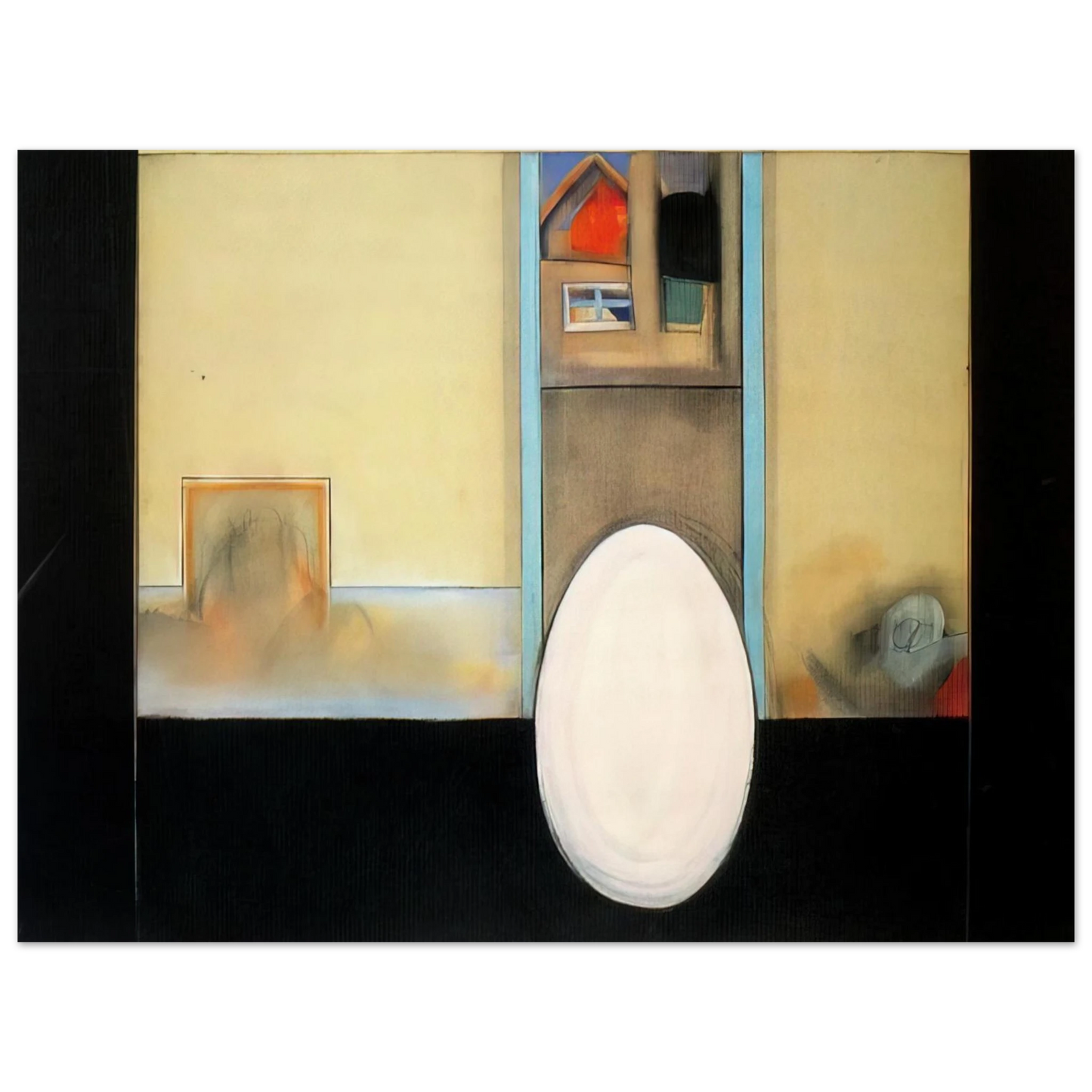
What is the historical significance of Miriam Schapiro's "The House" in feminist art?
"The House" is a seminal work from the 1970s Feminist Art movement, where Schapiro used her "femmage" technique to blend geometric abstraction with domestic symbols, challenging gender norms and elevating women's creative expression in art history.
What details make this fine art poster a museum-quality reproduction?
This reproduction captures Schapiro's original details on Master's Edition archival paper with a matte finish, using acid-free, FSC-certified materials to ensure longevity and a premium, luxurious texture for display.
What are the specifications of the paper used for this fine art print?
The print uses Master's Edition archival paper: 250 gsm (110 lb) weight, 0.29 mm (11.4 mils) thickness, matte uncoated finish in natural white, acid-free (pH above 7) to prevent yellowing, and FSC-certified for sustainability.
How is this Miriam Schapiro poster shipped and what are the fulfillment options?
We offer no minimum orders, with this feminist art poster printed and shipped on demand using secure packaging to ensure it arrives in pristine condition, ready for framing and display.
How long will this archival fine art print last without fading or damage?
Made with acid-free, pH-balanced paper, this print resists yellowing and fading, ensuring the vibrant colors and details of Schapiro's "The House" endure for decades as a lasting art investment.
What is Miriam Schapiro's "femmage" technique featured in this artwork?
Schapiro's "femmage" combines collage with fabric and paint, integrating domestic materials into high art to critique and celebrate women's roles, adding rich texture and symbolic depth to "The House".
Why is "The House" considered a key piece in geometric abstraction within feminist art?
"The House" merges clean geometric forms with household imagery, using abstraction to reinterpret domestic spaces, making it a pivotal example of how feminist artists reshaped modernist styles.