
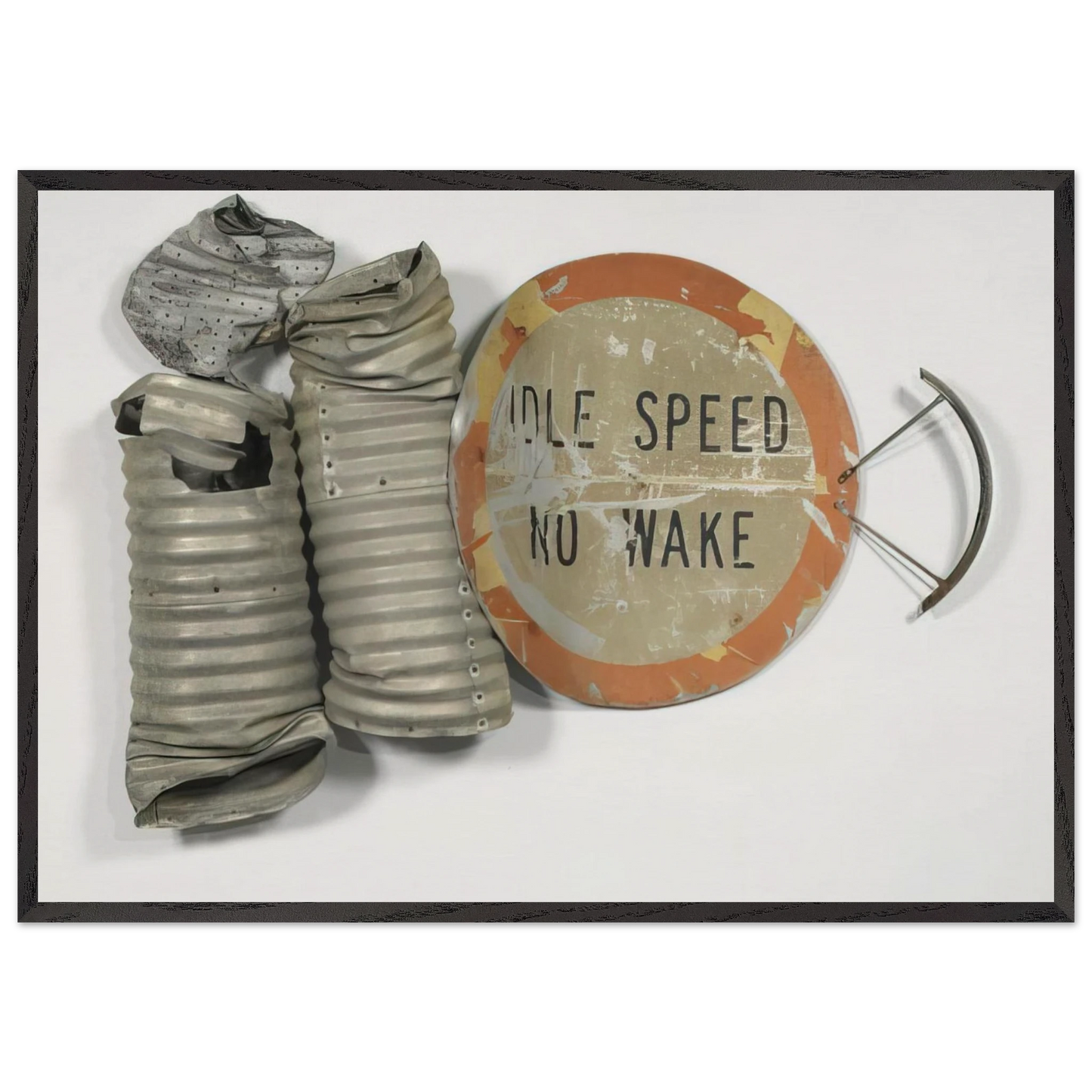
What is the historical significance of Robert Rauschenberg's "NO WAKE GLUT 1986"?
"NO WAKE GLUT 1986" is part of Rauschenberg's Glut series, where he welded found metal objects to critique 1980s consumerism and environmental issues, reflecting his Neo-Dada and Pop Art innovations in postmodern fine art.
What materials are used in this framed art print?
This museum-quality reproduction uses 250 gsm archival paper with a matte finish, a black wooden frame from responsibly sourced oak and ash, and shatterproof plexiglass for protection in a ready-to-hang fine art print.
Is this print ready to hang upon delivery?
Yes, this framed art print includes a hanging kit and is fully assembled, making it ready-to-hang directly on your wall for immediate display of your Robert Rauschenberg reproduction.
How durable and archival is the paper used?
The paper is 250 gsm, 0.29 mm thick, matte, uncoated, and archival-grade, ensuring long-lasting color fidelity and resistance to fading for a premium fine art print.
What are the frame specifications and sustainability features?
The frame is 20mm thick black wood from responsibly sourced oak and ash, with FSC-certified sustainable paper, offering a sturdier alternative to classic 14mm frames in an eco-conscious art print.
How does the Glut series reflect Rauschenberg's artistic techniques?
Rauschenberg's Glut series used welding and assemblage of discarded metal, showcasing his combine technique to blur boundaries between painting and sculpture in postmodern art.
What does "NO WAKE" signify in the context of this artwork?
"NO WAKE" references nautical signs, adding irony to the glut theme by hinting at environmental warnings amidst consumer excess in this 1986 Robert Rauschenberg piece.