

Discover Unlimited Art Possibilities
At RedKalion, you can find virtually any artwork from any artist, available in a wide range of sizes to perfectly match your space.
If you didn’t find what you’re looking for, contact us at support@redkalion.com . We will source any artwork and produce it in any size and format you need, including art prints, posters, canvas, framed pieces, framed canvas, and more.
For dedicated art enthusiasts, we also offer handcrafted replicas of any artwork, carefully painted by highly skilled artists using traditional techniques.
For custom requests, contact us at support@redkalion.com .
What is the material and finish of this Gerhard Richter aluminum print?
This print uses brushed silver Aluminum DIBOND® with a metallic finish and horizontal grain for a dynamic look, featuring a matte, glare-free finish ideal for black-and-white designs.
How thick and durable is the aluminum print?
It has a 3mm (0.12") thickness for a durable, rigid base, ensuring long-lasting quality in your fine art display.
What printing method is used for vivid colors?
We use direct print on AluDibond, which provides vivid colors and a matte finish, with unprinted areas revealing a metallic silver effect.
Is a hanging kit included with the print?
Yes, a hanging kit is included and varies by fulfillment country for easy installation of your museum-quality reproduction.
How archival and long-lasting is this print?
This archival-grade print on aluminum is designed for longevity, resisting fading and damage to maintain its premium quality over time.
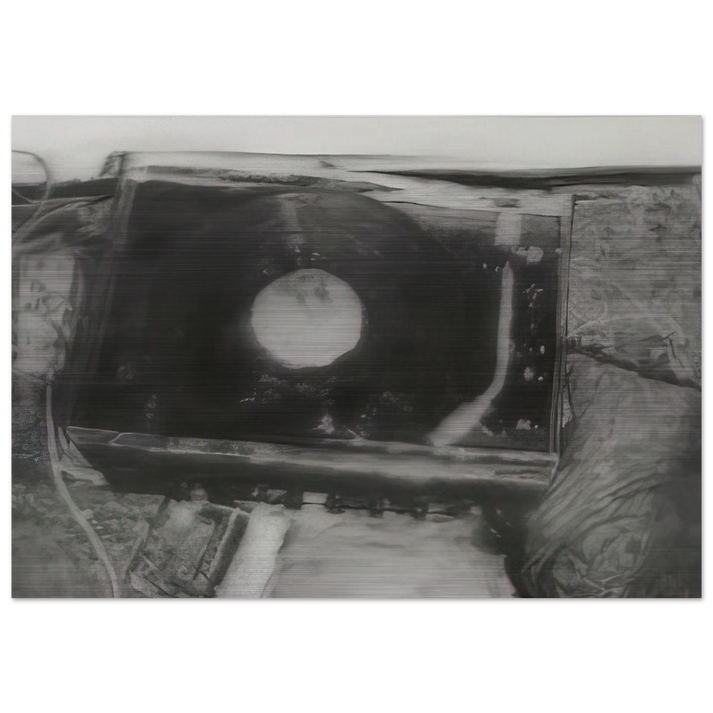
What is the historical significance of Record Player 1988?
Created in 1988, it's part of Richter's photo-painting series, exploring memory and perception through blurred imagery, reflecting post-war German art themes.
Why does Richter use blurred techniques in this artwork?
Richter's blurred technique in Record Player 1988 evokes nostalgia and ambiguity, challenging viewers' perceptions of reality and photographic truth.