
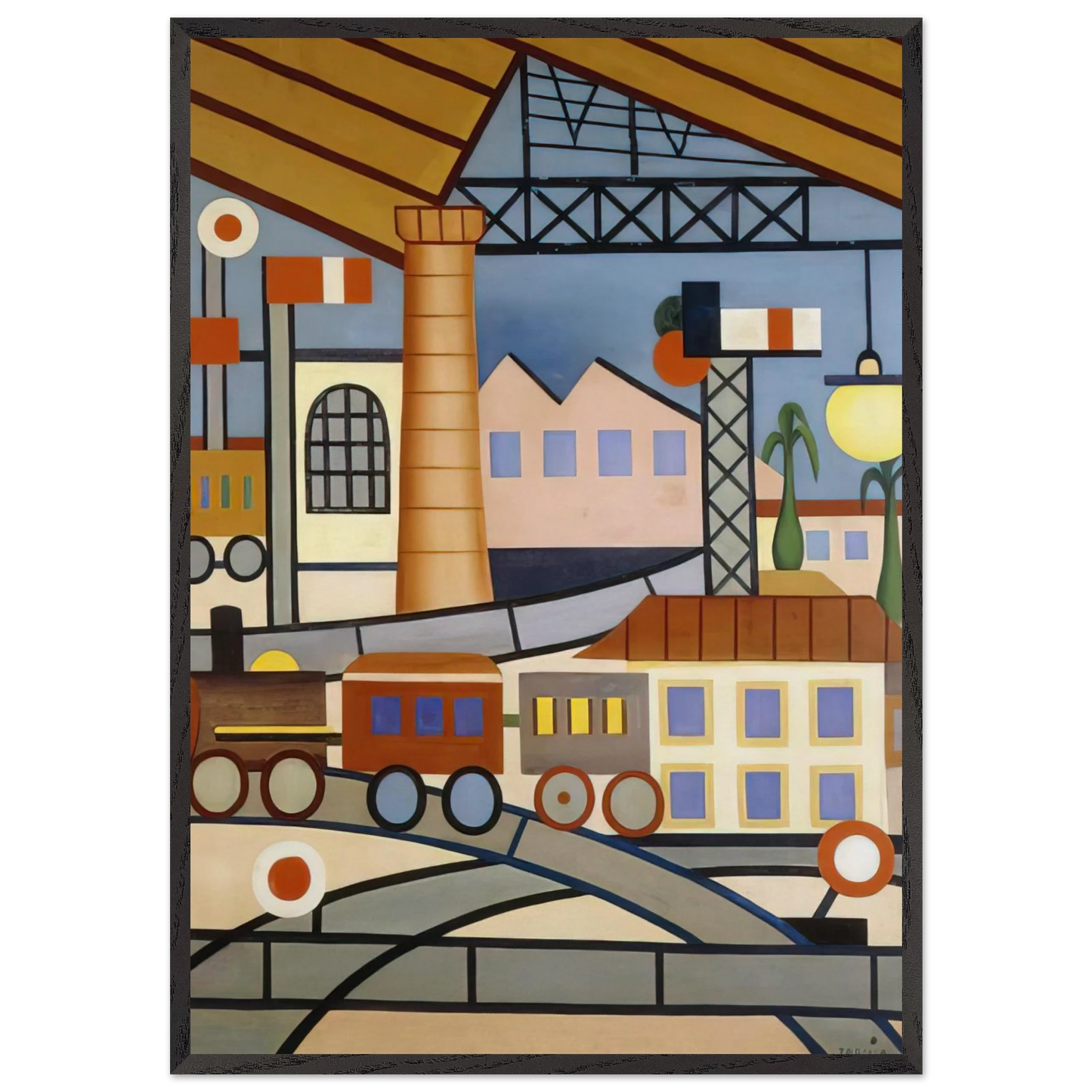
What materials are used for the 'A Gare' framed print?
We use 250 gsm archival-grade museum paper with a matte finish. The print is housed in a 20mm thick frame made from responsibly sourced oak or ash wood, protected by shatterproof plexiglass.
Is the framing material sustainably sourced?
Yes, RedKalion uses FSC-certified wood or equivalent sustainable materials for our black wooden frames, ensuring that your fine art print meets the highest environmental standards.
How is the artwork protected during shipping and display?
Each print is shielded by shatterproof plexiglass, which offers superior protection over standard glass. We ship our framed art in robust, secure packaging to ensure it arrives in pristine condition.
Does the print come ready to hang?
Absolutely. Your Tarsila do Amaral framed print includes a pre-installed hanging kit, allowing you to elevate your space immediately upon delivery without needing additional hardware.
What is the archival longevity of the paper?
Our 250 gsm natural white paper is acid-free and museum-quality. It is designed to resist yellowing and fading, ensuring your reproduction remains a vibrant centerpiece for decades.
What movement does 'A Gare' represent in Tarsila do Amaral’s career?
'A Gare' is a primary example of the 'Pau-Brasil' movement, where Amaral combined European modernism with Brazilian themes, focusing on industrialization and national identity.
Why are the colors in 'A Gare' significant to Brazilian Modernism?
Amaral utilized 'caipira' colors—pink, blue, and green—which were previously dismissed as folk art. She elevated them to high art to define a unique Brazilian aesthetic.