
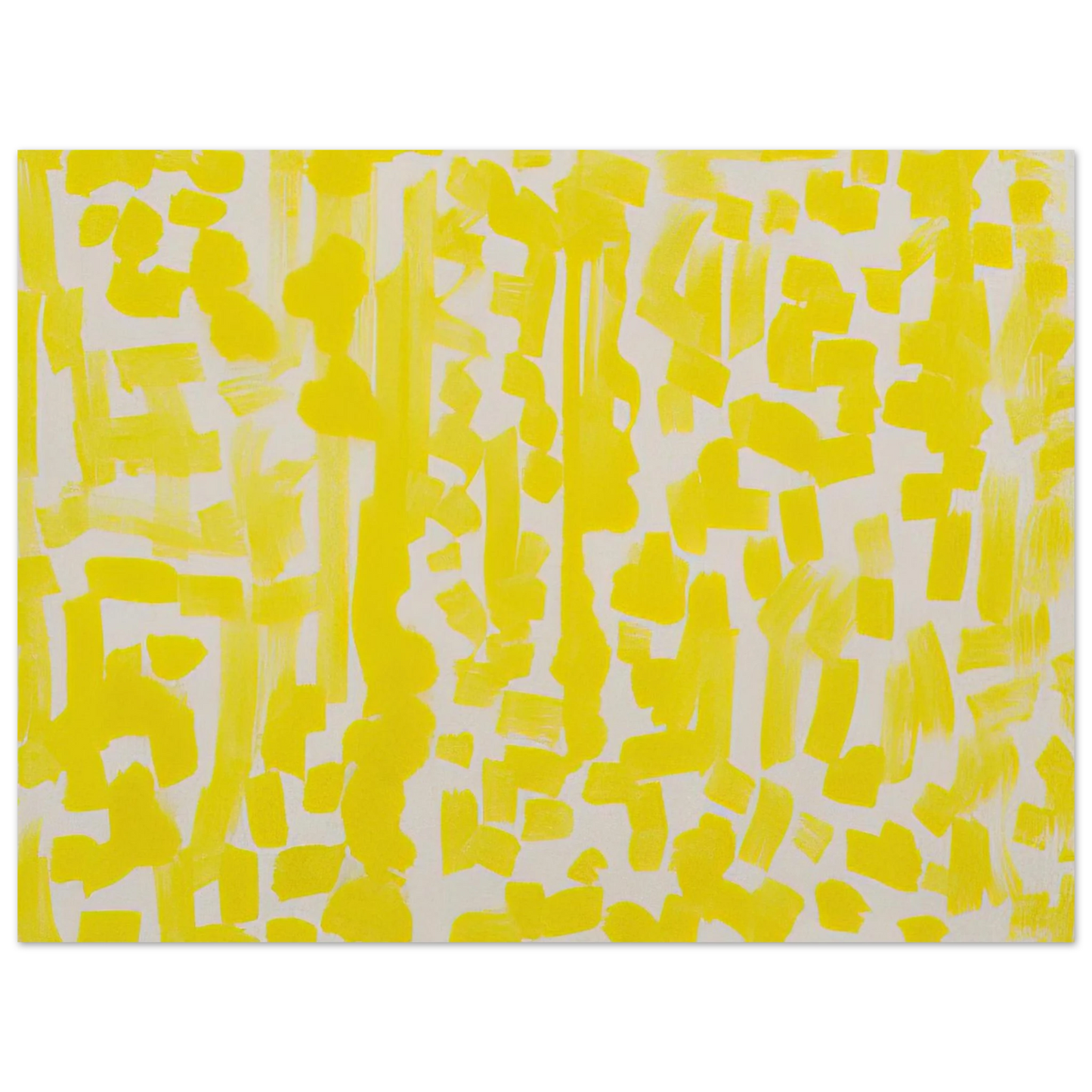
What defines the quality of this Ad Reinhardt fine art print?
Our reproductions use Master's Edition archival paper, featuring a 250 gsm weight and 0.29 mm thickness. This premium, museum-quality material provides a luxurious texture and superior durability for fine art displays.
How does the matte finish enhance the Yellow Painting?
The matte, uncoated finish eliminates glare and reflections, allowing the viewer to appreciate the subtle tonal shifts in Ad Reinhardt's color palette. It mimics the authentic texture of a gallery-original work.
Is the paper used for this reproduction sustainable?
Yes, all our prints use FSC-certified paper. This ensures that the materials for your fine art poster are sourced from responsibly managed forests that provide environmental, social, and economic benefits.
How long will this archival print last?
This print is acid-free with a pH value above 7, specifically designed to prevent yellowing and paper breakdown over time. It is an archival-grade product intended to last for generations.
How is the artwork shipped and fulfilled?
We offer print-on-demand fulfillment with no minimum orders. Each piece is carefully packaged and shipped to ensure it arrives in pristine, gallery-ready condition at your doorstep.
What is the significance of 1949 in Ad Reinhardt's career?
1949 was a transformative year for Reinhardt. It marked his shift toward a more structured, grid-like composition, serving as a bridge between high-energy abstraction and his later Minimalist philosophy.
How does this piece fit into the Abstract Expressionist movement?
While Reinhardt was a contemporary of Pollock and Rothko, his 1949 work began to reject their 'emotionalism' in favor of 'pure' art, emphasizing clarity, balance, and the physical properties of paint.