제품 정보로 건너뛰기
1 1

RedKalion

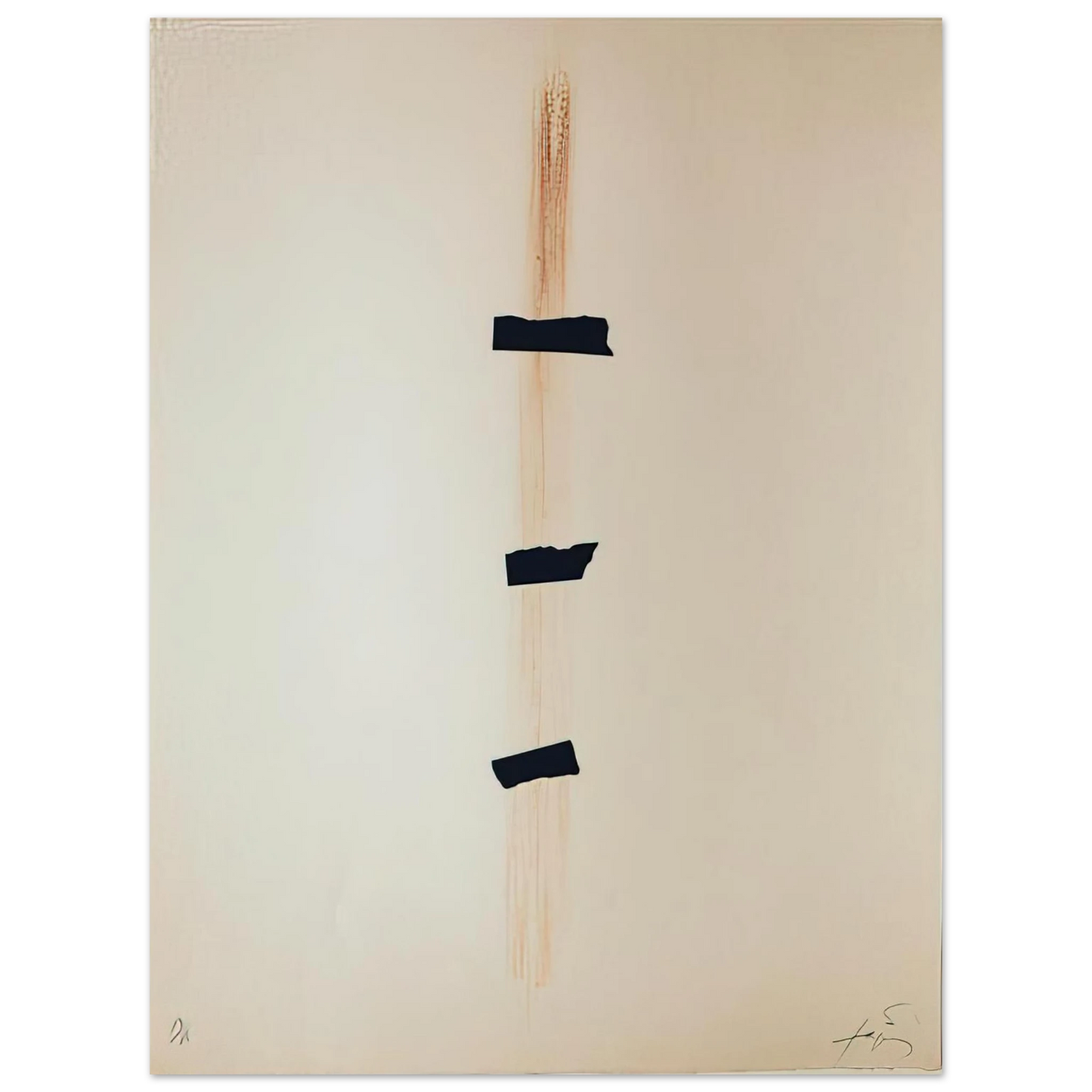
Antoni Tapies - LES TROIS NOIRS 1976 75x100 cm / 30x40inches Fine Art Poster

Antoni Tapies - LES TROIS NOIRS 1976 75x100 cm / 30x40inches Fine Art Poster

정가 $207.99 USD
정가 $311.00 USD 할인가 $207.99 USD
할인 품절
수량

The Tactile Language of Antoni Tàpies: Les Trois Noirs (1976)

Immerse yourself in the profound abstraction of Antoni Tàpies with this museum-quality reproduction of Les Trois Noirs (1976). As a central figure of the post-war European avant-garde and a master of 'Matter Painting,' Tàpies transformed the canvas into a site of philosophical inquiry. This specific piece, created during a pivotal era in Spanish contemporary art, explores the interplay of darkness, texture, and symbolic void, characteristic of his deeply spiritual and political oeuvre.

Our fine art print of Les Trois Noirs is curated for the discerning collector who seeks the gravity of an original lithograph within an archival format. RedKalion captures the nuanced contrasts of the deep blacks and the subtle off-white spaces, preserving the raw, calligraphic energy that Tàpies intended. This is not merely a poster; it is a sophisticated archival-grade reproduction that serves as a testament to 20th-century modernism.

Unrivaled Material Quality

To honor the tactile nature of Tàpies' work, we utilize our Master's Edition archival paper. This premium substrate provides a luxurious, heavy-weight feel that enhances the visual depth of the monochromatic composition. The matte, uncoated finish ensures that light does not reflect off the surface, allowing the viewer to appreciate the intricate details and the natural white texture of the paper.

  • Weight & Durability: 250 gsm (110 lb) thickness (0.29 mm) for a substantial, gallery-grade presence.
  • Archival Longevity: Acid-free and pH-buffered (above 7) to prevent yellowing or degradation over decades.
  • Sustainability: Printed on FSC-certified paper, reflecting a commitment to both art and the environment.
  • Fulfillment: Each piece is printed on demand with no minimums, ensuring every print is freshly produced and handled with care.

Elevate your interior space with an archival masterpiece that endures. This large-format 75x100 cm (30x40 inches) print brings the authoritative presence of Catalan modernism into your home or office, offering a window into the mind of one of the 20th century's most influential artists.

전체 세부 정보 보기
What makes the Master's Edition paper suitable for Tàpies' work?

Our 250 gsm Master's Edition paper features a natural white, matte finish that mirrors the tactile quality of original Tàpies lithographs, ensuring deep blacks and authentic textures without distracting glare.

How long will this archival print last without fading?

Because we use acid-free paper with a pH above 7, these museum-quality reproductions are designed to resist yellowing and maintain color integrity for generations when kept out of direct sunlight.

Is the paper used for this fine art print sustainable?

Yes, all prints of Les Trois Noirs are produced on FSC-certified paper, guaranteeing that the materials are sourced from responsibly managed forests that provide environmental and social benefits.

How is the artwork packaged for shipping?

To ensure your print arrives in pristine condition, we use robust, protective packaging tailored to the 75x100 cm dimensions, and each order is printed and shipped on demand with no minimums.

Does the print include a frame or mounting?

This product is a standalone fine art poster. Its standard 30x40 inch sizing makes it easy to find premium custom framing options to match your specific interior design aesthetic.

What is the historical significance of Les Trois Noirs (1976)?

Created in 1976, this work reflects the transition of Spain into a new era. Tàpies used the 'three blacks' to symbolize structural resilience and the complex emotional landscape of the post-Franco period.

How does Tàpies' 'Matter Painting' style translate to a print?

While the original used thick impasto, our high-resolution archival reproduction captures the visual shadows and 'relief' of the original gestures, maintaining the artist's signature aesthetic of raw, physical presence.