
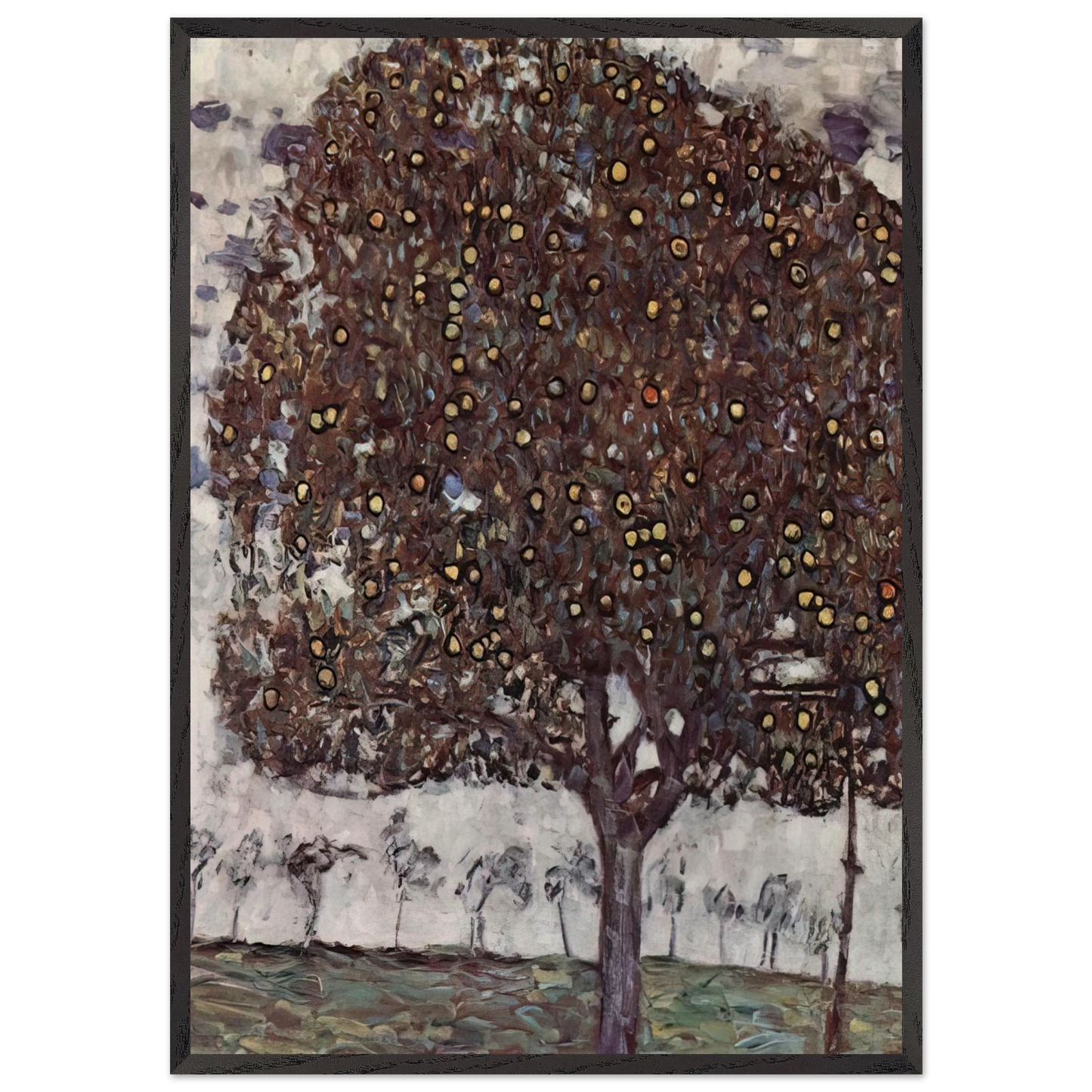
What paper quality is used for the Apple Tree II print?
We use 250 gsm (110 lb) archival museum-quality paper. It features a matte, uncoated, natural white finish that prevents glare and ensures long-term color preservation.
How is the print framed and is it ready to hang?
Your Klimt print arrives in a 20mm thick frame made of black-finished oak and ash. It includes a pre-installed hanging kit for immediate installation.
Are the materials used for this art print sustainable?
Yes. RedKalion uses FSC-certified wood and paper or equivalent sustainable materials, ensuring that your fine art reproduction is ethically produced and eco-friendly.
How is the artwork protected from damage?
Each print is shielded by premium shatterproof plexiglass. This provides the clarity of glass with added durability and protection against breakage and dust.
What is the archival longevity of this framed print?
Designed to last for decades, our prints use acid-free 250 gsm paper and archival techniques to prevent yellowing and fading, maintaining museum-quality standards.
What period of Klimt’s career does Apple Tree II represent?
Apple Tree II was created around 1916. It belongs to Klimt’s later landscapes, where he moved away from gold leaf toward a jewel-toned, mosaic-like Impressionist style.
Why does Apple Tree II have such a unique, flattened perspective?
Klimt used a "telescopic" view, inspired by Japanese art and Symbolism, to create a dense, decorative pattern that emphasizes the unity of nature over depth.