


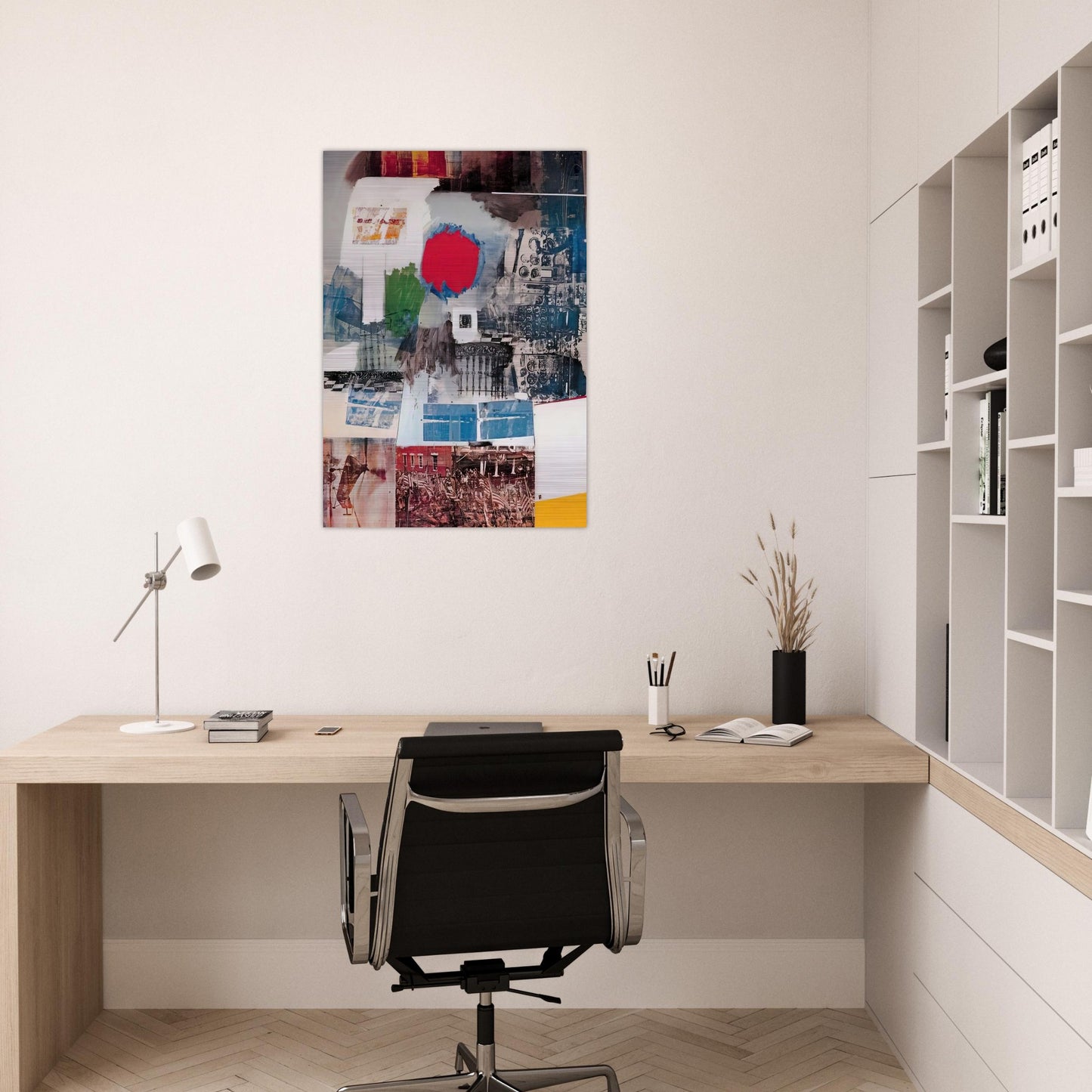
Discover Unlimited Art Possibilities
At RedKalion, you can find virtually any artwork from any artist, available in a wide range of sizes to perfectly match your space.
If you didn’t find what you’re looking for, contact us at support@redkalion.com . We will source any artwork and produce it in any size and format you need, including art prints, posters, canvas, framed pieces, framed canvas, and more.
For dedicated art enthusiasts, we also offer handcrafted replicas of any artwork, carefully painted by highly skilled artists using traditional techniques.
For custom requests, contact us at support@redkalion.com .
What makes the brushed aluminum finish unique for Archive 1963?
The brushed silver Aluminum DIBOND® features a horizontal grain. In unprinted areas, the metallic silver shines through, adding a dynamic, industrial texture that complements Rauschenberg's silkscreen style.
Is this print considered museum-quality?
Yes. RedKalion uses archival-grade materials and direct-to-substrate printing to ensure museum-level color accuracy and durability for every Robert Rauschenberg fine art print.
How does the hanging kit work for this Rauschenberg print?
Each aluminum print includes a specialized hanging kit. The specific hardware varies by fulfillment country to ensure safe, secure, and balanced mounting on your wall.
Is the print protected against glare and reflections?
Absolutely. The print features a matte, glare-free finish. This makes it ideal for rooms with high natural light or professional gallery lighting settings.
What are the shipping and logistics for international orders?
We provide secure, premium packaging and global shipping. RedKalion coordinates with local fulfillment centers to ensure your 70x100 cm print arrives safely and efficiently.
Why is the year 1963 significant for Robert Rauschenberg?
1963 was a landmark year; Rauschenberg perfected his silkscreen process and began the series that led to him winning the Grand Prize at the 1964 Venice Biennale.
What artistic technique did Rauschenberg use for the original Archive?
Rauschenberg utilized the commercial silkscreen process, allowing him to layer found photographs from magazines and newspapers with expressive, painterly gestures.