
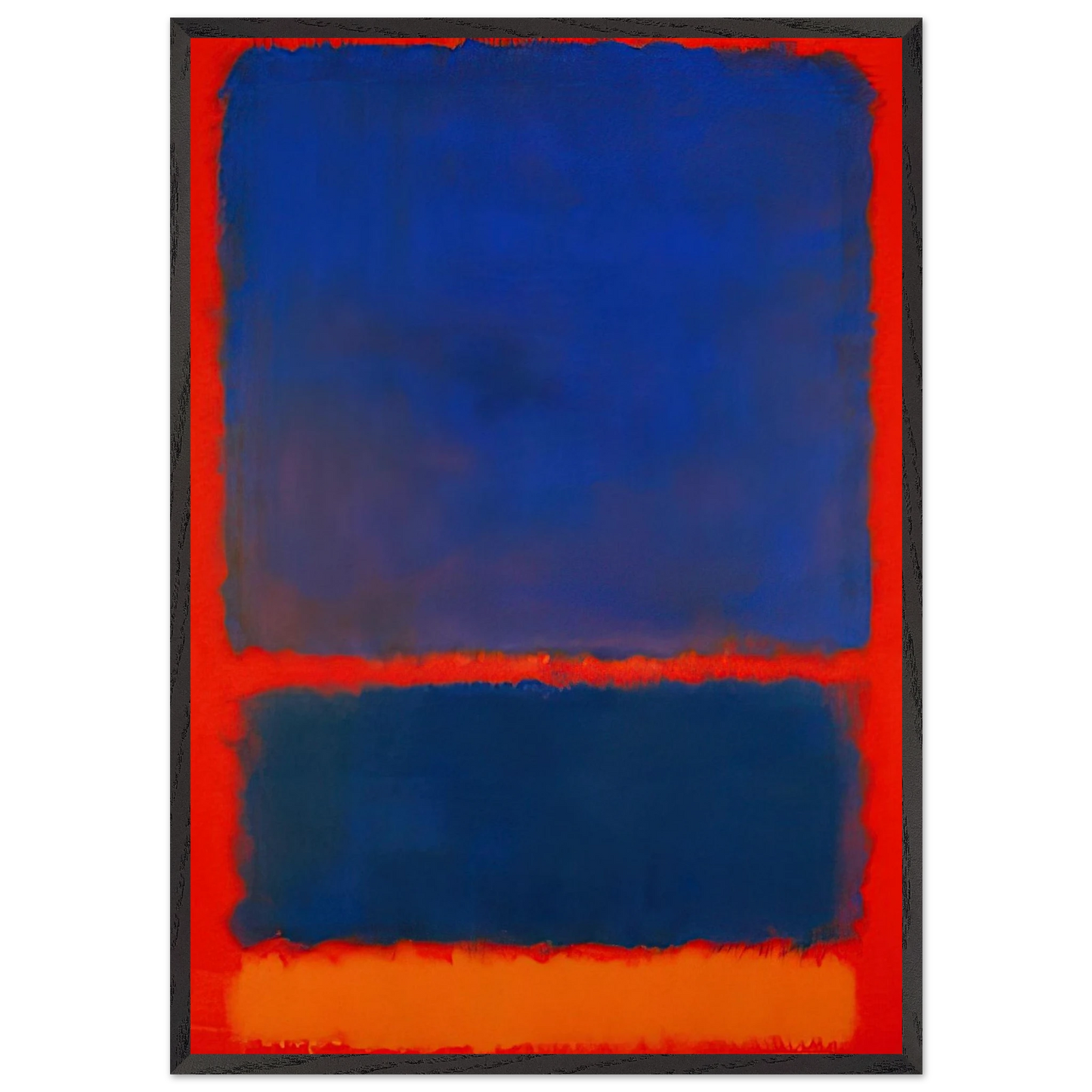
What makes this Rothko print museum-quality?
We use 250 gsm archival-grade, natural white paper with a matte finish. This ensures the heavy pigment load of the Rothko reproduction remains vibrant without fading, meeting the standards of fine art galleries and museums for longevity and texture.
Is the frame sustainably sourced?
Yes. All frames at RedKalion are crafted from FSC-certified oak and ash wood. This guarantees that the timber is harvested from responsibly managed forests, providing an eco-friendly way to display your fine art print.
What are the exact dimensions and frame thickness?
The print is 70x100 cm (28x40 inches). The frame features a premium 20mm (0.79") width and thickness, which is sturdier and more visually impactful than the thin 14mm frames commonly found in retail shops.
How is the artwork protected from damage?
Each framed print is fitted with high-quality shatterproof plexiglass. This material is lighter and stronger than traditional glass, protecting your Rothko print from impact and UV-related degradation while maintaining perfect clarity.
Does the print arrive ready to hang?
Absolutely. Your framed Mark Rothko print arrives fully assembled with a hanging kit included. It is designed to be hung directly on your wall immediately upon delivery, with no additional hardware required.
What is the significance of Blue, Orange, Red in Rothko's 1961 period?
By 1961, Rothko had perfected his "multiform" style. This piece represents his mastery of light and color interaction, where the floating rectangles appear to hover in space, creating a meditative, spiritual experience for the viewer.
Why did Rothko choose these specific color stacks?
Rothko used color as a vehicle for basic human emotions—tragedy, ecstasy, and doom. The contrast between the cool blue and the fiery oranges and reds in this 1961 work creates a visual tension meant to provoke a visceral reaction.