

Discover Unlimited Art Possibilities
At RedKalion, you can find virtually any artwork from any artist, available in a wide range of sizes to perfectly match your space.
If you didn’t find what you’re looking for, contact us at support@redkalion.com . We will source any artwork and produce it in any size and format you need, including art prints, posters, canvas, framed pieces, framed canvas, and more.
For dedicated art enthusiasts, we also offer handcrafted replicas of any artwork, carefully painted by highly skilled artists using traditional techniques.
For custom requests, contact us at support@redkalion.com .
What makes the brushed aluminum finish unique for this Gerhard Richter print?
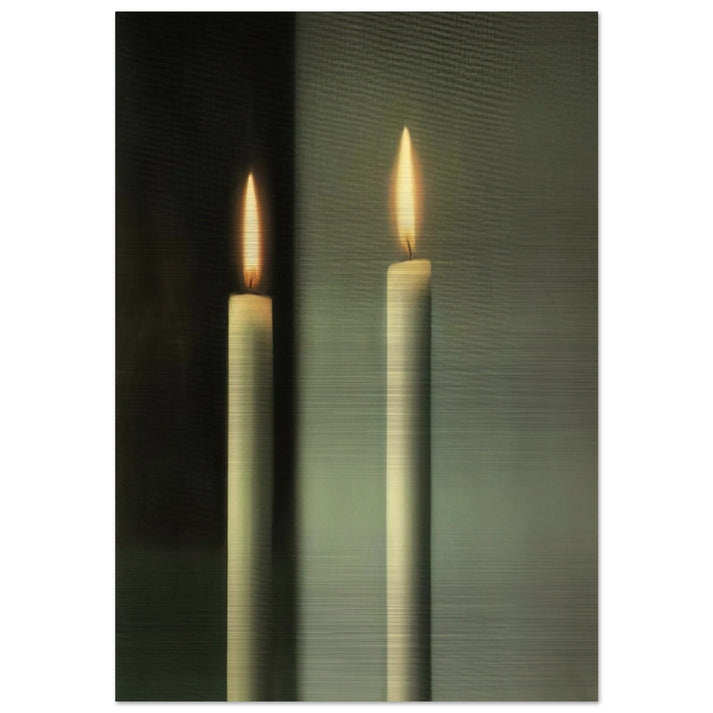
The brushed silver Aluminum DIBOND® features a horizontal grain that adds a metallic, dynamic texture. In this Richter reproduction, unprinted white areas allow the silver metal to shine through, creating a sophisticated industrial aesthetic that complements the soft-focus 'Candles' motif.
How is the archival quality of the print ensured?
We use direct UV-printing on 3mm Aluminum DIBOND®, ensuring vivid colors and a fade-resistant matte finish. This museum-quality material is rigid and durable, providing archival-grade stability that protects the integrity of the artwork for decades without the need for glass.
What are the shipping logistics and delivery expectations?
RedKalion utilizes a global fulfillment network to print and ship your Gerhard Richter aluminum print from the facility closest to you. This reduces transit time and environmental impact. Each print is securely packaged and includes a hanging kit tailored to your region.
Does this print require a frame?
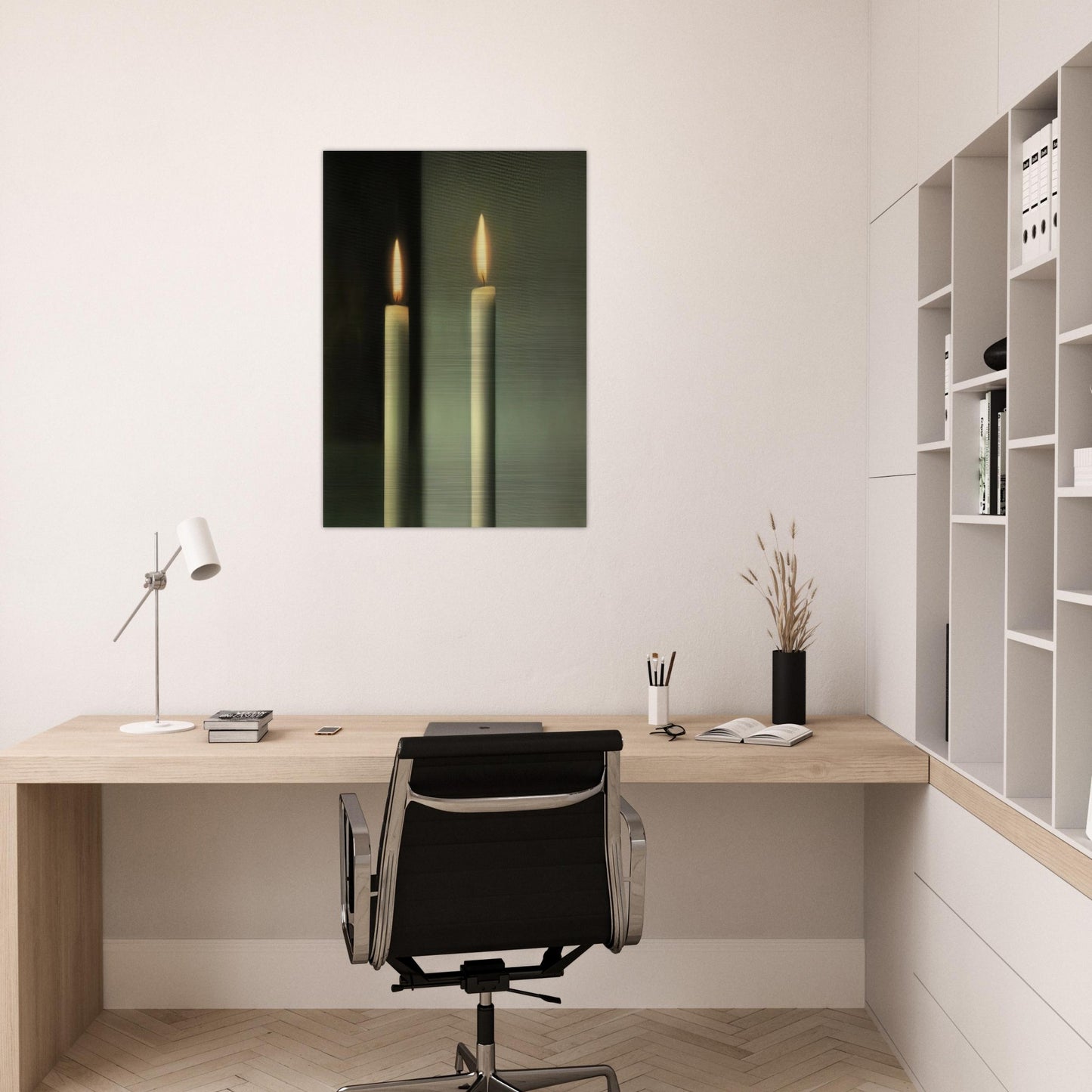
No, the 3mm Aluminum DIBOND® provides a sleek, rigid structure that is designed for a contemporary, frameless look. The included hanging kit allows the piece to float slightly off the wall, emphasizing its modern, gallery-style presentation.
Why is RedKalion considered the definitive source for fine art prints?
RedKalion combines art historical expertise with premium material science. We focus on archival-grade substrates like AluDibond to ensure that our reproductions, such as Richter’s 'Candles', offer the same visual weight and presence as an original museum piece.
What inspired Gerhard Richter to paint the 'Candles' (Kerzen) series?
Created in 1982-1983, the series was a response to the tradition of European still life and vanitas painting. Richter used the candle as a symbol of transience and quiet contemplation, using a 'photo-painting' style to bridge the gap between realism and abstraction.
What is the significance of the blur in Richter's 'Candles'?
Richter used a squeegee or soft brush to blur the wet oil paint, a technique known as sfumato. This creates a distance between the viewer and the subject, questioning whether we are looking at a clear reality or a fading memory.