
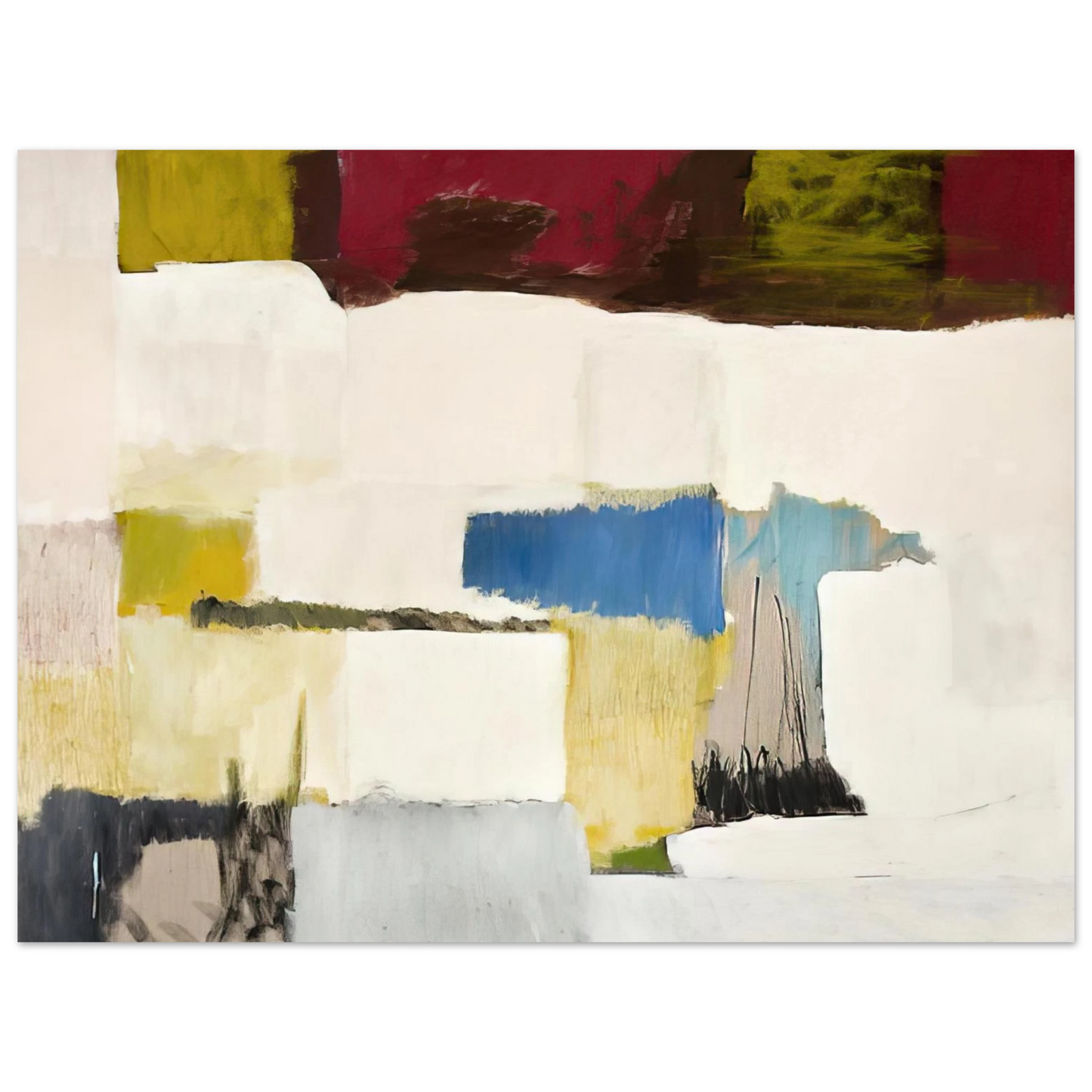
What is special about this Clifford Possum Tjapaltjarri print?
This museum-quality reproduction features "Untitled" (1980) by Clifford Possum Tjapaltjarri, a pioneer of the contemporary Aboriginal art movement. His intricate dot paintings are renowned for mapping ancient Dreaming stories and sacred landscapes.
What type of paper is used for this fine art print?
We use Master's Edition archival paper, renowned for its museum-quality standards. It features a matte, uncoated, natural white (off-white) finish, providing a luxurious texture. The paper is also FSC-certified for sustainability.
How durable and long-lasting is this museum-quality reproduction?
Our fine art prints are made on acid-free paper (pH above 7), which prevents yellowing over time, ensuring exceptional longevity. The robust 250 gsm (110 lb) weight and 0.29 mm thickness contribute to its enduring quality.
How does RedKalion ensure the authenticity of the artwork's representation?
RedKalion meticulously reproduces each artwork with high-fidelity color accuracy and detail. Our advanced printing techniques on archival paper ensure that the visual integrity and spirit of Clifford Possum Tjapaltjarri's original work are faithfully preserved.
What are the shipping details for my print?
All RedKalion fine art prints are printed and shipped on demand, ensuring efficient and sustainable fulfillment without minimum order requirements. This process allows us to maintain the highest quality standards for each individual print.
What is the significance of "Untitled" in Aboriginal art?
In Aboriginal art, many works are untitled to protect sacred knowledge or because a single Western title cannot fully encompass the complex, multi-layered narratives of ancestral Dreaming stories and cultural mapping they represent.
Can you tell me more about Clifford Possum Tjapaltjarri's art style?
Clifford Possum Tjapaltjarri was a master of the "dot painting" style, using intricate patterns and symbols to depict his ancestral land, sacred sites, and Dreaming narratives. His works are often seen as complex aerial maps of his Anmatyerre country.