RedKalion
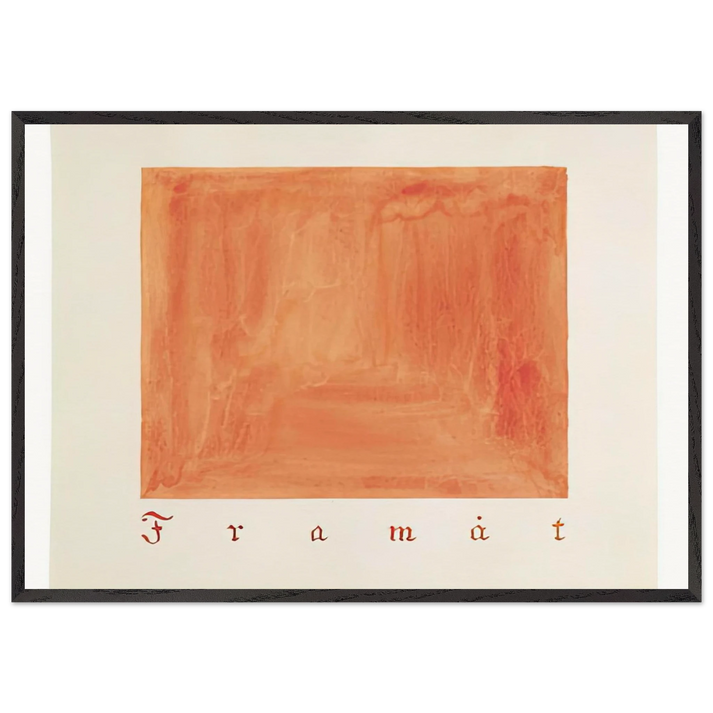
FORWARDS PARCIFAL SERIES GROUP 2 SECTION 4 THE CONVOLUTE OF THE PHYSICAL PLANE 1916 - Hilma af Klint 70x100 cm / 28x40 inches Framed Art Print – Black Wooden Frame
FORWARDS PARCIFAL SERIES GROUP 2 SECTION 4 THE CONVOLUTE OF THE PHYSICAL PLANE 1916 - Hilma af Klint 70x100 cm / 28x40 inches Framed Art Print – Black Wooden Frame
픽업 사용 가능 여부를 로드할 수 없습니다.
Forwards Parcifal Series Group 2 Section 4 The Convolute of the Physical Plane 1916 - Hilma af Klint
Immerse yourself in the visionary world of Hilma af Klint with this museum-quality framed art print of "Forwards Parcifal Series Group 2 Section 4 The Convolute of the Physical Plane" from 1916. This abstract masterpiece, created years before Kandinsky and Malevich pioneered non-representational art, showcases af Klint's profound exploration of spiritual dimensions and geometric symbolism. Her use of bold colors, intricate patterns, and esoteric motifs reflects a groundbreaking fusion of science, mysticism, and early modernism, making it a captivating centerpiece for any art enthusiast's collection.
RedKalion presents this archival reproduction in a premium black wooden frame, crafted from responsibly sourced oak and ash wood. The frame measures 20mm (0.79") thick and wide, offering a substantial, gallery-worthy presence that enhances the artwork's impact. Each print is meticulously produced on 250 gsm (110 lb) archival museum-quality paper with a matte, uncoated, natural white finish, ensuring vibrant color fidelity and longevity. Protected by shatterproof plexiglass, this ready-to-hang piece includes a hanging kit for effortless display.
Elevate your space with a timeless reproduction that honors Hilma af Klint's legacy and RedKalion's commitment to excellence in fine art prints.

Discover Unlimited Art Possibilities
At RedKalion, you can find virtually any artwork from any artist, available in a wide range of sizes to perfectly match your space.
If you didn’t find what you’re looking for, contact us at support@redkalion.com . We will source any artwork and produce it in any size and format you need, including art prints, posters, canvas, framed pieces, framed canvas, and more.
For dedicated art enthusiasts, we also offer handcrafted replicas of any artwork, carefully painted by highly skilled artists using traditional techniques.
For custom requests, contact us at support@redkalion.com .
What are the dimensions of this Hilma af Klint framed art print?
The framed print measures 70x100 cm (28x40 inches), with a 20mm (0.79") thick black wooden frame made from responsibly sourced oak and ash wood, providing a substantial, gallery-quality presentation.
What type of paper is used for this museum-quality reproduction?
We use 250 gsm (110 lb) archival museum-quality paper with a matte, uncoated, natural white finish and 0.29 mm (11.4 mils) thickness, ideal for fine art prints and ensuring long-term durability.
Is this framed print ready to hang?
Yes, it includes a hanging kit and is ready to hang directly on your wall, offering a convenient and professional display solution for your home or office.
How does the plexiglass protection enhance this art print?
The shatterproof plexiglass safeguards the print from dust, UV light, and damage, providing clear, durable protection while maintaining the artwork's visual integrity for years.
What makes this paper sustainable for archival art prints?
Our paper is FSC-certified or equivalent, ensuring responsible sourcing and environmental sustainability, aligning with RedKalion's commitment to eco-friendly fine art reproductions.
Why is Hilma af Klint's "Forwards Parcifal Series" significant in art history?
Created in 1916, this series predates mainstream abstract art, showcasing af Klint's pioneering blend of spiritual symbolism and geometric abstraction, which influenced later modernist movements.
What details in this artwork reflect Hilma af Klint's unique style?
The piece features bold colors, intricate patterns, and esoteric motifs that explore the physical and spiritual planes, highlighting her innovative approach to non-representational art.