
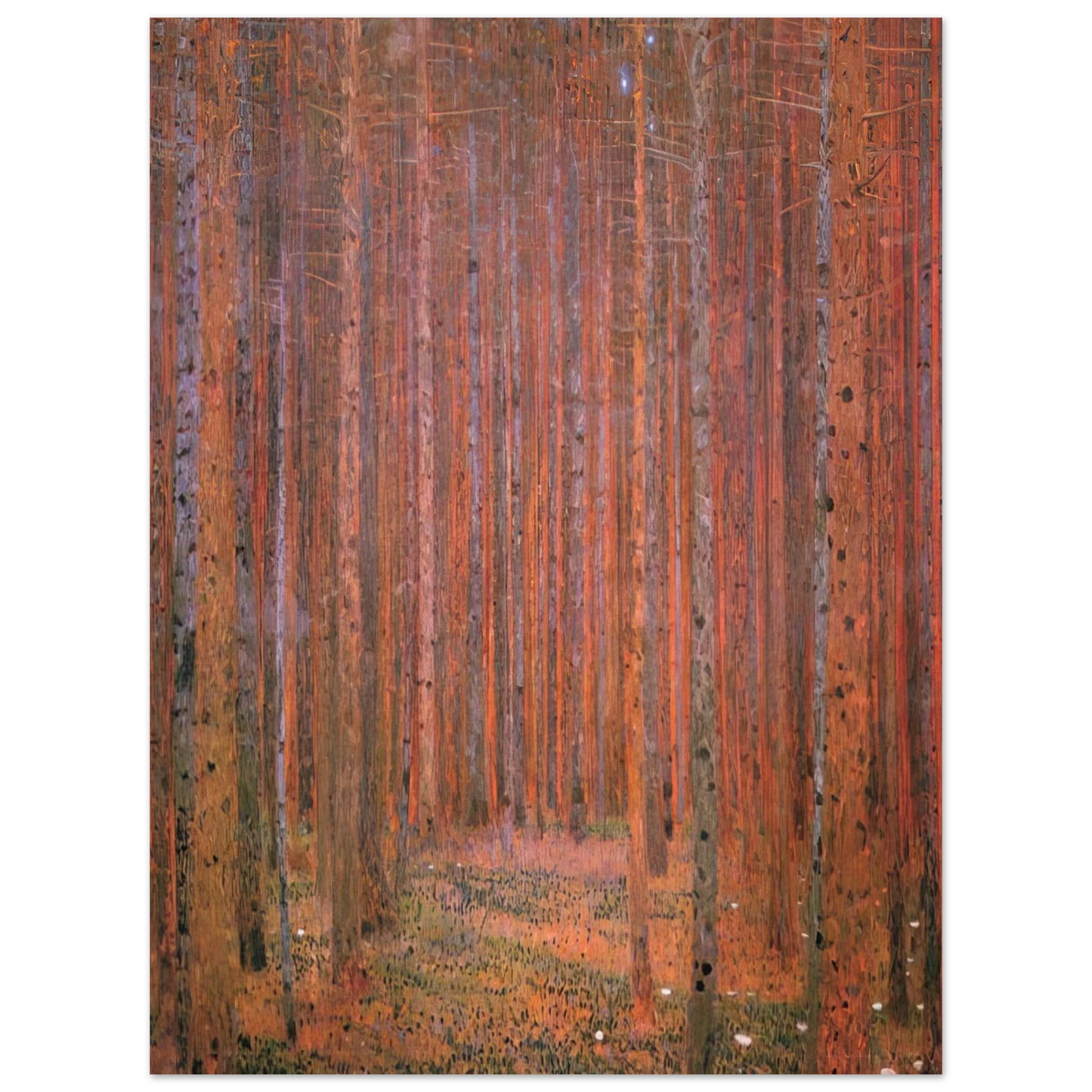
What is the historical significance of Gustav Klimt's "Fir Forest I"?
"Fir Forest I" (1901) is a key Symbolist landscape by Gustav Klimt, showcasing his shift to nature-focused art with abstract, rhythmic patterns that evoke spiritual harmony during the Vienna Secession movement.
What details make this fine art print museum-quality?
This museum-quality reproduction uses Master's Edition archival paper with a matte, uncoated finish and acid-free composition (pH above 7) to ensure vibrant colors and longevity, matching gallery standards for premium art prints.
What are the specifications of the paper used for this Gustav Klimt poster?
The paper is FSC-certified, 250 gsm (110 lb) weight, 0.29 mm (11.4 mils) thick, and natural white (off-white), offering a luxurious texture and durability for high-end fine art prints.
How does the archival quality protect this Klimt print over time?
Archival quality includes acid-free paper (pH above 7) to prevent yellowing and fading, ensuring this Gustav Klimt landscape art print remains pristine for decades as a lasting investment.
What is the shipping and fulfillment process for this artwork?
We print and ship on demand with no minimum orders, providing efficient delivery for this 75x100 cm fine art poster while reducing waste through sustainable practices.
How did Klimt's technique in "Fir Forest I" differ from his other works?
Klimt used a pointillist technique in "Fir Forest I," building luminous surfaces with small dots to create abstract, symbolic patterns, unlike his figurative golden phase artworks.
Why is the matte finish preferred for this Klimt reproduction?
The matte, uncoated finish enhances the natural texture and reduces glare, allowing the intricate details of Klimt's Symbolist landscape to shine in a gallery-like display.