Discover Unlimited Art Possibilities
At RedKalion, you can find virtually any artwork from any artist, available in a wide range of sizes to perfectly match your space.
If you didn’t find what you’re looking for, contact us at support@redkalion.com . We will source any artwork and produce it in any size and format you need, including art prints, posters, canvas, framed pieces, framed canvas, and more.
For dedicated art enthusiasts, we also offer handcrafted replicas of any artwork, carefully painted by highly skilled artists using traditional techniques.
For custom requests, contact us at support@redkalion.com .
What are the dimensions of this Henri Matisse print?
This fine art poster measures 75x100 cm, equivalent to 30x40 inches, perfect for standard framing and display in homes or offices.
What type of paper is used for this museum-quality reproduction?
We use Master's Edition archival paper, featuring a matte, uncoated finish with a natural white color for a luxurious texture and enhanced durability.
How is this print shipped and are there minimum order requirements?
It is printed and shipped on demand with no minimum orders, ensuring fast fulfillment and eco-friendly production tailored to your needs.
Is this archival print resistant to fading or yellowing over time?
Yes, the acid-free paper (pH above 7) prevents yellowing, and the high-quality inks ensure long-lasting vibrancy for a lasting art investment.
What is the weight and thickness of the paper for this fine art poster?
The paper weighs 250 gsm (110 lb) with a thickness of 0.29 mm (11.4 mils), providing a substantial, premium feel ideal for framing.
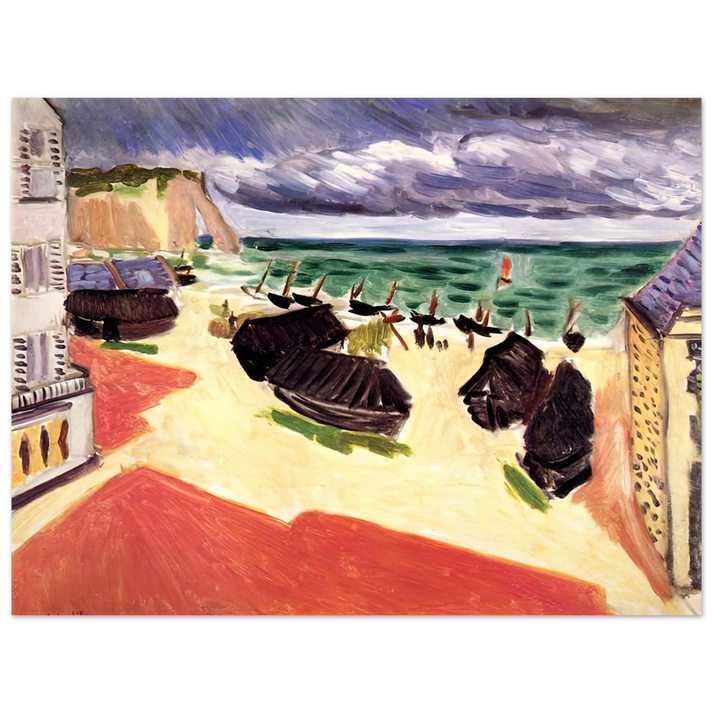
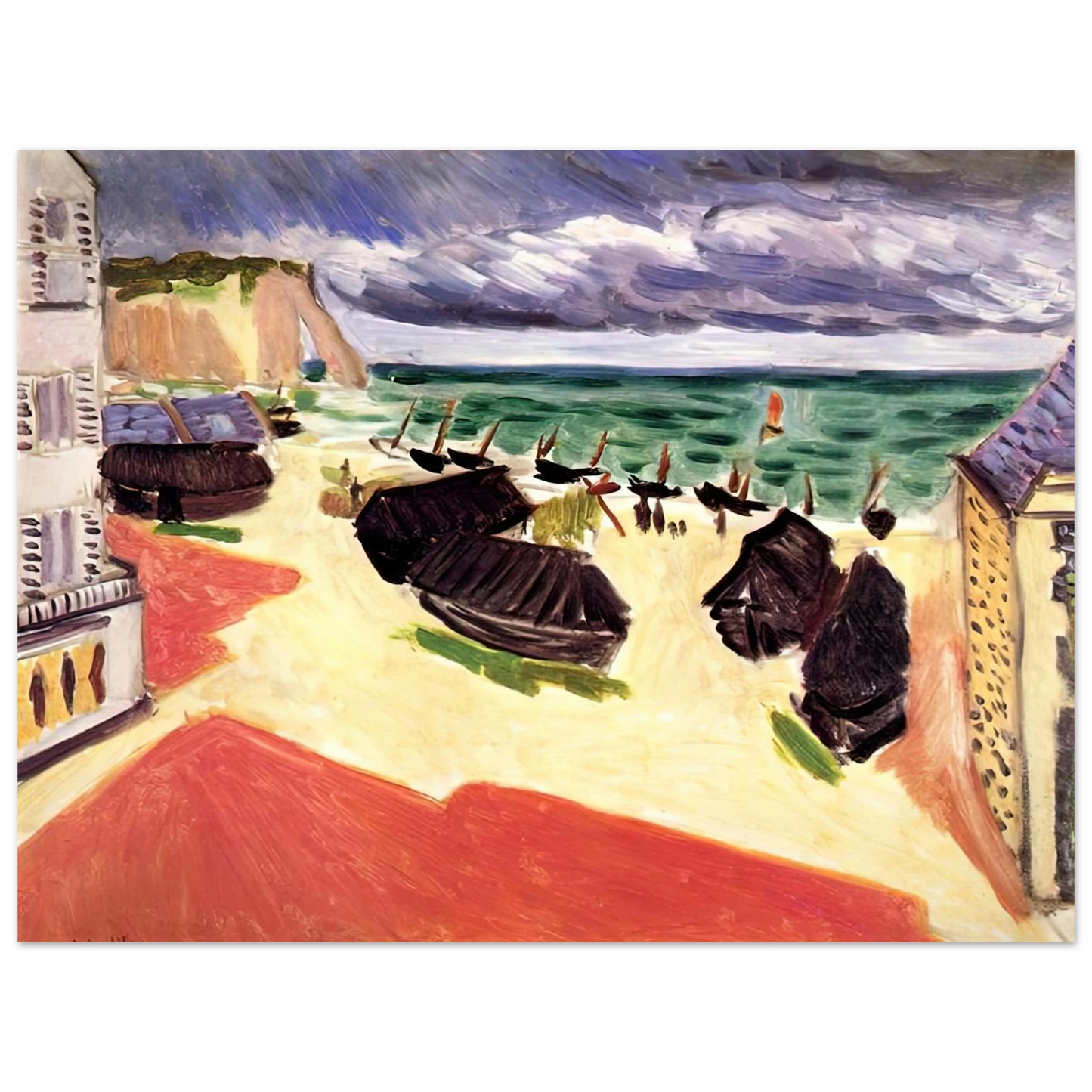
Why did Henri Matisse paint "Fishing Boats in Winter Etretat" in 1921?
Matisse was inspired by Étretat's coastal scenery, a popular subject among artists, capturing its wintry tranquility during his later, more simplified artistic phase.
How does this artwork reflect Matisse's style from the early 1920s?
It showcases his move towards expressive color harmonies and reduced forms, blending Impressionist influences with his unique modernist approach to light and composition.