
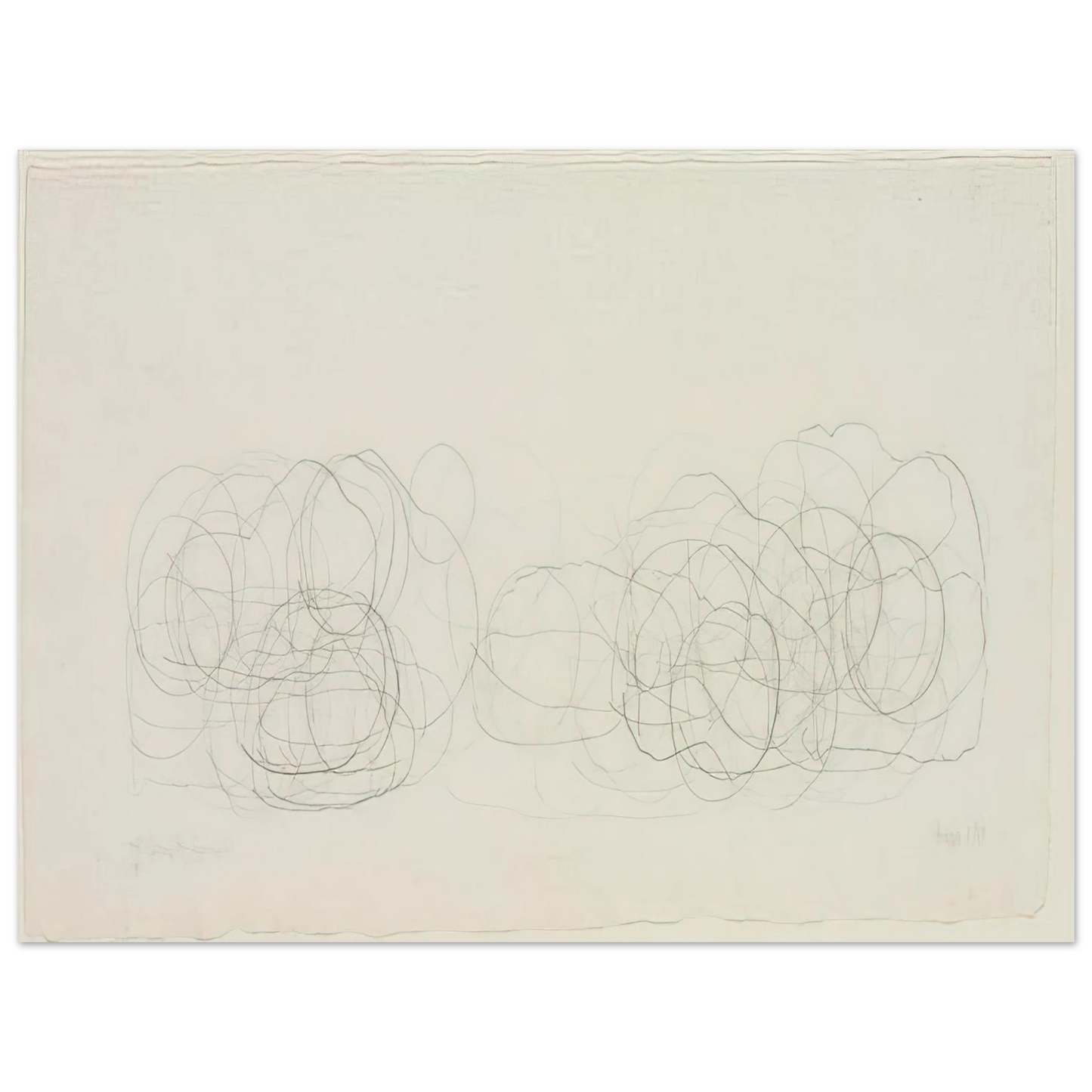
What is the historical significance of John Cage's 7R15 Where R=Ryoanji?
This 1983 work is part of Cage's Ryoanji series, inspired by Kyoto's Zen rock garden. It reflects his use of chance operations and minimalist aesthetics to explore silence and abstraction in visual art, blending Eastern philosophy with avant-garde techniques.
How does this fine art print capture the details of the original artwork?
Our museum-quality reproduction uses high-resolution imaging to preserve every hand-drawn line and texture of Cage's abstract stone arrangements, ensuring an authentic representation on archival paper for true art enthusiasts.
What are the specifications of the Master's Edition archival paper?
The paper features a matte, uncoated finish in natural white (off-white), with a weight of 250 gsm (110 lb), thickness of 0.29 mm (11.4 mils), acid-free properties (pH above 7) to prevent yellowing, and FSC-certified sustainability for eco-conscious collectors.
How is this fine art poster shipped and are there minimum orders?
We print and ship on demand with no minimum orders, ensuring each 75x100 cm (30x40 inches) reproduction is handled with care and delivered securely to your location.
What makes this print archival and long-lasting?
Made from acid-free, pH-balanced paper, this archival-grade print resists yellowing and degradation over time, offering museum-quality longevity for a durable addition to your art collection.
What inspired John Cage's use of stone arrangements in this artwork?
Cage drew inspiration from the Ryoanji temple garden in Kyoto, using chance operations to arrange stones, symbolizing Zen principles of randomness and tranquility in his visual compositions.
Can this print be framed easily?
Yes, the 75x100 cm (30x40 inches) size and matte finish make it compatible with standard frames, enhancing its minimalist appeal for home or gallery display.