


Discover Unlimited Art Possibilities
At RedKalion, you can find virtually any artwork from any artist, available in a wide range of sizes to perfectly match your space.
If you didn’t find what you’re looking for, contact us at support@redkalion.com . We will source any artwork and produce it in any size and format you need, including art prints, posters, canvas, framed pieces, framed canvas, and more.
For dedicated art enthusiasts, we also offer handcrafted replicas of any artwork, carefully painted by highly skilled artists using traditional techniques.
For custom requests, contact us at support@redkalion.com .
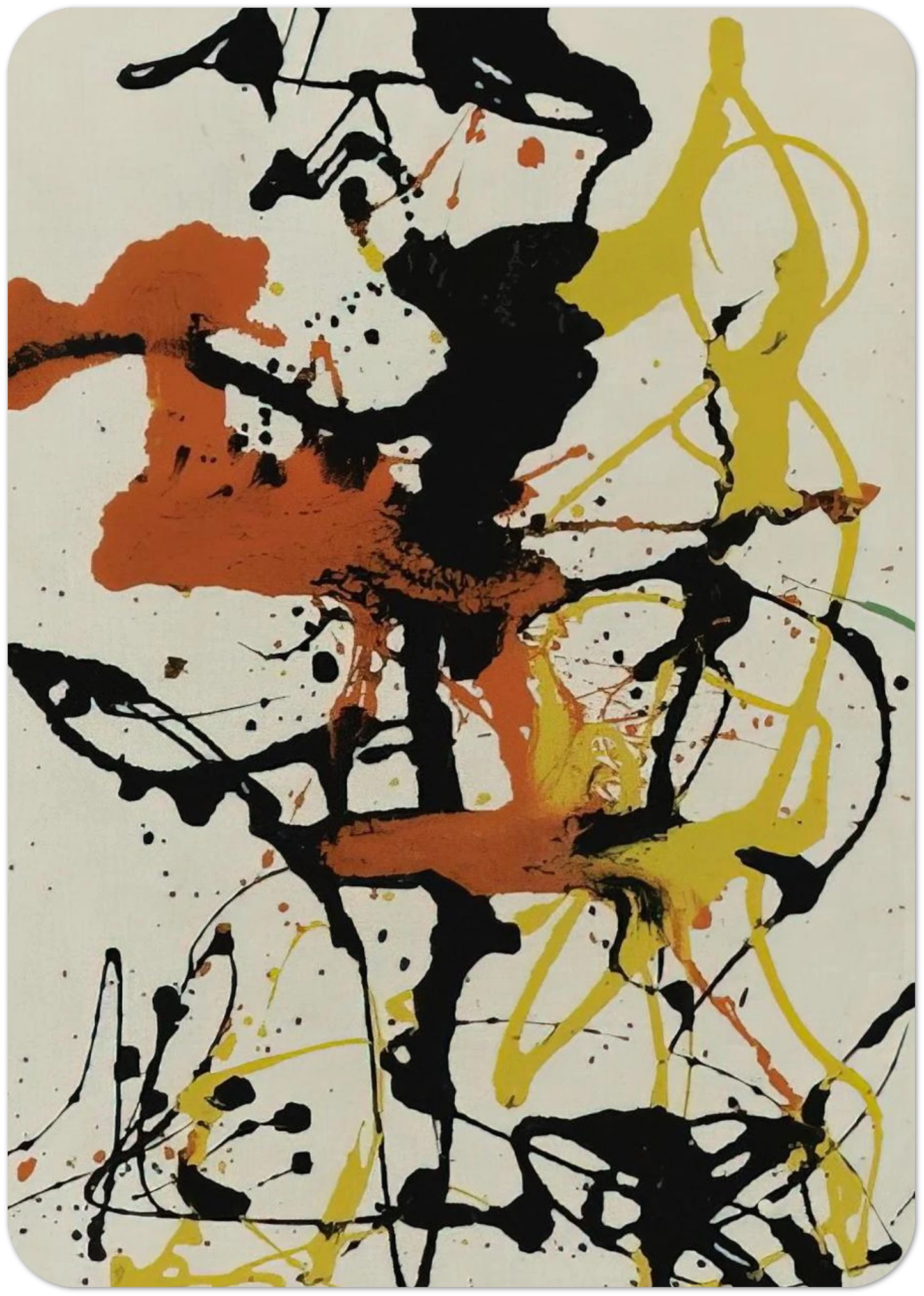
What is Jackson Pollock's NUMBER 26 1949, and why is it significant?
NUMBER 26 1949 is a key Abstract Expressionist painting by Jackson Pollock, created during his drip-painting era. It showcases his revolutionary technique of flinging and pouring enamel paint, symbolizing a shift to pure abstraction and emotional intensity in modern art.
How many post cards are included in this pack, and what are their dimensions?
This pack includes 10 flat post cards, each measuring A6 size (10.5 x 14.8 cm or 4.1 x 5.8 inches), ideal for mailing, framing, or display as miniature fine art prints.
What printing technology is used for these Jackson Pollock post cards?
We use 12-color fine art printing technology to ensure vivid, accurate colors with stunning depth, far surpassing standard 4-color inkjet prints for a museum-quality reproduction.
Are these post cards eco-friendly and what is the paper quality?
Yes, they are printed on environmentally conscious, FSC-certified paper with a smooth matte finish, 200 gsm (80 lb) weight, and 0.26 mm (10.3 mils) thickness for durability and a premium feel.
How are these post cards shipped and what is the production time?
Printed on demand with no minimum orders, they are shipped promptly using protective packaging to ensure your fine art prints arrive in perfect condition.
What was Jackson Pollock's technique in creating NUMBER 26 1949?
Pollock used a drip-painting method, flinging and pouring enamel paint onto a horizontal canvas to create intricate, dynamic webs of color, emphasizing motion and spontaneity in Abstract Expressionism.
How does this artwork fit into Pollock's broader career and art history?
NUMBER 26 1949 represents Pollock's peak in the late 1940s, marking his full embrace of abstraction and influencing later movements, solidifying his role as a pioneer in modern art.