
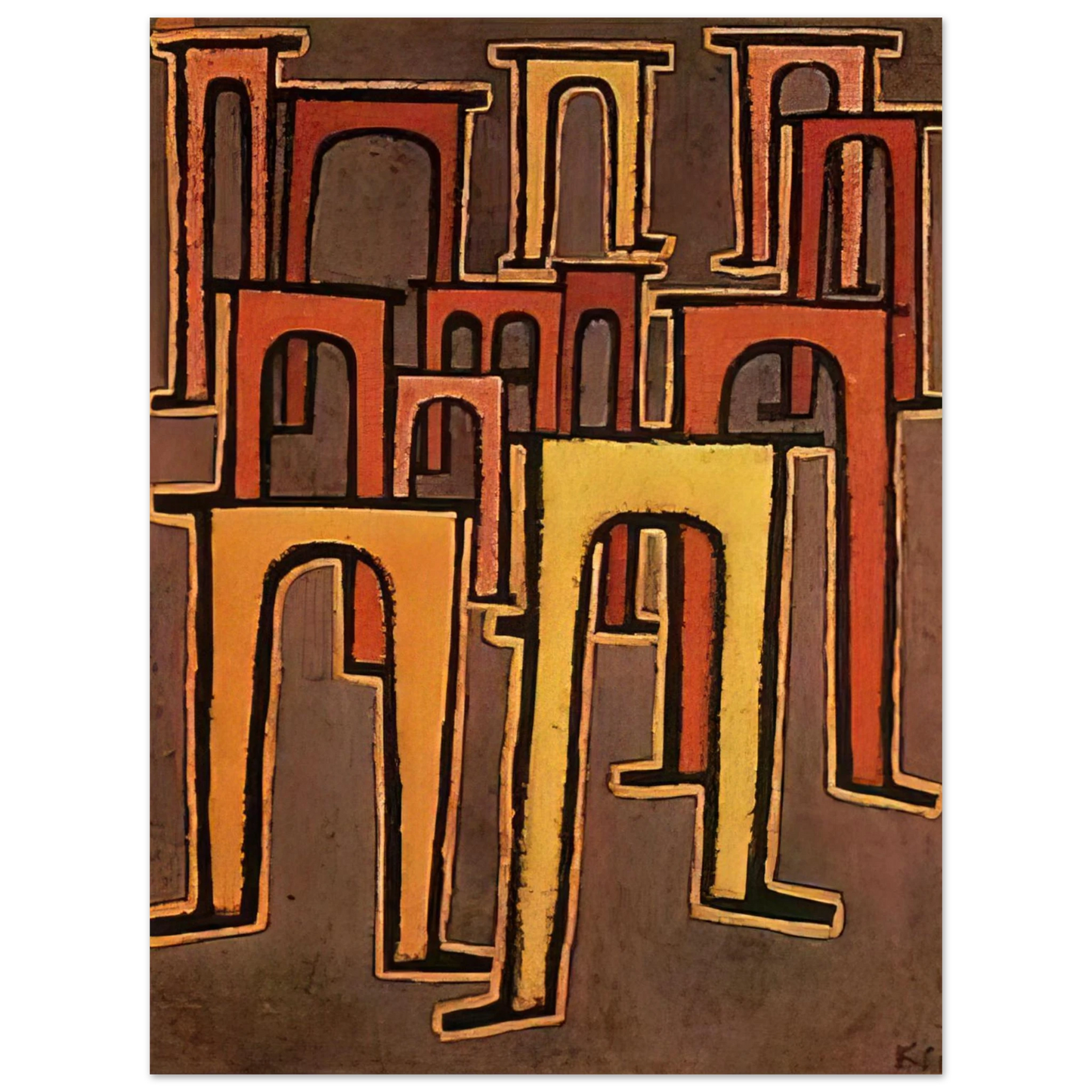
What is the significance of Paul Klee's "Revolution of the Viaduct" (1937)?
This artwork reflects Klee's late-period abstraction, blending geometric viaduct forms with symbolic depth to explore themes of order and transformation during the pre-war era, making it a key piece for modernist art collectors.
What are the specifications of the Master's Edition archival paper used for this fine art print?
The print uses museum-quality, acid-free (pH above 7) paper with a matte, uncoated finish, natural white color, 250 gsm weight, 0.29 mm thickness, and FSC certification for archival longevity and luxurious texture.
How is this print shipped, and are there minimum order requirements?
We offer on-demand printing and shipping with no minimum orders, ensuring fresh, high-quality reproductions delivered directly to your door for convenient art acquisition.
How long will this archival print last without yellowing or degradation?
With acid-free (pH above 7) paper and archival-grade materials, this print is designed to resist yellowing and maintain its quality for generations, ideal for long-term display.
What makes RedKalion's reproductions museum-quality compared to standard posters?
Our reproductions use Master's Edition archival paper, precise color matching, and expert craftsmanship to capture every detail of Klee's original, ensuring a premium, gallery-worthy fine art print.
Why did Paul Klee use geometric shapes like viaducts in his 1937 works?
Klee employed geometric forms to symbolize structural order and dynamic change, reflecting his interest in the intersection of architecture and nature during his late artistic phase.
How does the matte finish enhance the viewing experience of this print?
The matte, uncoated finish reduces glare and provides a natural texture that highlights Klee's delicate lines and subtle colors, offering an authentic, museum-like presentation.