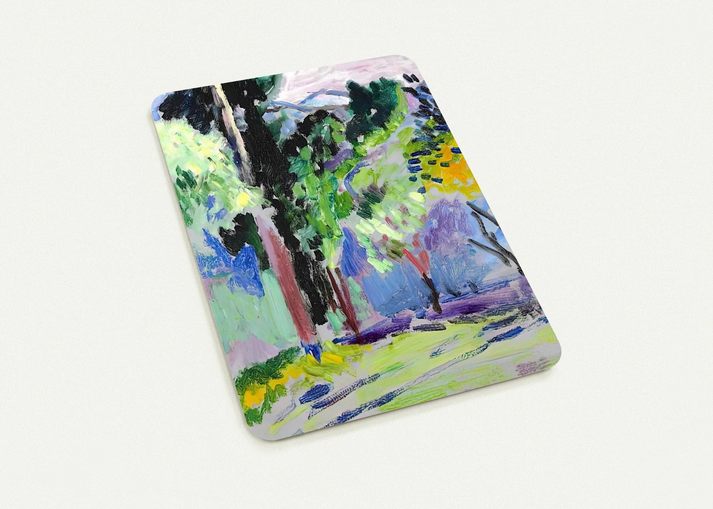


Discover Unlimited Art Possibilities
At RedKalion, you can find virtually any artwork from any artist, available in a wide range of sizes to perfectly match your space.
If you didn’t find what you’re looking for, contact us at support@redkalion.com . We will source any artwork and produce it in any size and format you need, including art prints, posters, canvas, framed pieces, framed canvas, and more.
For dedicated art enthusiasts, we also offer handcrafted replicas of any artwork, carefully painted by highly skilled artists using traditional techniques.
For custom requests, contact us at support@redkalion.com .
What is the historical significance of Paysage à Collioure by Henri Matisse?
Painted in 1905, this landscape is a cornerstone of Fauvism, showcasing Matisse's use of bold, non-naturalistic colors to express emotion, revolutionizing modern art with its vibrant Mediterranean scene.
How does the 12-color fine art printing enhance these Matisse post cards?
Our 12-color technology delivers superior color vibrancy and depth compared to standard printing, accurately reproducing Matisse's iconic Fauvist palette for a museum-quality reproduction on each post card.
What are the specifications of the paper used for these post cards?
Each post card is printed on 200 gsm (80 lb), 0.26 mm thick FSC-certified paper with a smooth matte finish, ensuring durability and a glare-free display for your fine art prints.
Are these Henri Matisse post cards available in other sizes?
Yes, RedKalion offers this artwork in a variety of sizes to fit any space or frame, though this pack features the A6 (10.5 x 14.8 cm) dimension for versatile use.
How are these post cards shipped and what is the delivery time?
We ship worldwide using protective packaging; delivery times vary by location, typically 5-10 business days, with tracking provided for your museum-quality art prints.
How long will the colors on these archival post cards last?
With archival-grade inks and FSC-certified paper, these post cards are designed for longevity, resisting fading to preserve Matisse's vibrant colors for years under normal display conditions.
What inspired Matisse's use of color in Paysage à Collioure?
Inspired by the intense light of Collioure, France, Matisse abandoned realistic hues to explore emotional expression through vivid, arbitrary colors, defining the Fauvist movement's breakthrough.