
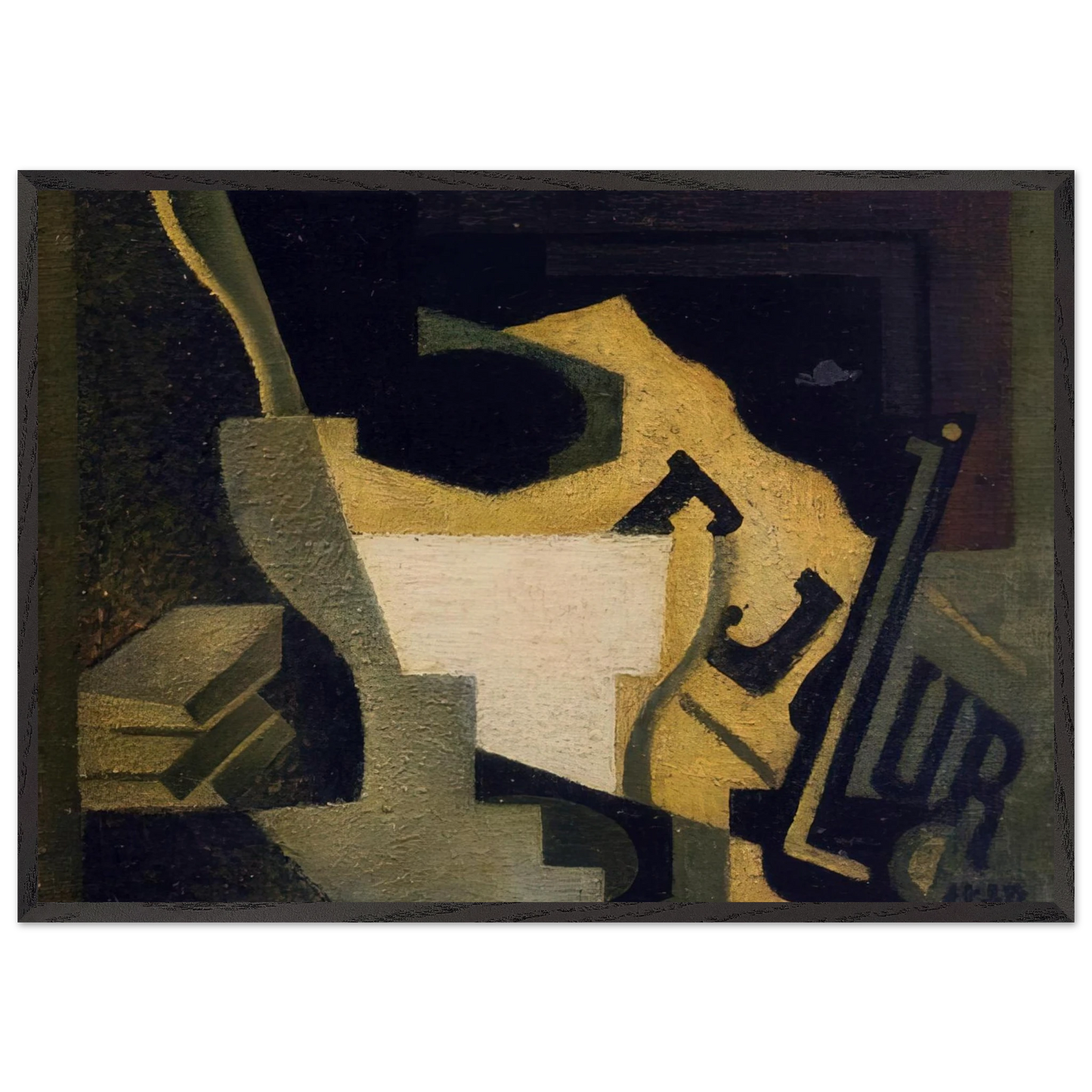
What is the historical significance of "Still Life with Newspaper 1918" by Juan Gris?
This artwork is a key example of Synthetic Cubism, where Juan Gris used fragmented forms and collage-inspired elements to redefine still life painting in the early 20th century, blending art and intellectual depth.
What materials are used in this framed art print?
It features a museum-quality print on 250 gsm matte paper, a black wooden frame from responsibly sourced oak and ash, and shatterproof plexiglass for protection, all using sustainable FSC-certified materials.
How is the frame constructed for durability?
The frame is 20mm thick and wide, made from sturdy oak and ash wood, providing a robust and elegant presentation that exceeds standard 14mm frames for enhanced longevity.
Is this framed print ready to hang upon arrival?
Yes, it includes a ready-to-hang kit, so you can display this fine art reproduction directly on your wall without additional setup, ensuring a seamless installation experience.
What makes the paper archival and museum-quality?
The 250 gsm matte paper is uncoated and natural white, designed to resist fading and deterioration, making it ideal for preserving this Cubist masterpiece as a long-lasting art print.
How does Juan Gris's technique in this work differ from earlier Cubism?
In "Still Life with Newspaper 1918," Gris employed Synthetic Cubism, focusing on constructed compositions with flat planes and integrated text, moving beyond the analytical fragmentation of earlier Cubist works.
What protection does the shatterproof plexiglass offer?
The shatterproof plexiglass safeguards the print from dust, UV light, and physical damage while maintaining optical clarity, ensuring your framed art remains pristine and secure over time.