
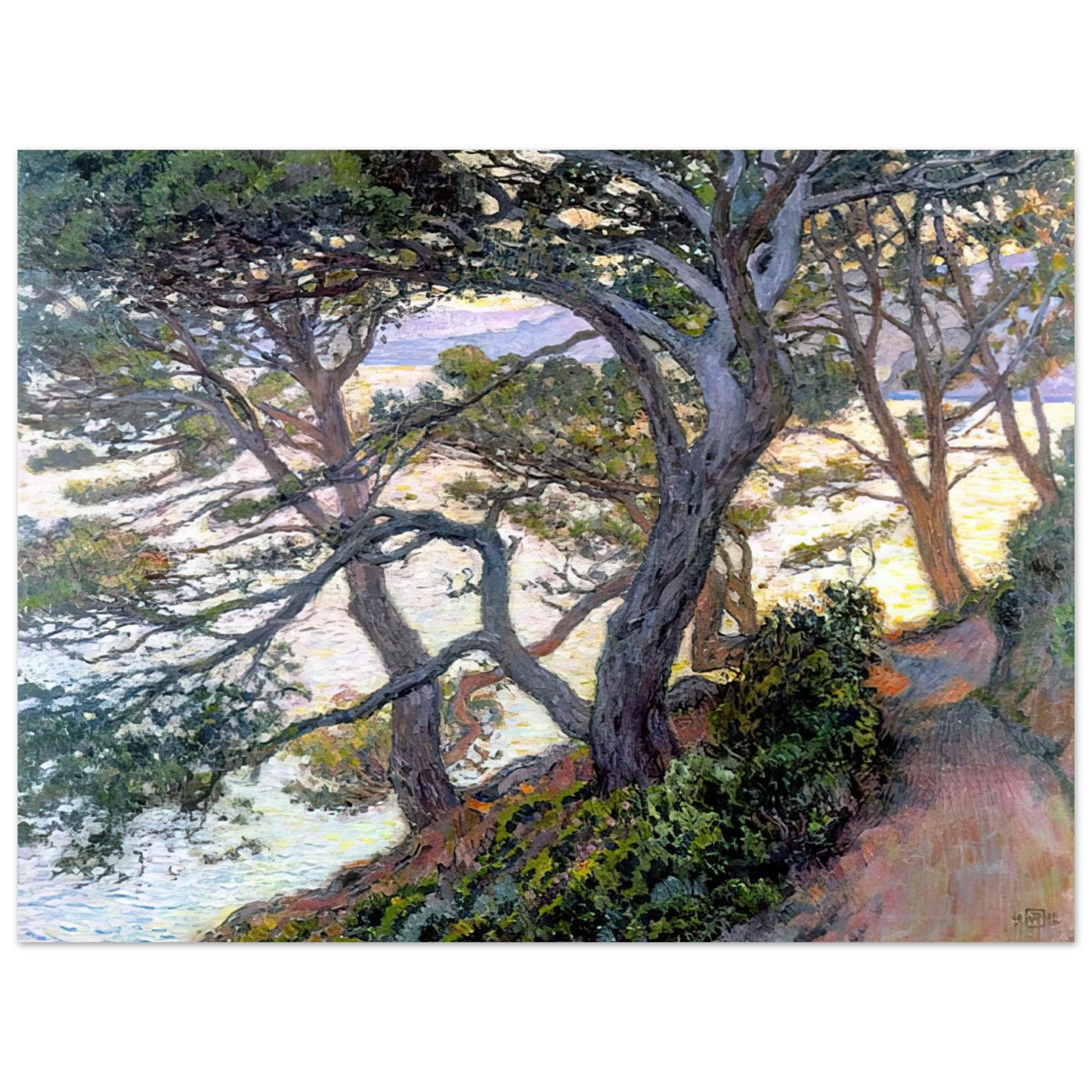
What are the dimensions of this Theo van Rysselberghe fine art print?
This museum-quality reproduction measures 75x100 cm or 30x40 inches, perfect for a statement piece in any room.
What type of paper is used for this archival print?
It's printed on Master's Edition archival paper, a matte, uncoated, natural white paper that ensures longevity and a luxurious texture for your Neo-Impressionist art.
How is this print shipped and are there minimum orders?
We print and ship on demand with no minimum orders, offering convenient fulfillment for your Theo van Rysselberghe Pines of Rayol poster.
Is this paper acid-free to prevent yellowing?
Yes, the paper is acid-free with a pH above 7, designed to prevent yellowing and preserve your museum-quality reproduction for years.
What is the weight and thickness of the paper?
The paper has a substantial 250 gsm (110 lb) weight and 0.29 mm (11.4 mils) thickness, providing a durable and premium feel for your fine art print.
What artistic technique did Theo van Rysselberghe use in Pines of Rayol?
Van Rysselberghe employed pointillism, a Neo-Impressionist technique using small dots of color to create luminous effects, as seen in this 1912 landscape.
Where was Pines of Rayol painted and what does it depict?
Painted in the South of France in 1912, it depicts pine trees against the Mediterranean sea, showcasing van Rysselberghe's mastery of light and coastal scenes.