
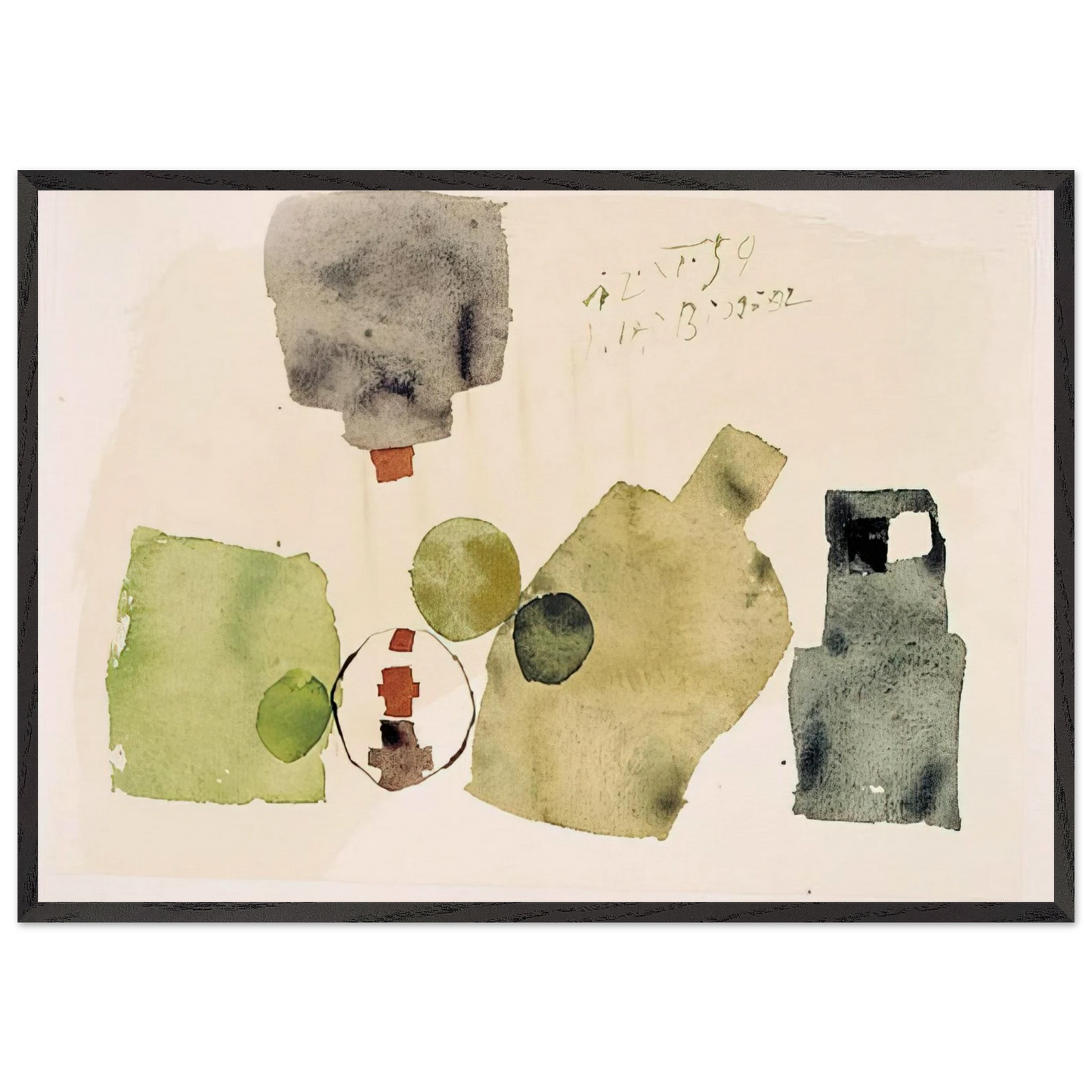
What makes this Julius Bissier print "museum-quality"?
We use 250 gsm archival museum-quality paper with a matte, natural white finish. This acid-free paper ensures long-term preservation and high color fidelity, reflecting the quality found in world-class art galleries.
What are the specifications of the black wooden frame?
The frame is crafted from FSC-certified oak and ash, measuring 20mm (0.79") in both width and thickness. This wider profile offers superior structural integrity compared to standard frames.
How is the artwork protected during shipping and display?
Each print is protected by shatterproof plexiglass, which is more durable and safer than standard glass while maintaining exceptional clarity for viewing the fine details of Bissier’s work.
Is the framed print ready to hang upon arrival?
Yes, every framed art print from RedKalion includes a professional-grade hanging kit, ensuring the piece is ready to be displayed on your wall immediately upon delivery.
Is the paper and frame sustainably sourced?
RedKalion is committed to sustainability. We exclusively use FSC-certified wood and paper (or equivalent certifications) to ensure your artwork supports responsible forest management.
What does the title "12XI59" represent in Julius Bissier’s work?
Bissier titled his works using the date of their creation (November 12, 1959). This practice emphasizes the artwork as a temporal record of a specific meditative state or spiritual moment.
How did Zen philosophy influence Julius Bissier’s technique?
Bissier was deeply influenced by Zen-Buddhism and ink wash painting. This is evident in his use of calligraphic 'signs' and the strategic use of empty space, or 'Ma,' to create balance.