
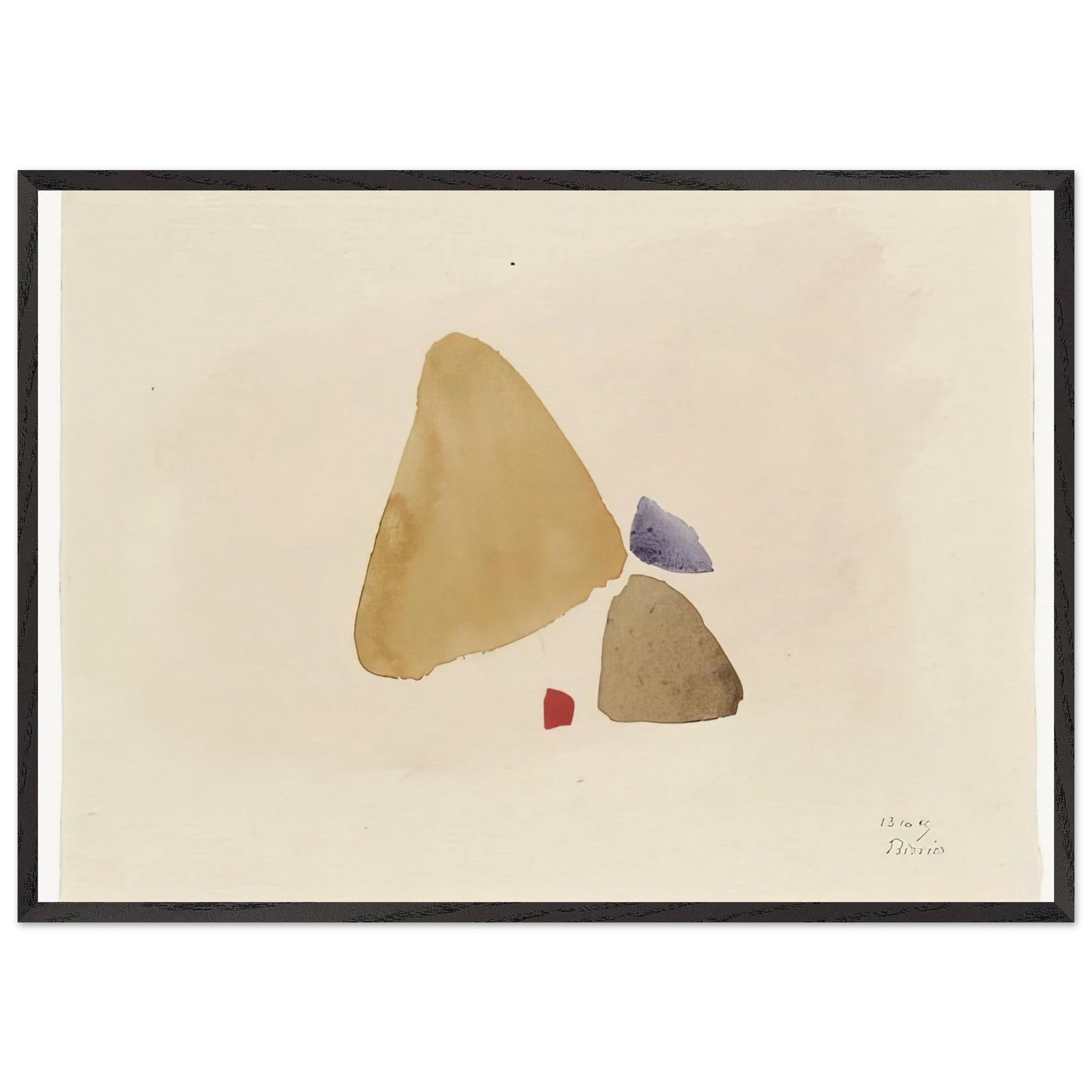
What materials are used for this Julius Bissier print?
We use 250 gsm (110 lb) natural white, archival museum-quality paper. The paper is matte and uncoated, ensuring an authentic fine art feel and superior color depth without glare.
What are the specifications of the black wooden frame?
The frame is made from responsibly sourced oak and ash wood. It measures 20mm (0.79") in both thickness and width, providing a sturdier and more premium look than standard 14mm frames.
Is the artwork protected against damage?
Yes, each framed print features shatterproof plexiglass. This provides professional-grade protection and clarity while ensuring the piece remains safe during shipping and within your home environment.
Is this print sustainable and eco-friendly?
Absolutely. RedKalion uses FSC-certified materials or equivalent certifications to ensure that the wood and paper are sourced responsibly from sustainably managed forests.
How is the artwork shipped and installed?
Your Julius Bissier print is shipped ready-to-hang with a mounting kit included. It is packaged securely to prevent movement and damage, allowing you to display it immediately upon arrival.
What is the significance of the title '231049 - 1949'?
Bissier often titled his works with the date of creation. This 1949 piece marks his evolution into lyrical abstraction, reflecting the post-war search for universal spiritual harmony through minimalist forms.
Does the print accurately represent Bissier’s technique?
Yes, our high-resolution archival printing captures the subtle calligraphic strokes and transparency characteristic of Bissier’s Zen-influenced style, preserving the meditative quality of the original composition.