
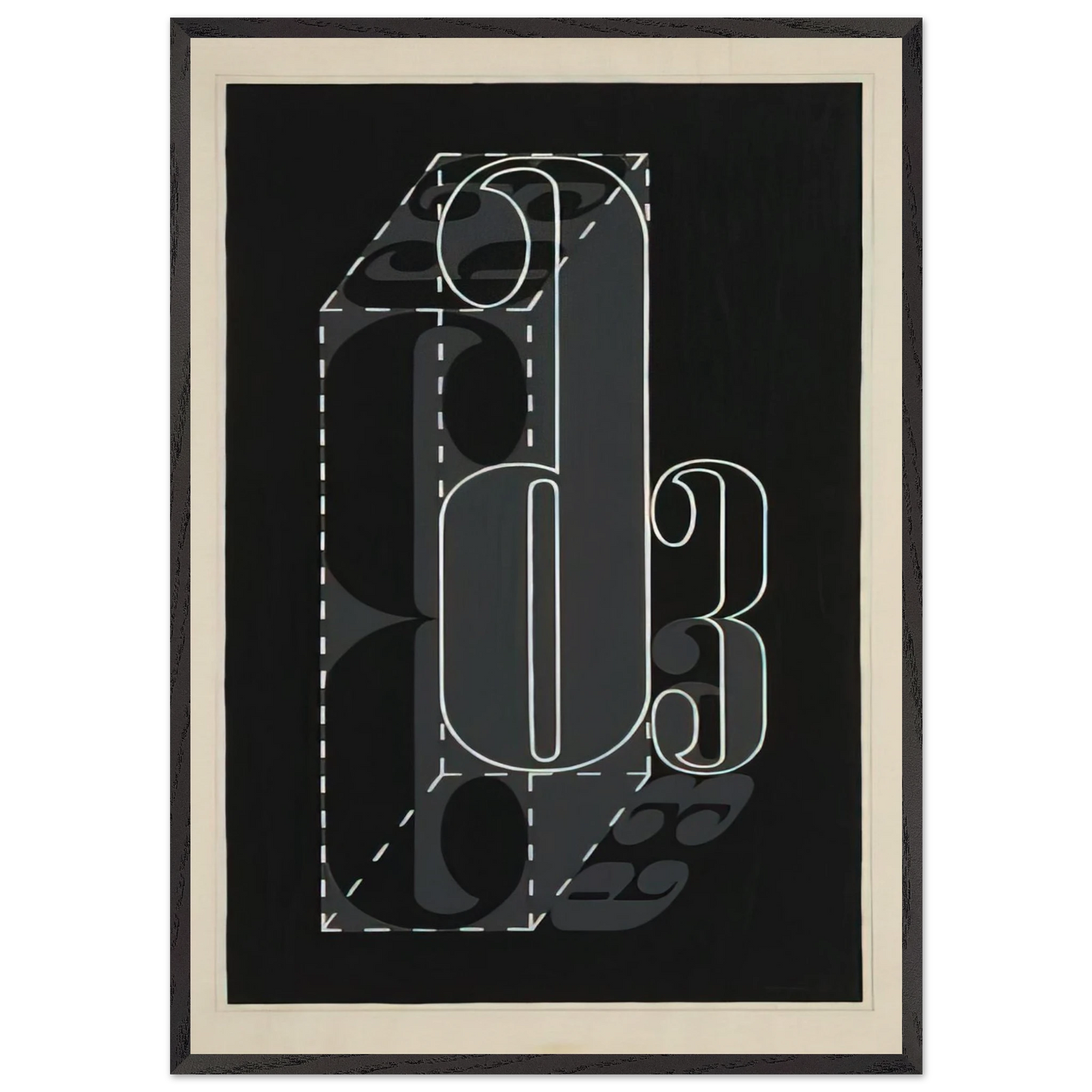
What makes the paper quality of this print 'museum-grade'?
We use 250 gsm (110 lb) archival paper, which is significantly heavier and more durable than standard prints. The natural white, uncoated matte finish prevents glare and ensures the ink remains vibrant and acid-free for decades.
Is the black wooden frame sustainably sourced?
Yes, all our frames are made from FSC-certified oak and ash wood. This ensures that the timber is harvested responsibly, supporting global reforestation efforts while providing a robust, premium 20mm wide profile for your artwork.
How is the Josef Albers print protected during shipping?
Each framed print is secured with shatterproof plexiglass and robust packaging. The plexiglass offers superior clarity and safety compared to traditional glass, ensuring your Josef Albers reproduction arrives in pristine condition.
Is this artwork ready to hang upon delivery?
Absolutely. Your framed print includes a complete hanging kit. The 70x100 cm (28x40 inch) frame is pre-assembled, allowing you to elevate your home or office gallery immediately upon arrival.
Will the colors of '6 AND 3' fade over time?
No. By utilizing archival-grade materials and UV-resistant plexiglass, RedKalion prints are designed to resist yellowing and fading, maintaining the stark geometric precision of Albers' 1931 masterpiece for a lifetime.
What is the significance of the title '6 AND 3' in Albers' work?
The title refers to the numerical and structural relationships within the composition. In 1931, Albers focused on how mathematical proportions influence human perception, a hallmark of his Bauhaus teaching and artistic philosophy.
How does Josef Albers use geometric abstraction in this 1931 piece?
Albers uses precise, sandblasted-style lines to create an illusion of three-dimensional space on a flat plane. This 1931 work is a foundational example of his 'structural constellations,' where lines suggest multiple spatial readings.