Discover Unlimited Art Possibilities
At RedKalion, you can find virtually any artwork from any artist, available in a wide range of sizes to perfectly match your space.
If you didn’t find what you’re looking for, contact us at support@redkalion.com . We will source any artwork and produce it in any size and format you need, including art prints, posters, canvas, framed pieces, framed canvas, and more.
For dedicated art enthusiasts, we also offer handcrafted replicas of any artwork, carefully painted by highly skilled artists using traditional techniques.
For custom requests, contact us at support@redkalion.com .
What are the exact dimensions and frame specifications?
This print measures 70x100 cm (28x40 inches). It features a premium 20mm wide and thick black wooden frame made from responsibly sourced oak or ash, offering a more robust profile than standard 14mm frames.
What type of paper and ink are used for this Klee print?
We use 250 gsm (110 lb) museum-quality, natural white, matte paper. It is archival-grade and FSC-certified, ensuring the vibrant vermillion accents and subtle tones remain vivid for decades without yellowing.
How is the artwork protected during shipping and display?
Each print is protected by shatterproof plexiglass, which provides superior clarity and safety. We ship in secure, reinforced packaging to ensure your museum-quality reproduction arrives in pristine condition.
Is the artwork ready to hang upon arrival?
Yes. Every RedKalion framed print comes with a pre-installed hanging kit. You can elevate your space immediately upon unboxing with no additional hardware required.
Is this product environmentally sustainable?
Absolutely. RedKalion uses FSC-certified materials or equivalent sustainable alternatives for both our paper and wooden frames, ensuring your art purchase supports responsible forestry practices.
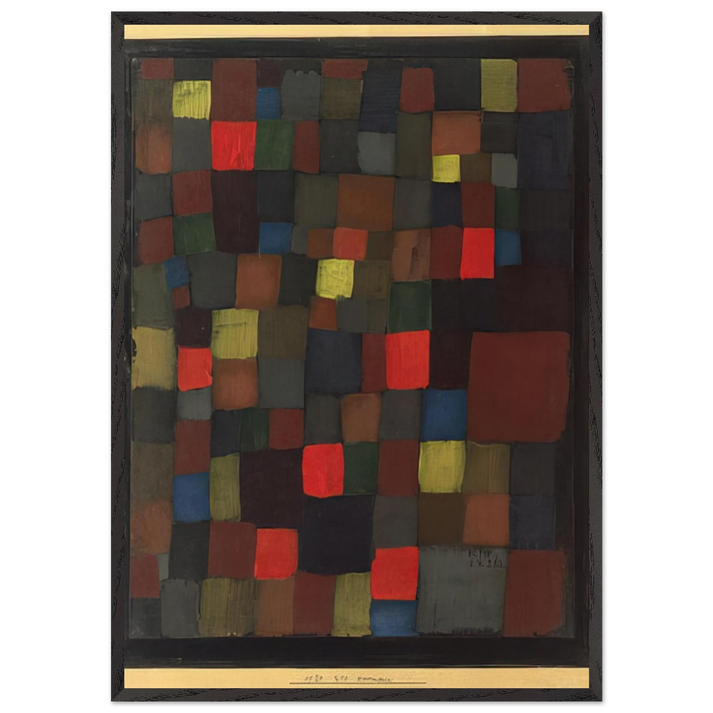
What inspired Paul Klee’s 'magic squares' in 1924?
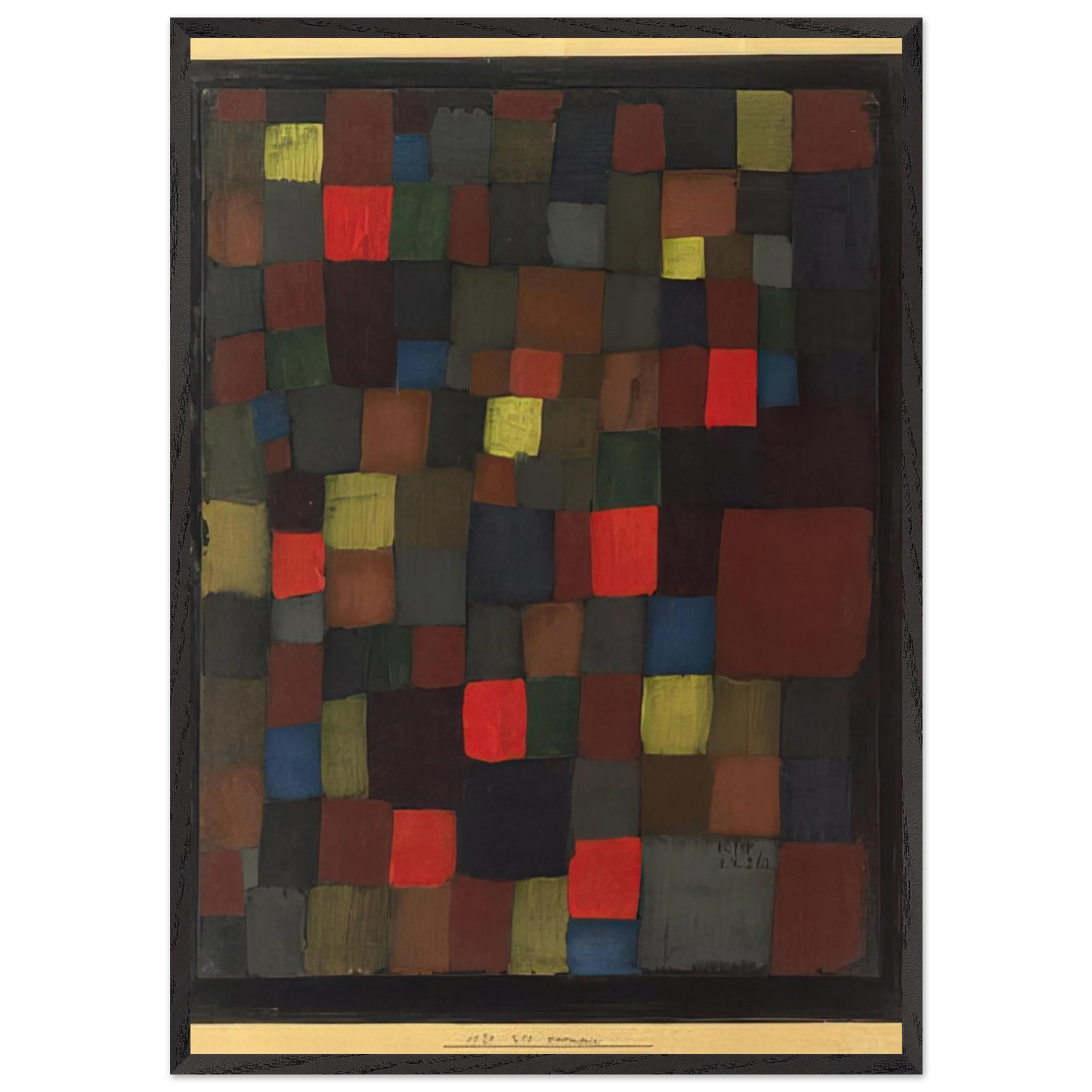
The composition was inspired by Klee’s fascination with music and Bauhaus color theory. He sought to create 'polyphonic' paintings where colors move in harmony, much like different voices in a musical fugue.
Why is the 1924 period significant for this artwork?
1924 was a peak year for Klee at the Bauhaus. It marks his mastery of geometric abstraction, where he balanced technical precision with the emotional impact of specific pigments like vermillion.