
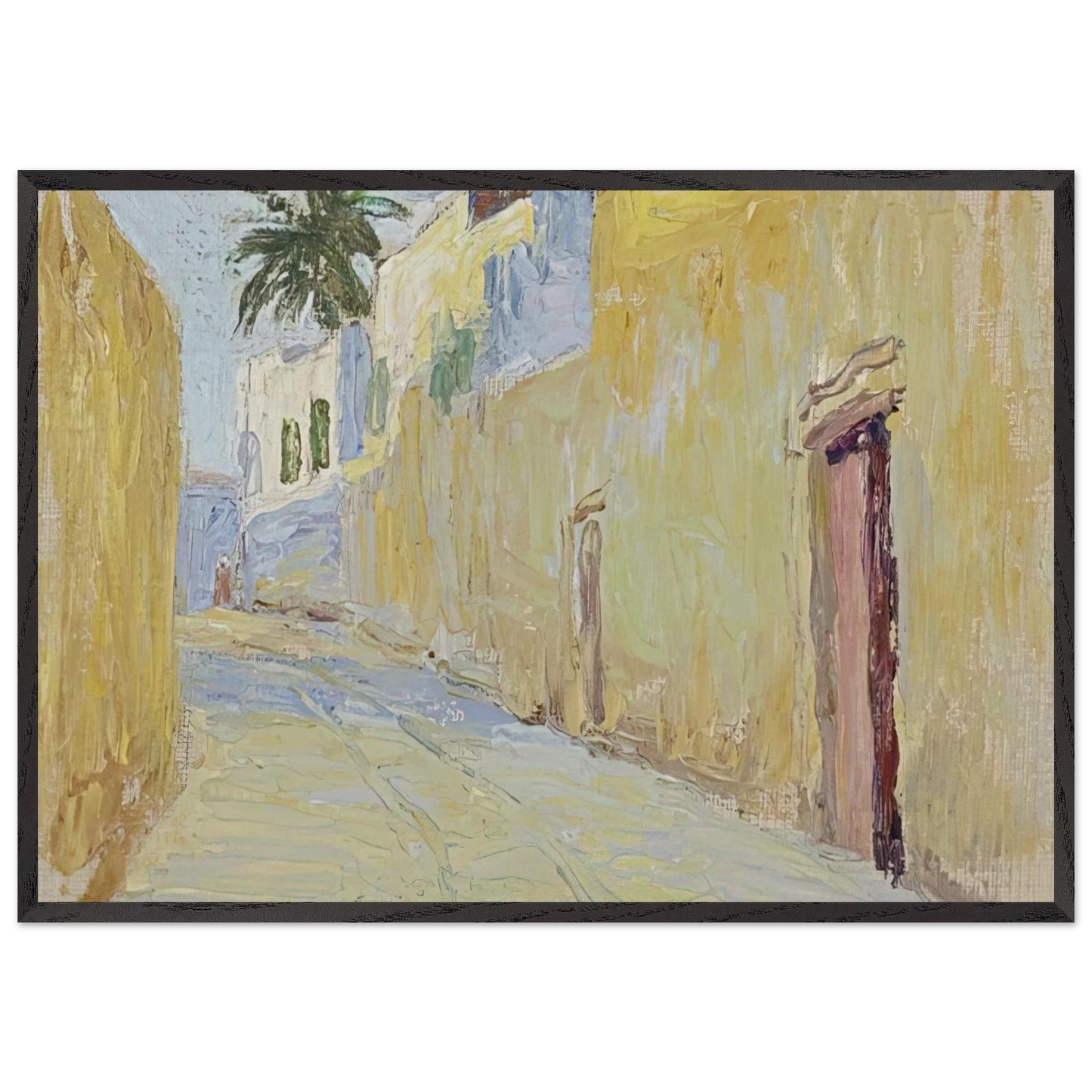
What are the specifications of the paper used for this Münter print?
We use 250 gsm (110 lb) natural white, museum-quality paper. It is archival, acid-free, and features a matte, uncoated finish to ensure long-lasting color fidelity and zero glare.
Does the frame meet sustainability standards?
Yes, all frames are crafted from responsibly sourced oak and ash wood, carrying FSC certification or equivalent to ensure environmental integrity and premium quality.
Is the artwork protected against damage?
Each print is protected by shatterproof, crystal-clear plexiglass. This provides the clarity of glass with significantly higher durability and safety for your home.
Will I need additional hardware to hang this art?
No, your framed print arrives ready-to-hang. We include a dedicated hanging kit designed for the 20mm thick frame to ensure a secure and level display.
How long will the colors of this reproduction remain vibrant?
Our archival-grade materials and museum-quality paper are specifically designed to resist yellowing and fading, preserving the expressionist palette for decades under normal indoor conditions.
What inspired Gabriele Münter to paint this Tunisian scene?
Münter painted this during a pivotal 1904-1905 journey to North Africa with Wassily Kandinsky. The unique Mediterranean light inspired her to move toward bolder, more simplified compositions.
What artistic movement does "Alley in Tunis" represent?
This work represents early German Expressionism. It showcases the transition toward the vibrant colors and flattened perspectives later championed by the Blue Rider (Der Blaue Reiter) group.