


Discover Unlimited Art Possibilities
At RedKalion, you can find virtually any artwork from any artist, available in a wide range of sizes to perfectly match your space.
If you didn’t find what you’re looking for, contact us at support@redkalion.com . We will source any artwork and produce it in any size and format you need, including art prints, posters, canvas, framed pieces, framed canvas, and more.
For dedicated art enthusiasts, we also offer handcrafted replicas of any artwork, carefully painted by highly skilled artists using traditional techniques.
For custom requests, contact us at support@redkalion.com .
What material is used for this Paul Cézanne print?
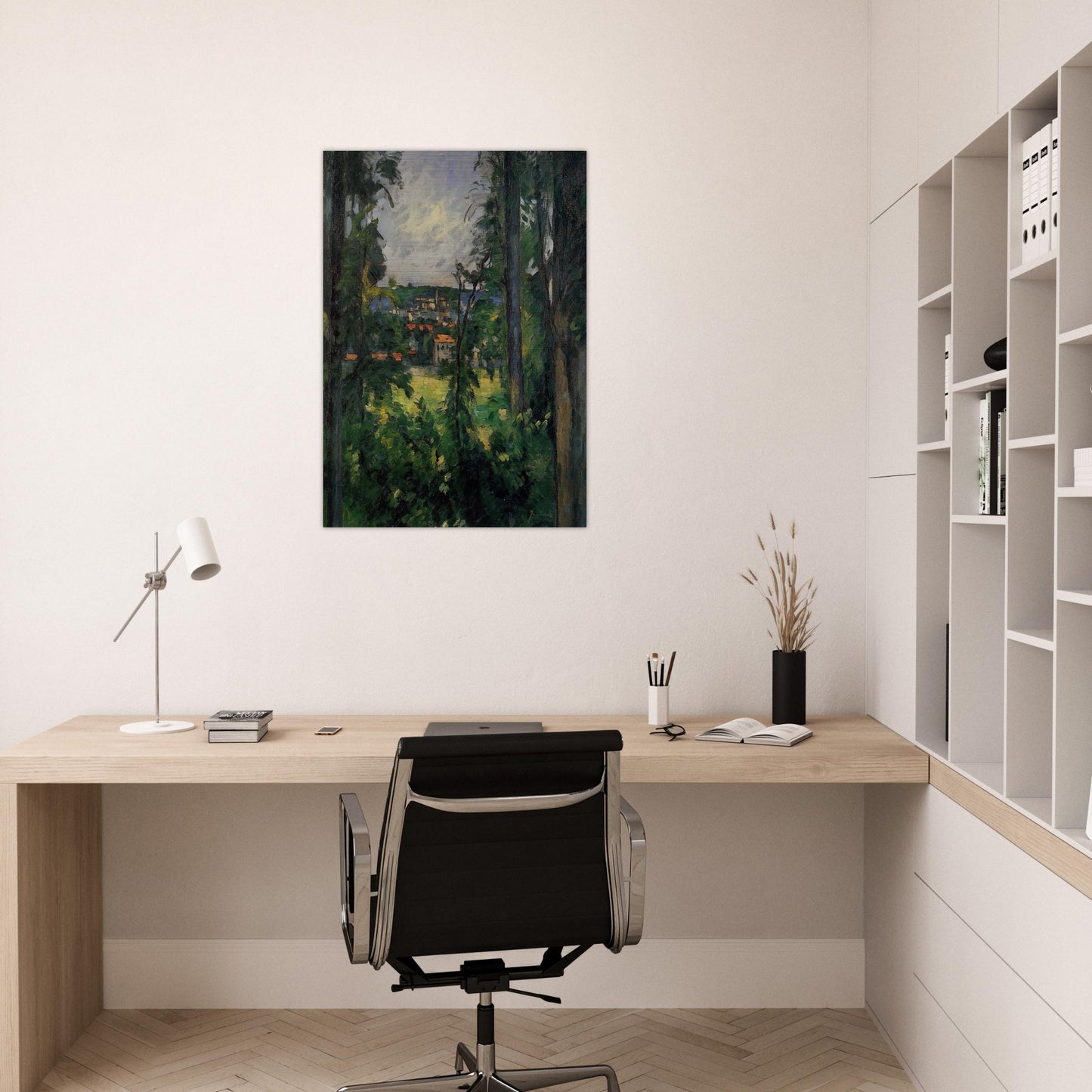
This print is crafted on 3mm (0.12") Brushed Silver Aluminum DIBOND®. It features a rigid, durable base with a horizontal grain that provides a unique metallic finish, particularly in lighter areas of the artwork.
How does the brushed silver finish affect the visual of the artwork?
The brushed silver effect adds a dynamic, metallic sheen to the composition. Unprinted areas reveal the horizontal grain of the aluminum, creating a sophisticated interplay of light that enhances Cézanne’s structural landscape.
Is the hanging hardware included with my purchase?
Yes, every RedKalion aluminum print includes a professional hanging kit. The specific type of hardware may vary depending on the fulfillment country to ensure the safest and most efficient installation.
How should I care for my aluminum fine art reproduction?
Aluminum DIBOND® is highly durable and moisture-resistant. To maintain its museum-quality appearance, simply dust the matte surface occasionally with a soft, dry microfiber cloth. Avoid using harsh chemical cleaners.
What is the archival longevity of an AluDibond print?
These prints are built for longevity. The direct-print method on AluDibond is UV-resistant and highly stable, ensuring that the vivid colors and matte finish of your Cézanne reproduction remain vibrant for decades.
What is the significance of "Auvers. View from Nearby" in Cézanne’s career?
This work marks Cézanne's shift toward structural analysis. Painted in Auvers-sur-Oise, it reflects the influence of Camille Pissarro while showcasing Cézanne's unique method of reducing nature to its fundamental geometric forms.
Why is Cézanne considered the "father of modern art"?
Cézanne bridged the gap between late 19th-century Impressionism and 20th-century Cubism. His focus on the underlying structure of objects and his use of rhythmic brushstrokes fundamentally changed the trajectory of Western art.