
Discover Unlimited Art Possibilities
At RedKalion, you can find virtually any artwork from any artist, available in a wide range of sizes to perfectly match your space.
If you didn’t find what you’re looking for, contact us at support@redkalion.com . We will source any artwork and produce it in any size and format you need, including art prints, posters, canvas, framed pieces, framed canvas, and more.
For dedicated art enthusiasts, we also offer handcrafted replicas of any artwork, carefully painted by highly skilled artists using traditional techniques.
For custom requests, contact us at support@redkalion.com .
What makes the Belle Ile 1896 1 print archival quality?
We use 250 gsm (110 lb) museum-quality, natural white, uncoated paper. This acid-free, FSC-certified material prevents yellowing over time, ensuring the Henri Matisse print retains its original clarity and tonal depth for decades.
How is the Matisse art print framed and protected?
The print is housed in a 20mm thick frame made from sustainably sourced oak and ash. It features a sophisticated black finish and is protected by shatterproof plexiglass, providing a safer and clearer alternative to traditional glass.
Is the Henri Matisse framed print ready to hang?
Yes. Your Belle Ile 1896 1 print arrives fully assembled with a professional hanging kit included. The robust 20mm frame provides structural stability, making it ready to elevate your walls immediately upon arrival.
How does RedKalion ensure sustainable production?
RedKalion prioritizes the environment by using FSC-certified wood and paper or equivalent sustainable materials. This ensures your Matisse art print supports responsible forestry practices without compromising on premium quality.
What is the shipping protection for large 70x100 cm prints?
We use high-durability packaging and shatterproof plexiglass to protect your large-format art print during transit. This ensures your 28x40 inch Henri Matisse piece arrives in pristine gallery condition, ready for display.
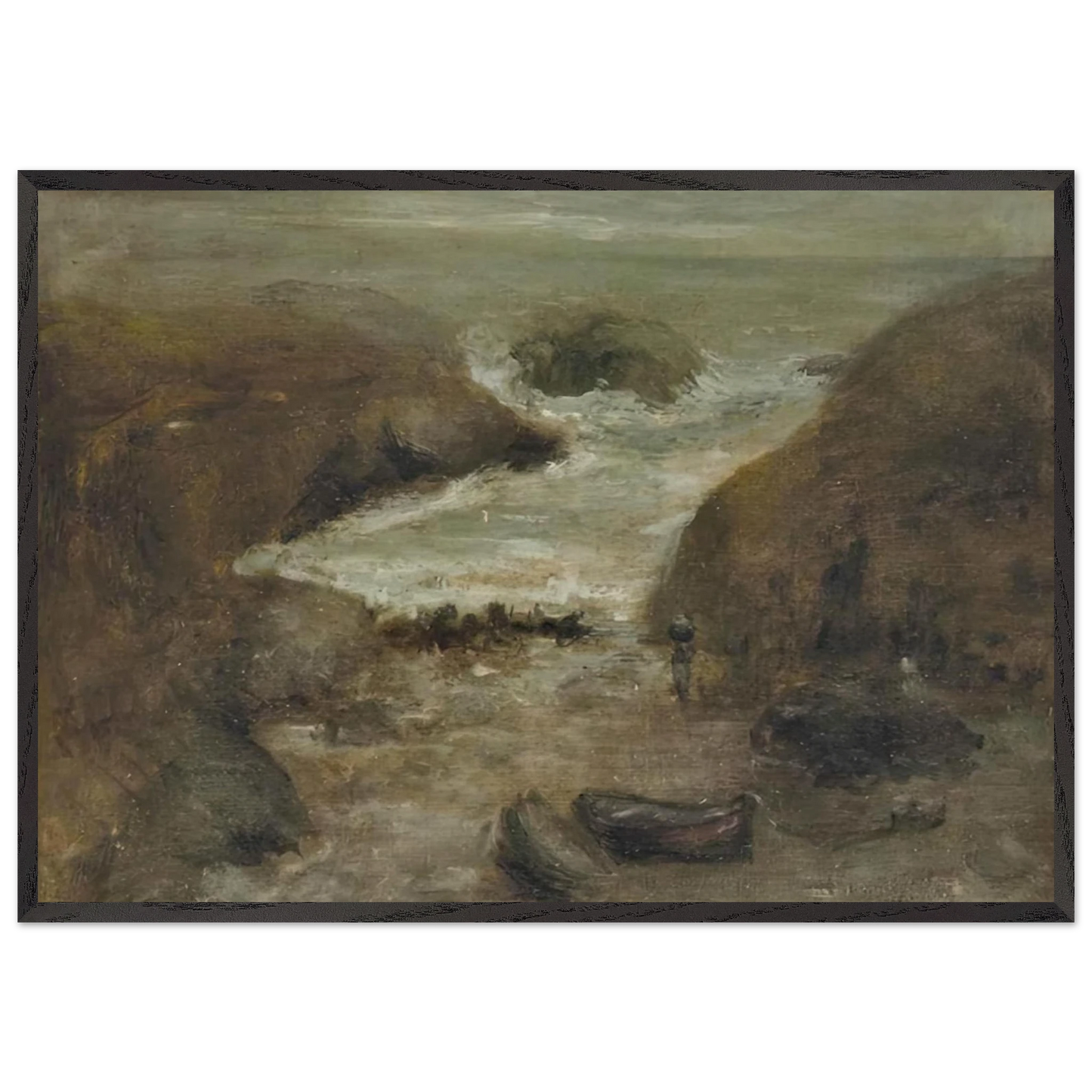
Why was Belle-Île significant in Henri Matisse's career?
Matisse's 1896 visit to Belle-Île was a turning point where he moved away from traditional palettes. It was here he discovered Impressionism, leading to the bold experimentation with color that would later define his Fauvist style.
What is the aesthetic style of this 1896 Matisse work?
This piece represents Matisse's transition toward Modernism. It features proto-Impressionist influences, focusing on the atmospheric light of the Brittany coast, characterized by expressive brushstrokes and a nuanced exploration of natural textures.