
What makes RedKalion's archival paper special?
We use 250 gsm natural white, matte, museum-quality paper. This archival-grade, uncoated stock ensures rich color depth and longevity without glare, preserving the integrity of the original artwork for generations.
How is the print framed and prepared?
The print is mounted in a 20mm thick black frame made from solid oak or ash. It arrives ready-to-hang with a pre-installed kit and shatterproof plexiglass for ultimate protection.
Is the artwork protected from environmental damage?
Yes, each print is protected by high-quality shatterproof plexiglass and printed on acid-free, FSC-certified paper, ensuring resistance to yellowing and physical damage during display or transit.
How is shipping and packaging handled?
Each framed print is securely packaged in protective materials to prevent movement. Your order arrives fully assembled and ready to hang directly on your wall.
Will the colors fade over time?
No, we utilize archival-grade inks and 250 gsm museum-quality paper that are specifically designed to resist fading and maintain vibrancy for decades under normal indoor lighting.
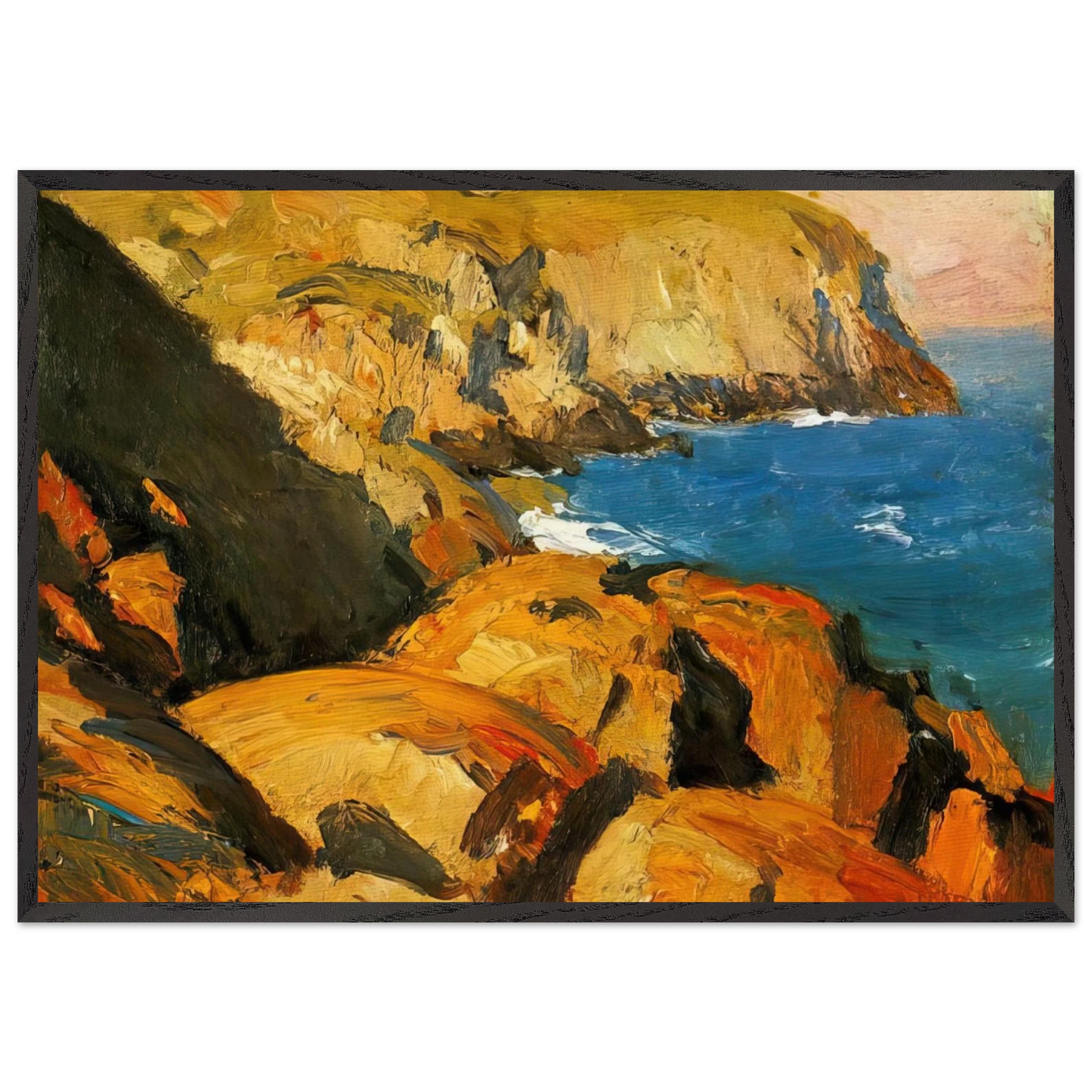
What period of Hopper's career does Blackhead Monhegan represent?
This piece dates from Hopper's early career (1916-1919) when he frequented the Maine coast, moving from Impressionism toward the stark, architectural realism that became his signature style.
Why did Hopper choose Monhegan Island as a subject?
Hopper was drawn to Monhegan's rugged cliffs and desolate beauty, which provided the perfect stage to explore the interaction between harsh sunlight, deep shadows, and the power of nature.