
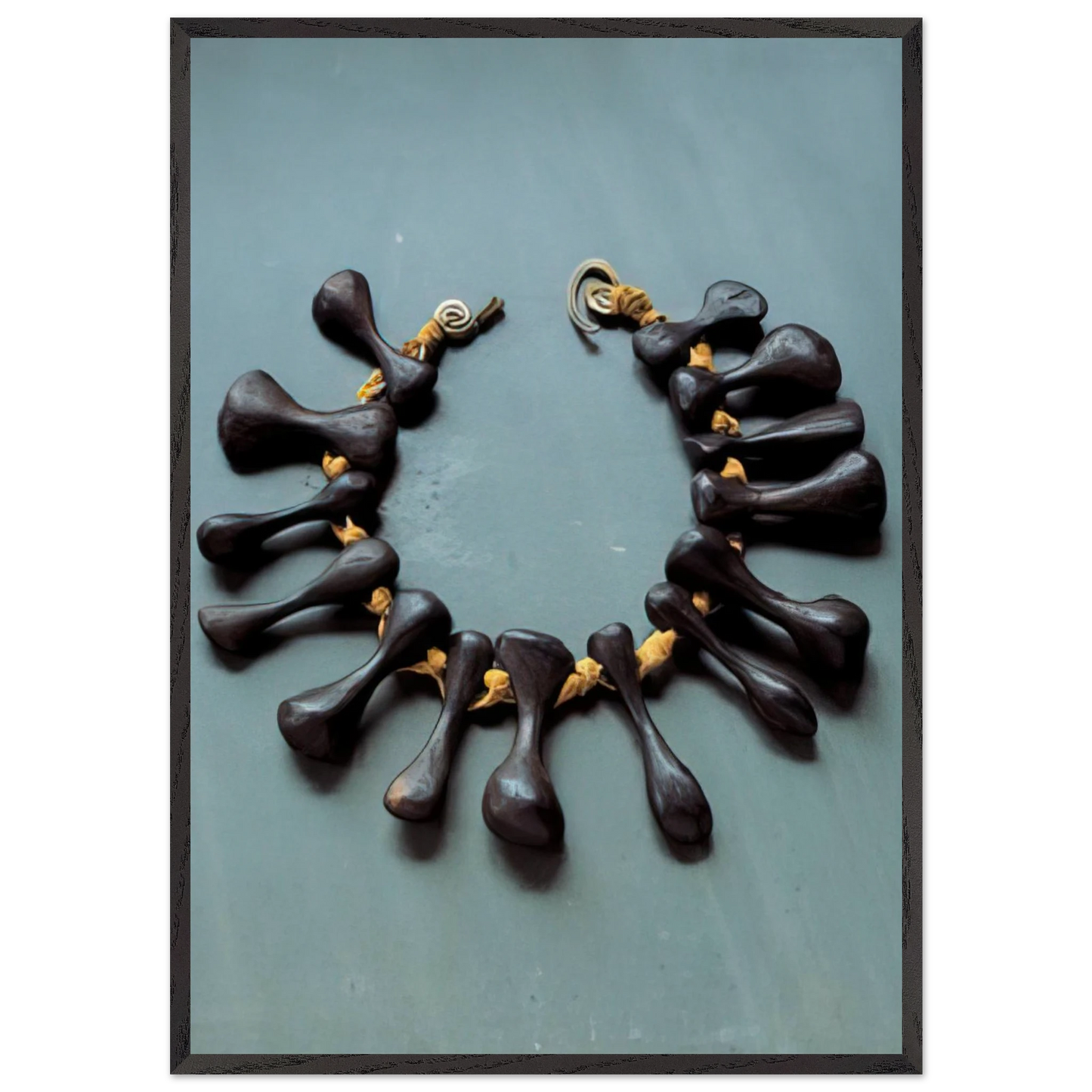
What makes the print quality of the Bones Necklace 1940 archival?
We use 250 gsm (110 lb) natural white, uncoated paper that meets archival standards. This museum-quality material ensures the ink stays vibrant and the paper resists yellowing over time, preserving your Alexander Calder reproduction indefinitely.
Is the frame for this Alexander Calder print sustainably sourced?
Yes, all frames are made from responsibly sourced oak and ash wood. Our materials are FSC-certified or equivalent, ensuring that your premium art print supports sustainable forestry practices while offering a robust 20mm profile.
How is the artwork protected during shipping and display?
Each framed print is protected by high-quality, shatterproof plexiglass. This ensures the Bones Necklace 1940 arrives safely and remains protected from dust and damage while maintaining crystal-clear visibility in your home or office.
Does the framed print come ready to hang?
Absolutely. Every RedKalion framed art print includes a professional-grade hanging kit. The 70x100 cm frame is constructed to be sturdy yet easy to mount, allowing you to display your new masterpiece immediately upon arrival.
How long will this fine art reproduction last?
Designed for longevity, our archival museum-quality paper and acid-free materials prevent degradation. When displayed away from direct moisture, this Alexander Calder print is engineered to last for decades without fading or losing its structural integrity.
What is the significance of Alexander Calder's jewelry work in 1940?
In 1940, Calder was heavily experimenting with hammered metal and organic shapes. Pieces like the Bones Necklace represent his 'wearable sculpture' phase, where he applied the same principles of balance and movement found in his famous mobiles.
Why is the 1940 Bones Necklace considered a masterpiece of modernism?
It exemplifies the surrealist-adjacent movement of the era, moving away from traditional precious gems to focus on form and rhythm. It highlights Calder's ability to turn rigid structures into fluid, biological metaphors.