
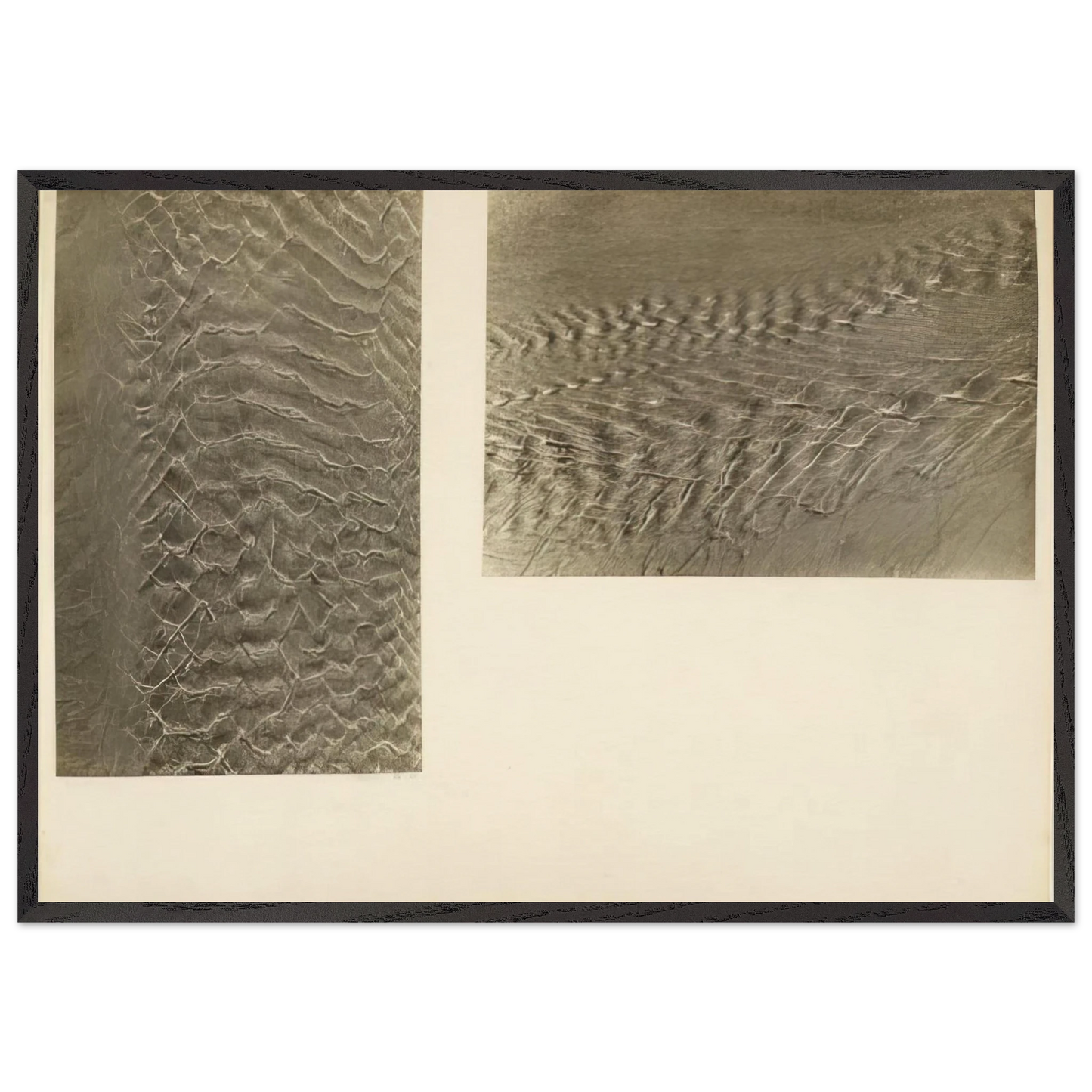
What is the significance of the Biarritz series in Albers' career?
Created in 1929, this series represents Albers’ mastery of geometric abstraction during his tenure at the Bauhaus. It explores the rhythmic interplay of line and spatial depth, bridging the gap between traditional craft and modern fine art.
What makes the paper quality 'museum-grade'?
We use 250 gsm natural white paper with a matte, uncoated finish. This archival-grade material is acid-free and FSC-certified, ensuring the Josef Albers print does not yellow or degrade over time.
How does the 20mm frame differ from standard frames?
Our frames feature a 20mm (0.79") width and thickness, which is significantly sturdier than the standard 14mm profiles. This provides a more luxurious, gallery-style presence and better structural support for the 70x100 cm print.
Is this Josef Albers print ready to hang upon delivery?
Yes. Every RedKalion framed print arrives with a pre-installed hanging kit. The shatterproof plexiglass and sturdy oak/ash frame ensure the artwork is ready to elevate your space immediately upon arrival.
How is the artwork protected during shipping and on the wall?
We utilize specialized protective packaging for transit. On your wall, the print is protected by shatterproof plexiglass, which offers superior clarity and safety compared to traditional glass, while preventing physical damage.
Why did Albers use 'Brackish Water' in the title?
The title reflects Albers' fascination with the intersection of natural phenomena and geometric order. In 1929, he often translated environmental impressions into the rigorous, minimalist aesthetic seen in his Biarritz compositions.
Does RedKalion use sustainable materials for this print?
Absolutely. We use FSC-certified paper and responsibly sourced oak and ash wood for our frames. This commitment ensures that your fine art reproduction is as environmentally conscious as it is aesthetically pleasing.