
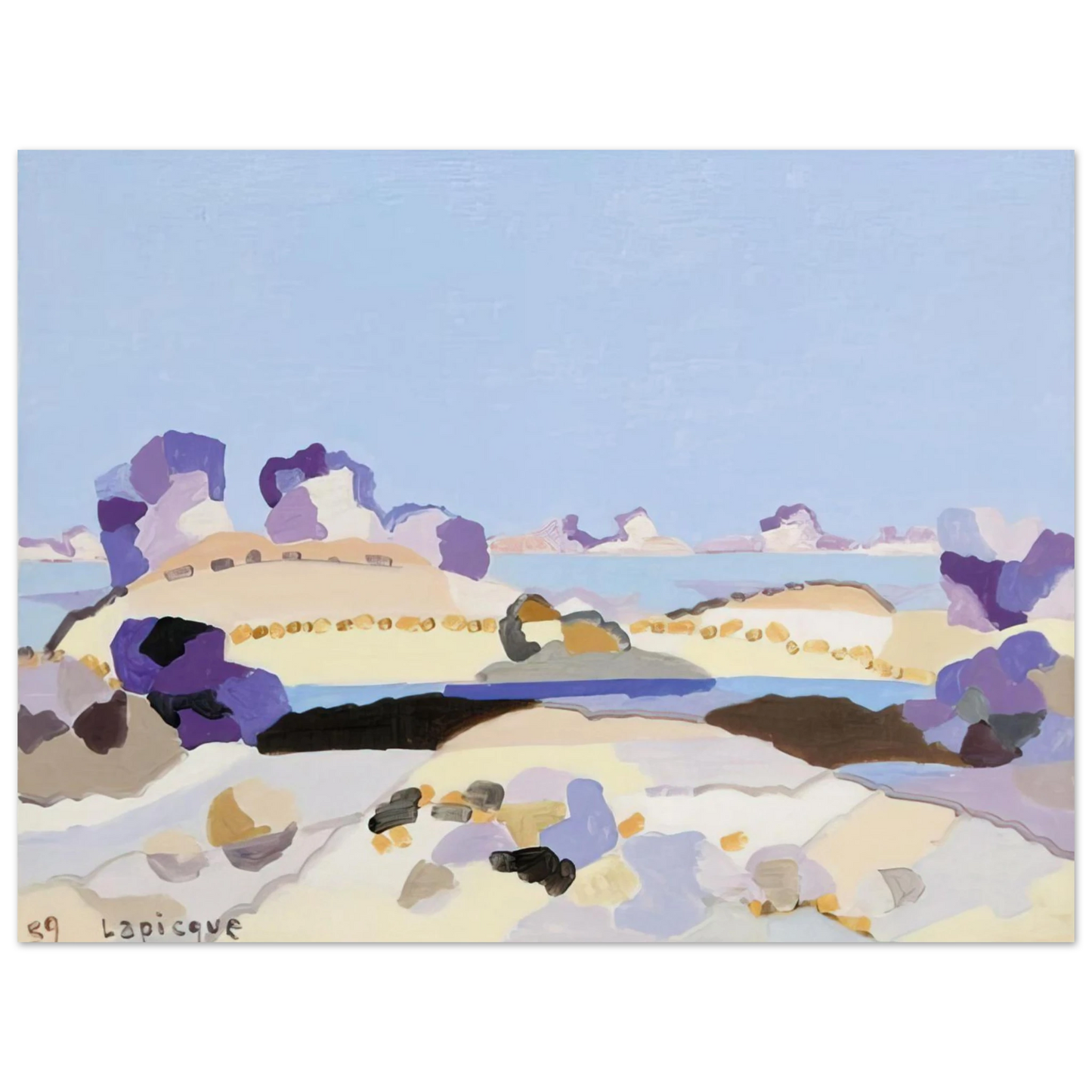
What defines the quality of this Charles Lapicque print?
This is a museum-quality reproduction printed on 250 gsm Master's Edition archival paper. It uses premium pigments on a natural white, matte surface to ensure the highest color accuracy and a luxurious, non-reflective finish.
Is the paper finish suitable for professional framing?
Yes, the uncoated, natural white matte finish is ideal for high-end framing. It prevents glare and reflections, allowing the intricate details of Lapicque’s 1959 brushwork to remain visible from any angle.
How does the acid-free paper affect the print’s lifespan?
The paper is acid-free with a pH value above 7, which chemically prevents the material from yellowing or becoming brittle. This archival standard ensures your investment remains gallery-quality for decades.
Is this fine art poster sustainably produced?
Absolutely. We use FSC-certified paper from responsibly managed forests. Furthermore, our on-demand printing model eliminates overproduction and waste, ensuring a sustainable path from our gallery to your home.
How is the artwork fulfilled and shipped?
Each print is produced on demand with no minimum order requirements. We use secure, protective packaging designed for large-format fine art (75x100 cm) to ensure your artwork arrives in flawless condition.
What is the significance of the year 1959 in Lapicque's career?
By 1959, Lapicque had fully developed his unique 'optical' style. This period represents his mastery of using color as a structural element, bridging the gap between maritime realism and mid-century abstraction.
Why did Charles Lapicque focus on the Breton lagoon as a subject?
Lapicque was deeply influenced by the light and topography of Brittany. 'Lagune bretonne' reflects his fascination with the fluid motion of water and the complex reflections found in coastal environments.