
RedKalion
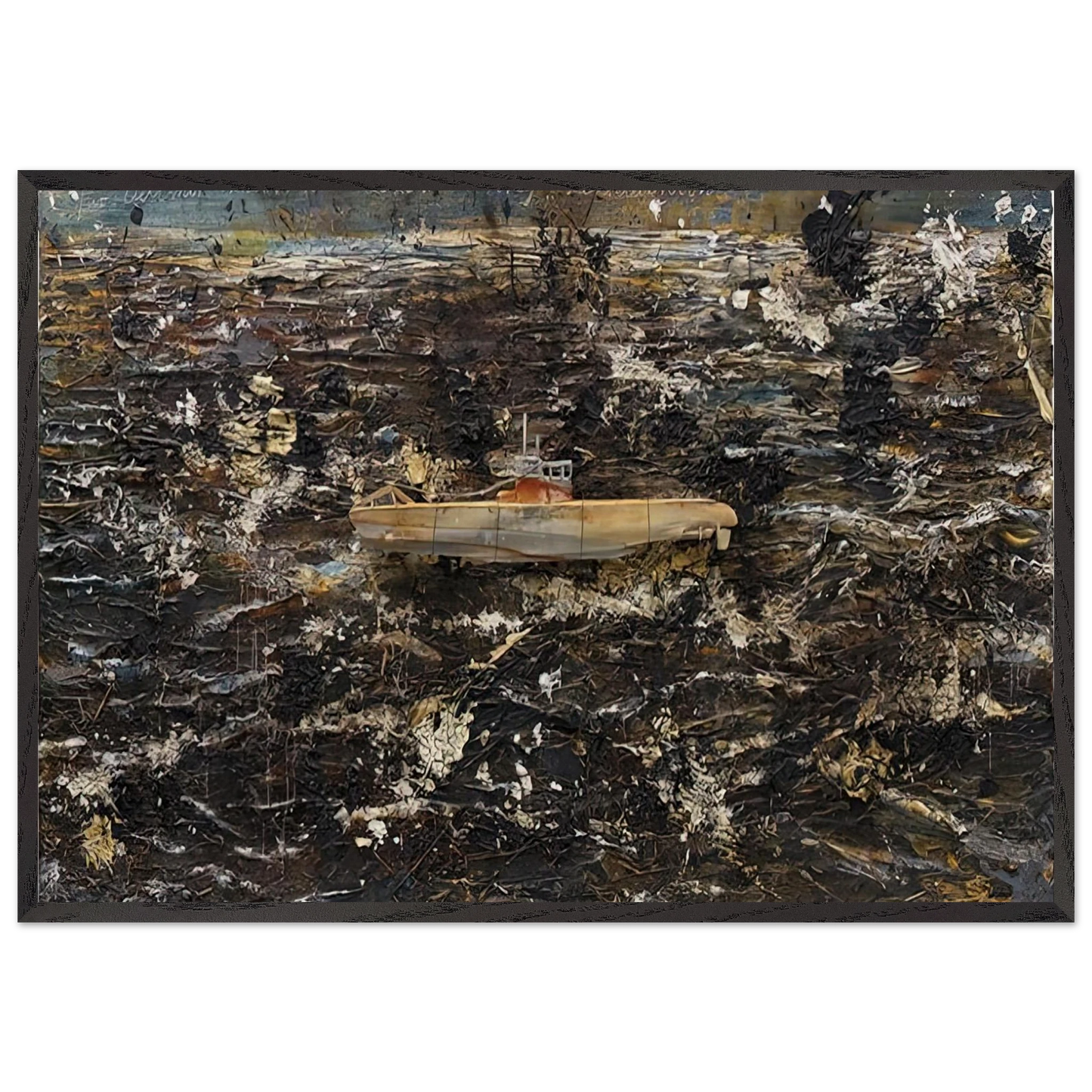
FOR VELIMIR KHLEBNIKOV THE DOCTRINE OF WAR BATTLES 2010 - Anselm Kiefer 70x100 cm / 28x40 inches Framed Art Print – Black Wooden Frame
FOR VELIMIR KHLEBNIKOV THE DOCTRINE OF WAR BATTLES 2010 - Anselm Kiefer 70x100 cm / 28x40 inches Framed Art Print – Black Wooden Frame
Couldn't load pickup availability
Velimir Khlebnikov: The Doctrine of War Battles (2010) by Anselm Kiefer
Immerse yourself in the profound historical and philosophical depth of Anselm Kiefer's Velimir Khlebnikov: The Doctrine of War Battles (2010), now available as a museum-quality framed art print from RedKalion. This monumental work, measuring 70x100 cm (28x40 inches), is a masterful exploration of memory, conflict, and the cyclical nature of history, rendered in Kiefer's signature textured, layered style that incorporates materials like lead, ash, and emulsion to evoke a haunting, timeless presence.
Kiefer, a central figure in post-war German art, draws inspiration from the Russian Futurist poet Velimir Khlebnikov, whose theories on the mathematical patterns of war resonate through this piece. The artwork's dense, almost archaeological surface invites contemplation, blending abstraction with symbolic references to battlegrounds and ruins. This fine art reproduction captures every intricate detail, from the gritty textures to the somber palette, ensuring an authentic representation of Kiefer's visionary approach.
Elevate your space with this archival masterpiece, presented in a black wooden frame crafted from responsibly sourced oak and ash wood. The frame measures 20mm (0.79") thick and wide, offering a robust, gallery-worthy presence that enhances the artwork's dramatic impact. Protected by shatterproof plexiglass, the print is housed on FSC-certified sustainable paper—a 250 gsm (110 lb), matte, uncoated, natural white sheet with a thickness of 0.29 mm (11.4 mils), designed for longevity and exceptional color fidelity. Each piece arrives ready-to-hang with a complete hanging kit, allowing for immediate display in your home or office.
At RedKalion, we specialize in premium art prints that bridge historical significance with contemporary craftsmanship. This reproduction is not merely a decoration but a statement piece that endures, inviting viewers to engage with the complex narratives of 20th-century art. Trust in our expertise to deliver a high-quality framed print that honors Kiefer's legacy and transforms any environment into a curated gallery experience.
Discover Unlimited Art Possibilities
At RedKalion, you can find virtually any artwork from any artist, available in a wide range of sizes to perfectly match your space.
If you didn’t find what you’re looking for, contact us at support@redkalion.com . We will source any artwork and produce it in any size and format you need, including art prints, posters, canvas, framed pieces, framed canvas, and more.
For dedicated art enthusiasts, we also offer handcrafted replicas of any artwork, carefully painted by highly skilled artists using traditional techniques.
For custom requests, contact us at support@redkalion.com .
What are the dimensions of this framed art print?
This framed print measures 70x100 cm (28x40 inches), including a 20mm thick black wooden frame, making it a striking centerpiece for any room.
What type of paper is used for this museum-quality reproduction?
We use FSC-certified sustainable paper: 250 gsm (110 lb), matte, uncoated, natural white archival paper with a thickness of 0.29 mm (11.4 mils) for optimal fine art display.
How is the print protected in the frame?
The print is safeguarded by shatterproof plexiglass, ensuring durability and clarity while protecting this Anselm Kiefer artwork from damage.
Is this framed print ready to hang upon arrival?
Yes, it includes a hanging kit and is ready-to-hang directly on your wall, offering a hassle-free setup for this premium art reproduction.
What makes this frame different from standard frames?
Our frame is 20mm (0.79") thick and wide, crafted from responsibly sourced oak and ash wood, providing a sturdier, gallery-style look than classic 14mm frames.
Who was Velimir Khlebnikov, and why did Anselm Kiefer reference him?
Velimir Khlebnikov was a Russian Futurist poet known for his theories on the mathematical cycles of war, which Kiefer explores in this piece to reflect on history's repetitive patterns.
What techniques did Anselm Kiefer use in the original artwork?
Kiefer employed mixed media, including lead, ash, and emulsion, to create textured, layered surfaces that evoke decay and memory, central to his post-war artistic themes.