
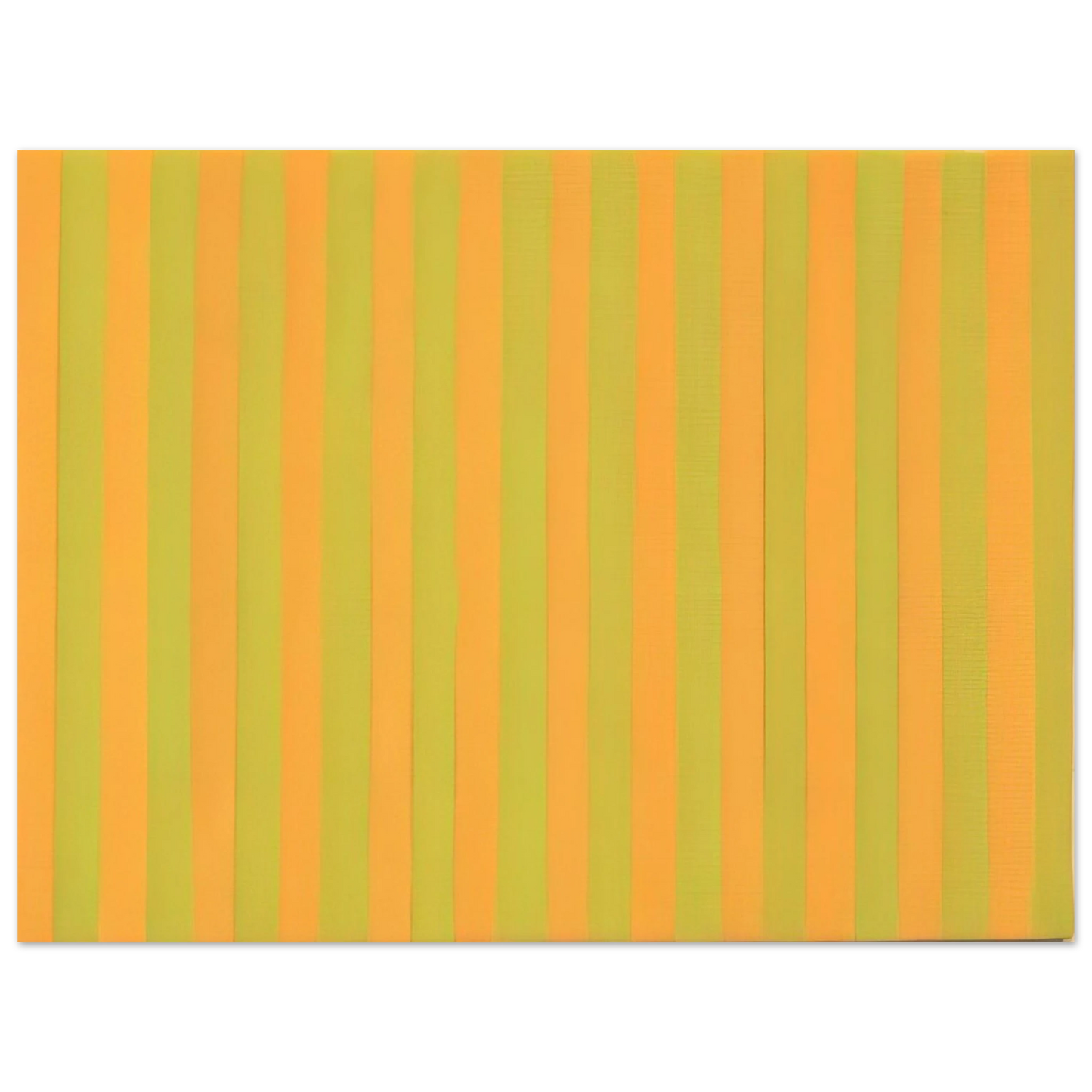
What is the historical significance of Gene Davis's 'Two Yellows'?
Created in 1959, 'Two Yellows' is a key work by Gene Davis, a leading figure in the Washington Color School. It exemplifies Color Field painting, using bold, rhythmic stripes to explore optical effects and emotional resonance in post-war American art.
How are the yellow stripes applied in this artwork?
Davis used a precise, hard-edge technique with masking tape to create clean, vibrant stripes. This method emphasizes color interaction and perceptual dynamics, making 'Two Yellows' a study in visual rhythm and simplicity.
What type of paper is used for this fine art print?
We use Master's Edition archival paper, a museum-quality, acid-free material with a matte, uncoated finish on natural white paper. It ensures vibrant color reproduction and long-term durability for your art collection.
Is this print archival and will it fade over time?
Yes, this print is fully archival. The acid-free paper (pH above 7) prevents yellowing, and high-quality inks resist fading, ensuring your Gene Davis reproduction maintains its brilliance for decades with proper care.
What are the dimensions and weight of the print?
The print measures 75x100 cm (30x40 inches) on 250 gsm (110 lb) paper with a thickness of 0.29 mm (11.4 mils). This premium weight provides a substantial, gallery-ready feel for display.
How is the print shipped and are there minimum orders?
We print and ship on demand with no minimum orders. Each piece is carefully packaged in protective materials to ensure it arrives in perfect condition, ready for framing and display.
Is the paper sustainable for this art reproduction?
Yes, we use FSC-certified paper, ensuring responsible sourcing from managed forests. This commitment to sustainability aligns with preserving art and the environment for future generations.