
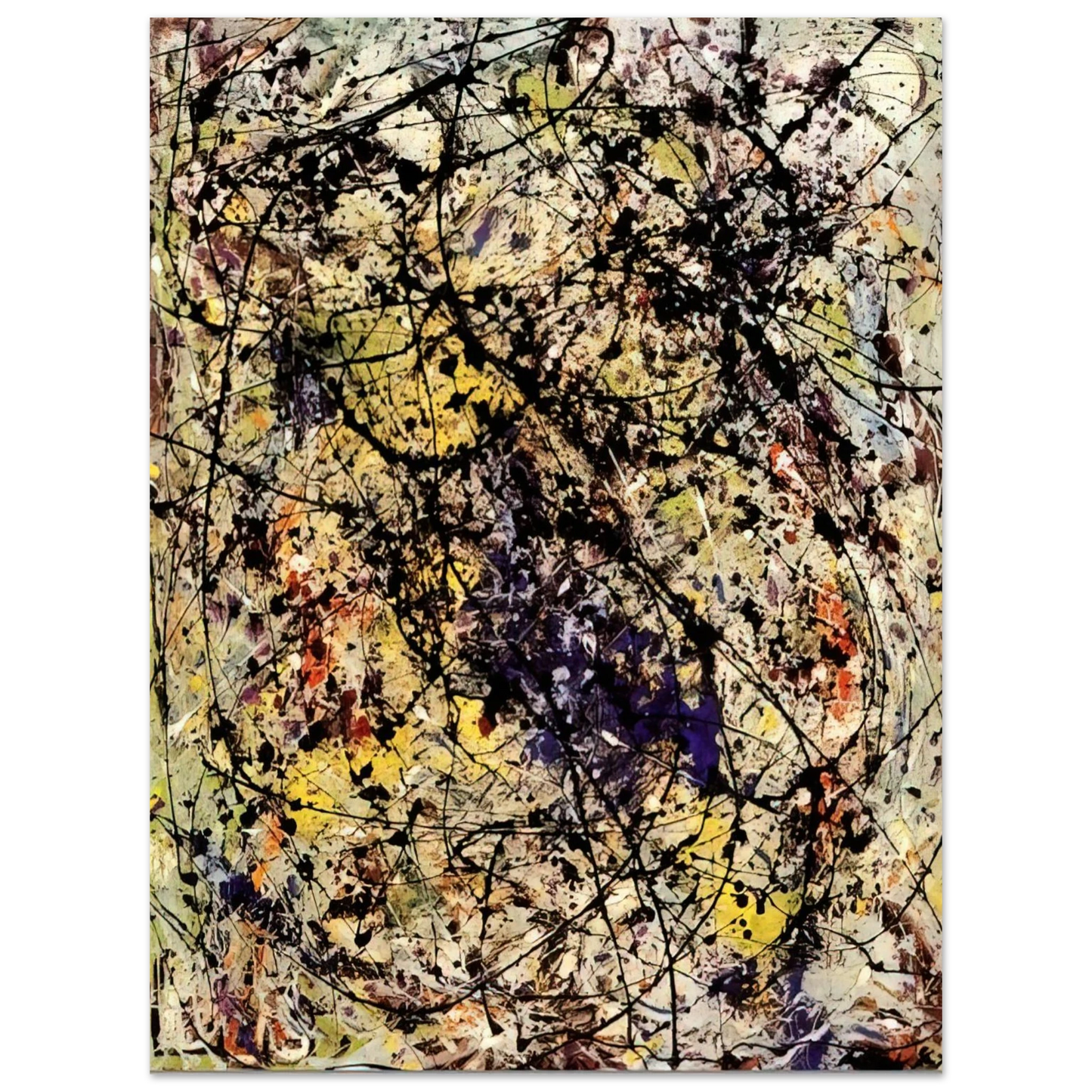
What is the historical significance of Jackson Pollock's Reflections of the Big Dipper?
Created in 1947, this painting is a prime example of Pollock's revolutionary drip technique, marking a pivotal moment in Abstract Expressionism and post-war American art, where he explored cosmic themes through dynamic, gestural abstraction.
How does the drip painting technique in this artwork affect its visual impact?
Pollock's method of pouring and flinging paint creates a chaotic yet controlled web of lines and splatters, evoking energy and movement that draws viewers into a deeply emotional, almost celestial experience in this fine art print.
What type of paper is used for this fine art print?
This museum-quality reproduction is printed on Master's Edition archival paper, featuring a matte, uncoated finish on natural white (off-white) paper for a luxurious texture and archival longevity.
Is this print acid-free to prevent yellowing over time?
Yes, it uses acid-free materials with a pH above 7, ensuring the fine art poster remains vibrant and resists yellowing for generations as part of our archival-grade collection.
What are the weight and thickness specifications of the paper?
The paper is 250 gsm (110 lb) in weight and 0.29 mm (11.4 mils) thick, providing a substantial, premium feel ideal for framing and durable display in any setting.
Is the paper sustainably sourced?
Yes, the FSC-certified paper ensures this museum-quality print supports responsible forestry, aligning with eco-friendly practices for your art collection.
How is this print shipped and are there minimum order requirements?
We offer on-demand printing with no minimum orders, and each fine art poster is carefully shipped directly to you, ready to elevate your space with a Jackson Pollock masterpiece.