
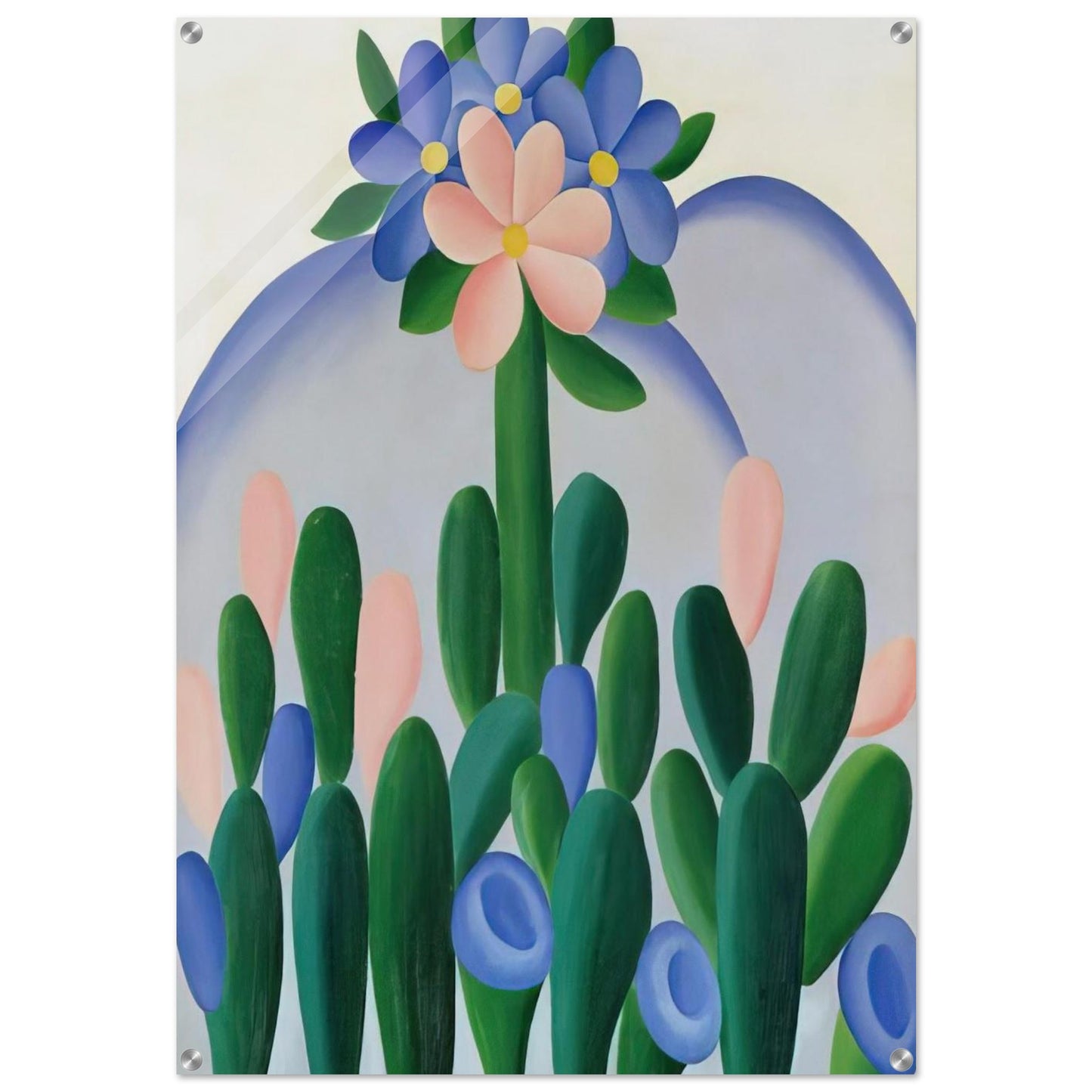
What is the significance of "Manacá" by Tarsila do Amaral?
"Manacá" is a 1927 painting by Tarsila do Amaral, a leading figure in Brazilian modernism. It showcases her use of bold colors and simplified forms to depict tropical flora, reflecting the Antropofagia movement's blend of indigenous and avant-garde influences for a unique national art identity.
What are the specifications of this acrylic print?
This fine art print measures 70x100 cm (28x40 inches) on 4mm (0.15") acrylic, featuring straight-cut corners and white-optimized backgrounds for a modern, vibrant display that enhances Tarsila do Amaral's original colors.
How is the acrylic print mounted and hung?
It includes a hanging kit with hardware and screws, plus pre-drilled screw holes at each corner (14mm/0.55" from the edge, 8mm/0.31" diameter, 15mm/0.6" screw head) for easy, secure installation on your wall.
Is this print archival and durable?
Yes, RedKalion's museum-quality reproduction uses archival-grade acrylic to resist fading and scratches, ensuring long-lasting vibrancy for your Tarsila do Amaral artwork in home or office settings.
What shipping and care does RedKalion provide?
We offer secure packaging and global shipping; handle with care by avoiding direct sunlight and harsh chemicals to maintain the acrylic print's sleek finish and color integrity over time.
Why did Tarsila do Amaral focus on tropical plants like the manacá flower?
Amaral emphasized Brazilian nature, such as the manacá flower, to celebrate indigenous culture and distance her work from European traditions, using vibrant hues and organic shapes to evoke national pride and modernist innovation.
How does the acrylic material enhance the artwork's appearance?
The 4mm acrylic provides a glossy, depth-enhancing surface that amplifies color saturation and contrast, making "Manacá"'s purples and greens pop for a gallery-like, contemporary fine art display.