
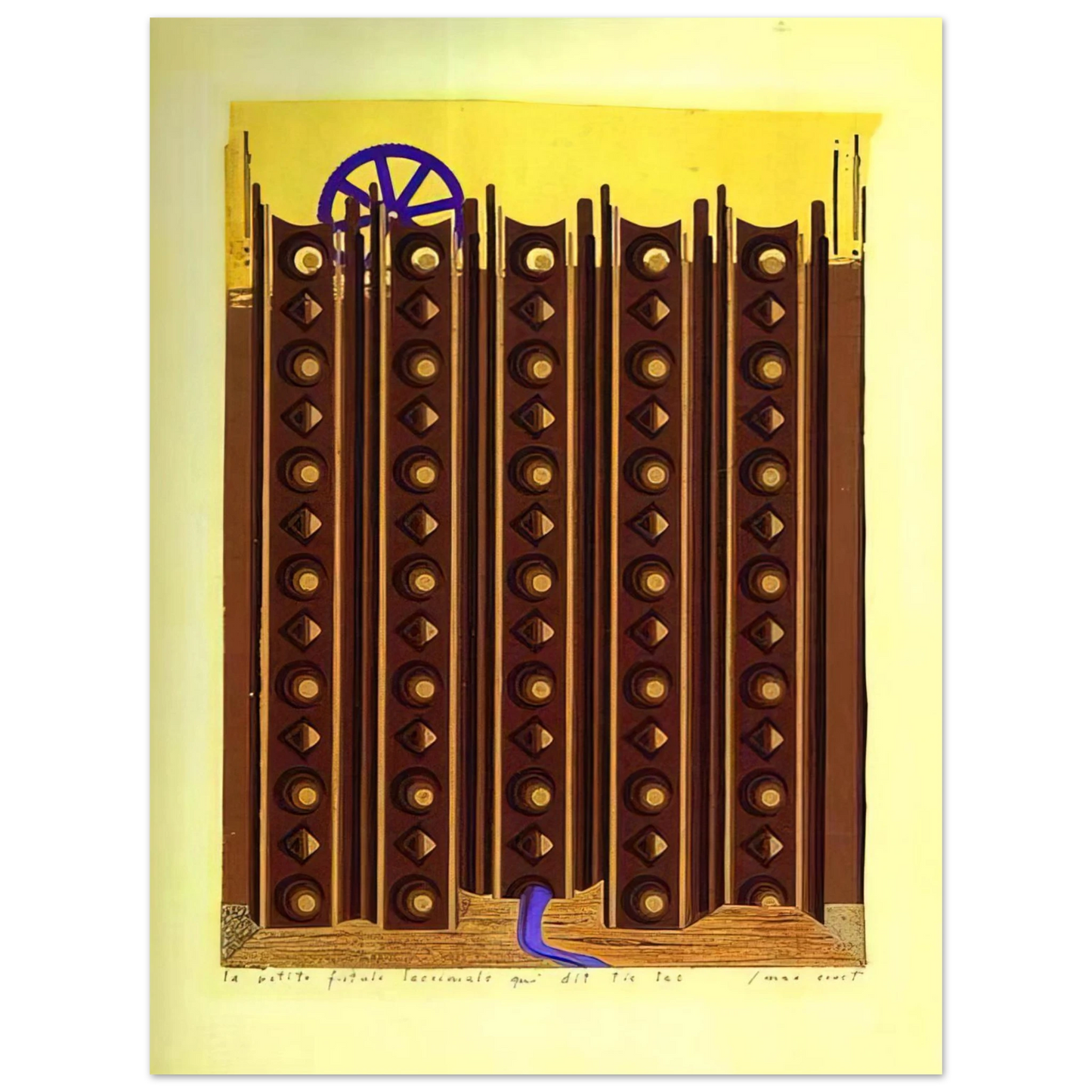
What is the historical significance of 'The Small Fistule That Says Tic Tac' by Max Ernst?
This artwork exemplifies Max Ernst's Surrealist innovation, using frottage to create subconscious, dreamlike imagery that challenges reality, making it a key piece for fine art print collectors.
What details can I expect in this Max Ernst fine art poster reproduction?
Our museum-quality reproduction captures every texture and nuance of Ernst's original, including the biomorphic forms and subtle tones, on premium archival paper for an authentic display.
What are the specifications of the Master's Edition archival paper used?
It features a matte, uncoated finish on natural white paper, with 250 gsm weight, 0.29 mm thickness, acid-free properties to prevent yellowing, and FSC certification for sustainability.
How is this fine art print shipped and what are the fulfillment options?
We print and ship on demand with no minimum orders, ensuring careful handling and timely delivery of your archival-quality Max Ernst poster.
How long will this archival print last without fading or damage?
Made from acid-free, pH-balanced paper, this print resists yellowing and degradation, offering long-lasting durability for your fine art collection.
What techniques did Max Ernst use in creating this Surrealist artwork?
Ernst employed frottage, rubbing textures onto paper to evoke subconscious forms, a hallmark of his innovative approach in this era-defining piece.
Why is the title 'The Small Fistule That Says Tic Tac' significant in Surrealist art?
The playful, nonsensical title reflects Surrealism's embrace of the irrational and dream logic, adding layers of mystery to Ernst's visual narrative.