RedKalion
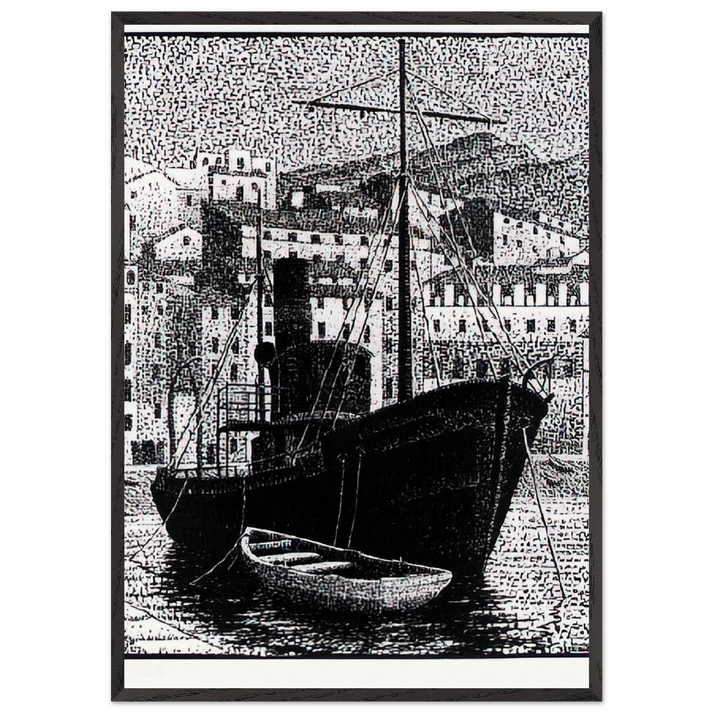
TUGBOAT OLD HARBOR OF BASTIA JANUARY 1934 1934 - MC Escher 70x100 cm / 28x40 inches Framed Art Print – Black Wooden Frame | Maurits Cornelis Escher Prints
TUGBOAT OLD HARBOR OF BASTIA JANUARY 1934 1934 - MC Escher 70x100 cm / 28x40 inches Framed Art Print – Black Wooden Frame | Maurits Cornelis Escher Prints
Couldn't load pickup availability
Tugboat Old Harbor of Bastia January 1934: A Rare Early Masterpiece by M.C. Escher
This framed art print captures Maurits Cornelis Escher's 'Tugboat Old Harbor of Bastia January 1934', a striking departure from his later, more famous geometric works. Created during a pivotal trip to Corsica in 1934, this piece showcases Escher's early mastery of realism and atmospheric perspective, depicting a lone tugboat amidst the industrial charm of Bastia's harbor under a wintry sky. The mood is one of serene isolation and meticulous detail, inviting viewers into a moment frozen in time.
RedKalion presents this museum-quality reproduction on premium, archival-grade paper—250 gsm (110 lb) weight with a 0.29 mm (11.4 mils) thickness and a natural white, matte finish that ensures true color fidelity and longevity. Housed in a sophisticated black wooden frame made from responsibly sourced oak and ash wood, this piece features a 20mm (0.79") thick and wide profile for a bold, contemporary presence. The print is protected by shatterproof plexiglass and arrives ready-to-hang with a complete hanging kit, allowing you to elevate your space instantly with a piece of art history.
As an elite curator of fine art prints, RedKalion ensures every detail, from the FSC-certified sustainable materials to the precise color matching, meets the highest archival standards. This M.C. Escher print is not just a decoration but a testament to the artist's evolving genius, perfect for collectors and enthusiasts seeking a rare glimpse into his early career.

Discover Unlimited Art Possibilities
At RedKalion, you can find virtually any artwork from any artist, available in a wide range of sizes to perfectly match your space.
If you didn’t find what you’re looking for, contact us at support@redkalion.com . We will source any artwork and produce it in any size and format you need, including art prints, posters, canvas, framed pieces, framed canvas, and more.
For dedicated art enthusiasts, we also offer handcrafted replicas of any artwork, carefully painted by highly skilled artists using traditional techniques.
For custom requests, contact us at support@redkalion.com .
What are the dimensions of this framed M.C. Escher print?
This framed art print measures 70x100 cm (28x40 inches), including the black wooden frame, making it a statement piece for any room.
What type of paper is used for this museum-quality reproduction?
It uses 250 gsm (110 lb) archival museum-quality paper with a matte, uncoated finish and 0.29 mm (11.4 mils) thickness for superior durability and color accuracy in fine art prints.
Is this M.C. Escher print ready to hang upon delivery?
Yes, it includes a hanging kit and is ready-to-hang directly on your wall, ensuring easy setup for your framed art print.
How does the frame protect the print?
The frame features shatterproof plexiglass and is made from 20mm thick responsibly sourced oak and ash wood, offering enhanced protection and a sleek look for your M.C. Escher artwork.
Is the paper environmentally sustainable?
Yes, the paper is FSC-certified or equivalent, aligning with RedKalion's commitment to sustainable fine art reproductions.
Why is 'Tugboat Old Harbor of Bastia January 1934' significant in Escher's career?
This 1934 piece marks Escher's early focus on realism during his Corsican travels, predating his famous geometric works and showcasing his skill in atmospheric perspective and detailed scenes.
What details make this harbor scene unique in Escher's portfolio?
It captures a wintry, industrial harbor with a lone tugboat, highlighting Escher's attention to light, shadow, and serene isolation rarely seen in his later art.